Create your CubeMars account

Motor selection is one of the most critical decisions in mobile robot design. It directly influences how a robot moves, how efficiently it operates, and how reliable it remains over time.
In systems such as AGVs and inspection robots, motors are closely tied to overall performance—from load handling and motion control to energy consumption and system lifespan. Selecting the right motor is therefore not just a component choice, but a system-level decision.
To approach motor selection effectively, it is important to first understand their role in different applications and the consequences of improper selection.
The Role of Motors in AGV and Inspection Robots
Motors do more than simply enable movement—they define how a robot behaves in real-world conditions, including how it accelerates, responds, and maintains stability.
In mobile robots, motors are responsible for:
Driving and propulsion
Speed and acceleration control
Load handling capability
Positioning and motion precision
However, the way these functions are prioritized varies significantly between applications.
For AGVs motor:
Continuous and stable operation is essential
Motors must handle sustained loads over long duty cycles
Efficiency is critical to support extended runtime
For inspection robotic motor:
Motion is more dynamic and less predictable
Frequent start-stop and direction changes are required
Responsiveness and control accuracy become more important
These differences mean that mobile or wheeled robotic motor selection must be closely aligned with how the robot is expected to operate, rather than based on generic specifications.
Why Proper Selection Impacts Performance and Cost
Motor selection has a direct impact on both system performance and overall cost, and the effects are often more significant than expected.
From a performance perspective:
Insufficient torque can lead to poor acceleration or inability to carry loads
Low efficiency reduces battery life and operational time
Poor control performance affects navigation accuracy and stability
From a cost and reliability perspective:
Oversized motors increase weight and energy consumption
Inefficient systems may require larger batteries
Thermal issues and mechanical stress can shorten component lifespan
In practice, both under-specifying and over-specifying motors create problems. The goal is not to choose the most powerful option, but to select a motor that is properly matched to the application.
A well-selected motor improves performance, reduces system complexity, and minimizes long-term operating costs.
Although AGVs and inspection robots both fall under the category of mobile robots, their operating environments and motion requirements are fundamentally different. These differences directly influence how motors should be selected and optimized.
Understanding these application-level distinctions is essential before defining any technical specifications, because the same motor configuration may perform well in one scenario but fail in another.
Load, Speed, and Duty Cycle Differences
One of the most important distinctions between AGVs and inspection robots lies in how they handle load and motion patterns.
AGVs are typically designed for material handling tasks, where they operate under relatively stable and repetitive conditions. Their motion profile is characterized by long duty cycles and consistent load demands.
Key characteristics of AGVs include:
Relatively high and stable payload requirements
Continuous operation over long periods
Predictable routes and motion patterns
Emphasis on steady torque output
Inspection robots, in contrast, operate in much more dynamic conditions. Their workload can change rapidly depending on the task and environment.
Typical characteristics include:
Variable or lighter payloads
Frequent acceleration and deceleration
Irregular duty cycles depending on mission tasks
Higher demand for responsiveness and adaptability
This difference in motion behavior means that AGV motors are generally optimized for endurance and stability, while inspection robot motors must prioritize dynamic response and control flexibility.
Terrain and Environmental Challenges
Beyond motion profiles, the operating environment is another major factor that separates AGVs from inspection robotic motor selection.
AGVs are most commonly deployed in controlled indoor environments such as warehouses or manufacturing facilities. These environments offer smooth surfaces and stable operating conditions, which reduces external disturbances on the motor system.
In contrast, inspection robots often operate in far more complex environments, such as industrial sites, outdoor infrastructure, or confined spaces where conditions are less predictable.
Environmental challenges for inspection robots may include:
Uneven or unstructured terrain
Exposure to dust, moisture, or temperature variation
Mechanical shocks and vibration
Space constraints in narrow operating areas
Because of these conditions, motors used in inspection robots typically require higher durability, better protection levels, and stronger resistance to environmental stress compared to AGV systems.
What These Differences Mean for Motor Selection
These variations in load characteristics and environmental conditions lead directly to different motor selection priorities.
For AGV systems, motor selection typically focuses on:
Stable and continuous torque output
High efficiency for long operating cycles
Reliable performance under consistent load conditions
For inspection robots, the focus shifts toward:
Fast response and precise motion control
Adaptability to changing loads and environments
Higher robustness and environmental resistance
In practice, this means that motor selection cannot be standardized across mobile robot applications. Instead, it must be tailored to the actual operating profile of each system.

Once the application differences between AGVs and inspection robots are understood, the next step is to define a set of common motor requirements. These requirements serve as the baseline for evaluating different motor solutions across mobile robotics applications.
While specific priorities may vary depending on the use case, most mobile robot systems share a similar set of core performance expectations.
Torque and Load Capacity
Torque is one of the most fundamental parameters in mobile robot motor selection, as it directly determines the system’s ability to start, move, and carry loads under real operating conditions.
In practical applications, insufficient torque can lead to unstable motion, poor acceleration, or failure to operate under load.
Key considerations include:
Peak torque required for start-up and acceleration
Continuous torque for steady operation
Load variations caused by payload changes or slope conditions
Safety margin for unexpected resistance
A properly sized motor must ensure not only basic mobility, but also stable performance under dynamic and uncertain conditions.
In practice, torque requirements differ between applications: AGVs are typically driven by heavy payloads and continuous operation, while inspection robots require greater flexibility to handle uneven terrain and dynamic motion.
Efficiency and Battery Life
For most mobile robots, especially battery-powered systems, energy efficiency is a critical factor that directly impacts operational time and system cost.
Higher motor efficiency translates into longer runtime and reduced energy waste, which is particularly important in AGVs and autonomous inspection platforms.
Efficiency considerations typically include:
Power consumption under rated load
Energy loss during acceleration and deceleration
Thermal efficiency under continuous operation
Impact on overall battery sizing and system weight
Improving motor efficiency can significantly extend mission duration without increasing system complexity.
Size, Weight, and Integration
Space and weight constraints are important design factors in mobile robots, particularly for compact platforms or systems with distributed drive units.
Motor selection must balance performance with physical integration requirements.
Key aspects include:
Motor size relative to available installation space
Total system weight impact on mobility and energy use
Integration with gearboxes, encoders, or controllers
Wiring and mechanical assembly complexity
Compact and highly integrated motor solutions are often preferred to simplify system architecture and reduce mechanical design effort.
Durability and Protection
Mobile robots frequently operate in environments where mechanical stress and environmental exposure are unavoidable. As a result, motor durability plays a key role in long-term system reliability.
Important factors include:
Resistance to dust, moisture, and temperature variation
Mechanical robustness under vibration and shock loads
Bearing and gearbox lifespan under continuous operation
Protection rating suitability for application environment
A durable mobile and wheeled motor system helps reduce maintenance requirements and improves overall operational stability.
Control Accuracy and Responsiveness
Precise and responsive motor control is essential for ensuring smooth navigation, accurate positioning, and stable system behavior.
This is particularly important in inspection robots and autonomous systems that rely heavily on real-time feedback.
Key control-related requirements include:
High-resolution feedback (e.g., encoder integration)
Fast response to control signals
Stable low-speed performance
Smooth torque output without significant fluctuation
Strong control performance enables more precise and reliable robot motion, especially in complex or dynamic environments.
While these requirements apply broadly to mobile robots, their relative importance varies significantly between AGV and inspection applications, reinforcing the need for application-specific motor selection.
After defining the required torque, speed, and system constraints, the next step is to select an appropriate motor architecture. Different mobile robotic motor types offer distinct advantages in terms of performance, integration complexity, and control flexibility.
In mobile robot applications, the choice of motor type often determines how efficiently the system can be implemented and how well it performs under real operating conditions.
BLDC Motors for AGV and AMR
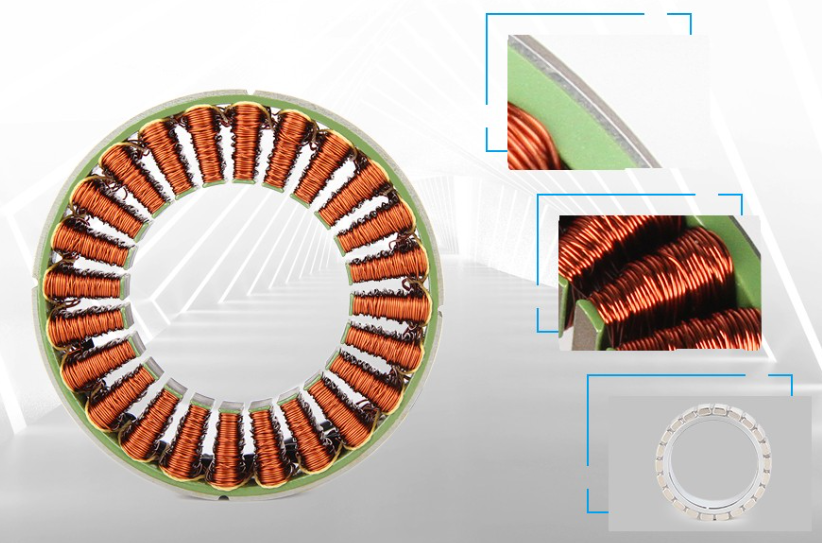
Brushless DC (BLDC) motors are widely used in AGV and autonomous mobile robot (AMR) systems due to their high efficiency, stable performance, and long service life.
They are particularly suitable for applications that require consistent motion and reliable torque output over extended operating periods.
Key advantages include:
High efficiency and low energy loss
Stable torque output across speed ranges
Long operational lifespan with low maintenance
Suitable for continuous duty applications
Because of these characteristics, BLDC motors are often the preferred choice for structured environments such as warehouses, factories, and logistics systems.
Integrated Robotic Actuators for Simplified Design
Integrated actuators combine motor, driver, and control electronics into a single compact unit. This design approach is increasingly used in mobile robots to simplify system architecture and reduce development complexity.
Compared to traditional motor setups, integrated solutions offer a more streamlined implementation process.
Typical benefits include:
Reduced wiring and mechanical assembly complexity
Faster system integration and development cycles
Improved system compactness and weight optimization
Easier control and parameter tuning
These advantages make integrated actuators particularly attractive for compact mobile robots and applications where space and integration efficiency are critical.
Gear Reduction and Torque Optimization
In many mobile robot designs, gear reduction is used to optimize torque output without significantly increasing mobile robotic motor size. This approach allows designers to better match motor characteristics to application requirements.
Gear systems can help achieve:
Higher output torque for heavy-load conditions
Improved low-speed control performance
Better adaptation to slope and resistance conditions
Flexibility in balancing speed and force requirements
However, gear selection must be carefully matched with motor characteristics to avoid efficiency loss and unnecessary mechanical complexity.
Motor selection for mobile robots is not a single-step decision, but a structured process that combines application requirements, mechanical constraints, and performance targets. A systematic approach helps ensure that the selected motor is properly matched to the robot’s real operating conditions.
In most engineering cases, motor selection can be broken down into several key stages, starting from defining system requirements and ending with configuration validation.
Step 1: Define Robot Parameters
The first step in motor selection is to clearly define the basic parameters of the robot system. These parameters form the foundation for all subsequent calculations and decisions.
Typical input parameters include:
Total robot weight (including payload)
Wheel diameter or drive mechanism specifications
Required maximum speed
Operating environment (indoor, outdoor, slope conditions)
Duty cycle and operating time requirements
At this stage, accuracy is important because even small deviations in system assumptions can significantly affect motor sizing later in the process.
In practical scenarios, AGVs often have clearly defined parameters, while inspection robots may require more flexible assumptions due to variable environments.
Step 2: Calculate Required Torque
Once the system parameters are defined, the next step is to estimate the required torque for motion. This is a key factor in determining whether a motor can meet the mechanical demands of the application.
In simplified terms, torque is influenced by:
Total load acting on the drive system
Wheel radius or transmission geometry
Rolling resistance and friction
Additional force requirements such as slope climbing
While detailed dynamic modeling can be used in advanced design stages, early-stage selection often relies on simplified estimation to identify a suitable torque range.
Step 3: Consider Real-World Factors (Slope, Friction)
In real operating environments, theoretical calculations alone are not sufficient. External factors must be included to ensure reliable performance under practical conditions.
Important considerations include:
Slope gradients in operating paths
Surface friction variations (smooth floor vs rough terrain)
Start-up resistance and transient loads
Mechanical losses in transmission systems
To ensure stability, engineers typically apply a safety margin to the calculated torque requirement. This helps prevent underperformance in unexpected conditions.
This becomes especially important for inspection robots, where environmental uncertainty is significantly higher than in typical AGV applications.
Step 4: Choose Motor Type and Configuration
After defining performance requirements, the final step is to select the appropriate motor type and system configuration.
At this stage, the selection is typically based on balancing performance, integration complexity, and system efficiency.
Common decision factors include:
BLDC motor vs integrated robotic actuator selection
Need for gearbox or direct drive configuration
Encoder and control system compatibility
Thermal and size constraints
The final motor choice should not only meet torque and speed requirements, but also align with system-level design priorities such as efficiency, compactness, and ease of integration.
To better understand the diversity of real-world applications, we can look at a wheeled robot project supported by CubeMars.
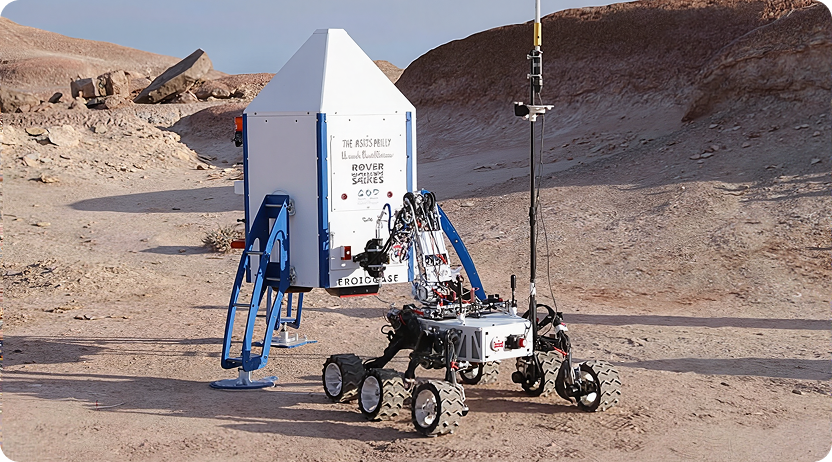
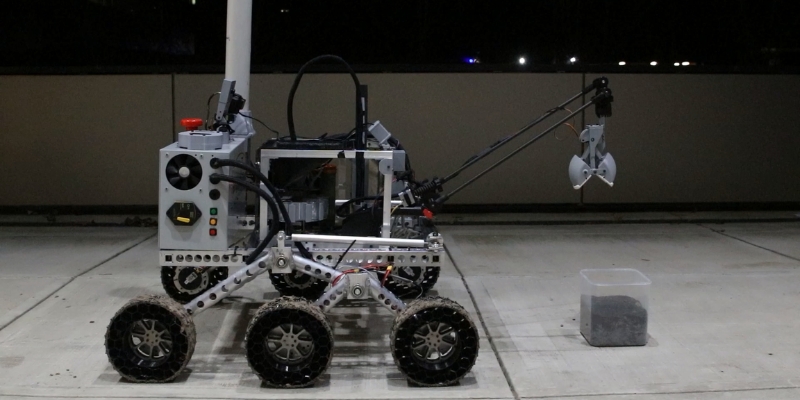
In a CubeMars-sponsored project, the Binghamton University Robotics Team developed a rover for the University Rover Challenge (URC). The robot was designed to operate in highly challenging environments inspired by planetary exploration scenarios. You can explore the full project here: CubeMars Sponsors Binghamton University Robotics Team for the 2024 University Rover Challenge (URC)
Application Characteristics
Unlike typical AGV systems operating in controlled indoor environments, this type of wheeled robot must function under significantly more complex conditions:
Uneven and unstructured terrain
Variable traction and resistance
Dynamic and unpredictable motion requirements
Integration of multiple subsystems within limited space
These characteristics are representative of many inspection and outdoor mobile robot applications.
Relevance to Motor Selection
Such real-world conditions highlight why motor selection cannot rely solely on nominal specifications. Instead, factors such as terrain variability, dynamic response, and environmental robustness become critical considerations.
This reinforces the importance of the structured selection approach discussed earlier.
Key Takeaway: Real-world mobile robot applications often involve far more variability than simplified design assumptions, making application-driven motor selection essential.
In many real AGV systems, integrated BLDC actuator solutions are selected to simplify mechanical design while maintaining sufficient performance headroom. Gear reduction may also be introduced depending on the required torque-speed balance.
Compared to AGVs, applying the same selection process to inspection robots would place greater emphasis on terrain adaptability and dynamic response, rather than continuous load efficiency.
After defining motor types and selection criteria, the next step is to map these requirements to practical motor solutions.
Rather than selecting motors based only on specifications, engineers often choose solutions by matching application scenarios with motor characteristics. The table below provides a simplified reference based on typical AGV and inspection robot requirements.
Recommended CubeMars Mobile Motor Solutions
| Application Scenario | Recommended Models | Key Features | Why It Fits |
| AGV / AMR (Heavy Load, Continuous Operation) | High radial load capacity, high torque density, robust structure | Designed for sustained loads and long duty cycles, ensuring stability and durability | |
| Medium AGV / Wheeled Robot | Dual encoder, stable long-term operation, high peak torque | Provides reliable continuous motion with strong control performance | |
| Inspection Robots(Compact / Dynamic) | AK60-39 V3.0 KV80 | Compact size, fast response, integrated design | Suitable for dynamic movement and space-constrained environments |
For AGVs, prioritize models with high torque stability and durability under continuous operation
For inspection robots, focus on compactness, responsiveness, and environmental adaptability
For complex systems, integrated actuator solutions can significantly reduce development complexity
In practice, the optimal motor selection depends on balancing torque, efficiency, and system integration based on the robot’s actual operating conditions.
Even with a structured approach, motor selection issues often arise when real-world operating conditions are not fully considered. For AGVs and inspection robots, these mistakes are typically linked to how the system is actually used, rather than how it is theoretically designed.
Underestimating Real Operating Load
A common mistake is sizing motors based on nominal load, without considering how the robot operates in practice.
For AGVs, this often means underestimating continuous load during long duty cycles.
For inspection robots, it usually involves ignoring terrain variation, slope, and frequent start-stop conditions.
Without accounting for these factors, motors may struggle to maintain stable motion or fail under peak demand.
Ignoring Application-Specific Thermal Conditions
Thermal performance is frequently evaluated under ideal conditions, but real applications introduce additional challenges.
AGVs operating continuously can accumulate heat over time, while inspection robots may face poor ventilation or higher ambient temperatures in confined or outdoor environments.
Failing to consider these conditions can lead to overheating, reduced efficiency, and shortened motor lifespan.
Mismatch Between Control and Motion Requirements
Another common issue is selecting motors without fully considering control behavior in the target application.
AGVs typically require smooth and stable motion over long distances, while inspection robots depend on fast response and precise control in dynamic environments.
If the motor and control system are not properly matched, the result can be unstable movement, poor positioning accuracy, or inefficient operation.
Motor selection for mobile robots is fundamentally about matching motor performance to real operating conditions. For both AGVs and inspection robots, the effectiveness of a motor is determined not only by specifications, but by how well it aligns with load characteristics, motion behavior, and environmental constraints.
While these robots share common technical foundations, their priorities differ in practice. AGVs focus on stability, efficiency, and continuous operation under consistent loads, whereas inspection robots require responsiveness, adaptability, and robustness in dynamic and unpredictable environments.
A structured, application-driven approach, combined with careful consideration of real-world factors and common selection pitfalls, helps ensure reliable performance and efficient system design. For engineers working on mobile robots, selecting the right motor is ultimately about achieving the best balance between performance, integration, and long-term reliability.