Create your CubeMars account

In recent years, robots have evolved from single-purpose automation equipment into intelligent systems capable of perceiving their surroundings, performing complex tasks, and interacting with humans. At WAIC 2026, humanoid robots with highly flexible motion capabilities, quadruped robots designed for complex environments, and intelligent robots for service and industrial applications demonstrated how rapidly robotic applications are expanding. These emerging scenarios require robots not only to “move,” but also to achieve more precise, smooth, and natural motions, such as dexterous object manipulation and rapid responses to changes in the external environment. Achieving these capabilities relies on the coordinated operation of multiple internal motion components.
Among these components, robotic actuators serve as the key link between control systems and mechanical structures, converting control signals into actual physical movement. Their performance directly affects a robot’s motion accuracy, response speed, and load capacity. As robotic applications continue expanding into more diverse environments, actuators featuring high torque density, precise control, and compact structural designs are becoming an essential foundation for achieving higher levels of robotic performance.

At WAIC 2026, one of the most significant changes in robotic development was not simply the diversity of robot forms, but the transition from “demonstrating technological capabilities” toward “performing real-world tasks.”
Across the exhibition floor, robots were shown entering an increasing number of practical application scenarios. Some robots demonstrated complex interactive tasks through highly flexible movements, while others focused on improving automation efficiency in logistics and manufacturing environments. Meanwhile, robots are also beginning to participate in public services and everyday assistance.
These developments reflect a major trend in robotics: robots are no longer just machines that execute predefined motions. Instead, they are evolving into intelligent systems capable of perceiving their environment, understanding tasks, and autonomously performing operations.
From Humanoid Robots to Intelligent Service Devices: Expanding Robotic Capabilities
Humanoid robots remained one of the major focuses at WAIC.
Compared with previous developments that mainly focused on whether robots could stand and walk, today’s humanoid robots are moving toward more complex task execution. Some robots displayed at the exhibition were already capable of performing movements such as dancing, presentations, and human-robot interaction. By combining vision, speech, and motion control technologies, these robots can achieve more natural communication with humans.
However, behind these seemingly simple movements lies the continuous coordination of multiple joints, including:
Maintaining body posture;
Synchronizing multi-joint movements;
Performing precise arm and hand operations.
As humanoid robots become closer to real-world applications, the requirements for their motion systems continue to increase. The performance of each joint is closely related to actuator output torque, control accuracy, and response capability. This is why humanoid robot actuators are gradually becoming a critical foundation for improving robotic mobility and interaction capabilities.
From Mobility to Manipulation: Robots Are Adapting to More Practical Tasks
In addition to humanoid robots, other robotic platforms showcased at WAIC also highlighted the expanding range of robotic applications.
For example, quadruped robots such as robotic dogs are exploring possibilities in complex environments through their flexible mobility. Compared with traditional mobile platforms, quadruped robots need to continuously adjust the posture and trajectory of multiple joints to maintain stable movement.
Meanwhile, robots designed for applications such as logistics sorting and pharmaceutical handling demonstrated the potential of robotics in automated operations. These robots typically perform repetitive tasks with high frequency over extended periods, requiring not only precise motion control but also stable and reliable operation.
Robots Are Entering More Daily Life and Public Service Scenarios
Beyond industrial and professional applications, robots showcased at WAIC also reflected a growing trend toward everyday use.
For example, in public service scenarios, robots can perform tasks such as guidance, assistance, and security inspection. In interactive environments, robots require more natural movements and faster response capabilities.
Compared with automation equipment operating in controlled environments, these applications are more open and unpredictable. As a result, robots require not only more advanced intelligent algorithms but also more flexible and reliable mechanical motion systems.
Diverse Applications Place Higher Demands on Robotic Motion Performance
The robots displayed at WAIC 2026 demonstrate that robotics is expanding into an increasingly wide range of fields:
From complex interactions performed by humanoid robots to dynamic movements achieved by quadruped robots; from precise operations in industrial environments to intelligent assistance in public services.
Although these robots differ in form and purpose, they all share a common challenge: how to enable robots to perform tasks with greater precision, speed, and stability.
This is why robotic motion systems have become a critical part of robotic development. As robotic applications continue to advance, core motion components such as actuators will play an increasingly important role in determining overall robotic performance.
The robots showcased at WAIC 2026 feature diverse forms and application scenarios. Whether they are humanoid robots capable of natural interaction, mobile robots designed to operate in complex environments, or specialized robots used in logistics, manufacturing, and public services, they all reflect the same development trend: robots are taking on increasingly complex tasks and require increasingly sophisticated motion capabilities.
In the past, robots mainly operated in relatively structured environments, repeatedly executing predefined movements. However, as robots gradually enter more open and dynamic application scenarios, they are required not only to perform basic movements such as walking, grasping, and transporting objects, but also to adjust their motions in real time according to environmental changes, achieving greater flexibility, stability, and precision.
As a result, competition in robotics is no longer focused solely on algorithm capabilities. It also depends on whether algorithms can be rapidly and accurately translated into real physical movement. This means that motion systems are becoming a fundamental factor in determining overall robotic performance.
From “Being Able to Move” to “Achieving High-Quality Motion”
A robot performing a single action is not simply a matter of driving one joint. Instead, it is the result of real-time coordination among multiple control components.
Taking humanoid robots as an example, a seemingly simple grasping action requires the control system to plan motion trajectories while coordinating multiple joints, including the shoulder, elbow, and wrist, to simultaneously control position, velocity, and torque. Similarly, when quadruped robots overcome obstacles or move at high speeds, they must continuously adjust the output of each joint to maintain body balance and motion stability.
As the number of degrees of freedom in robots continues to increase, multi-joint coordination becomes significantly more complex. Robots must not only “complete movements,” but also ensure that these movements are natural enough, responses are fast enough, and performance remains stable during long-term operation.
This has become one of the key directions in robotic motion development in recent years — advancing from simply being able to move toward achieving high-quality motion.
Robotic Joints Become the Core Carrier of Motion Capability
If control algorithms determine “how a robot should move,” then robotic joints determine whether those movements can actually be achieved.
All robotic movements, including locomotion, grasping, balance control, and posture adjustment, ultimately rely on individual joints. Each joint must accurately respond to control commands, continuously provide stable power output, and deliver real-time motion feedback to ensure coordination among multiple degrees of freedom.
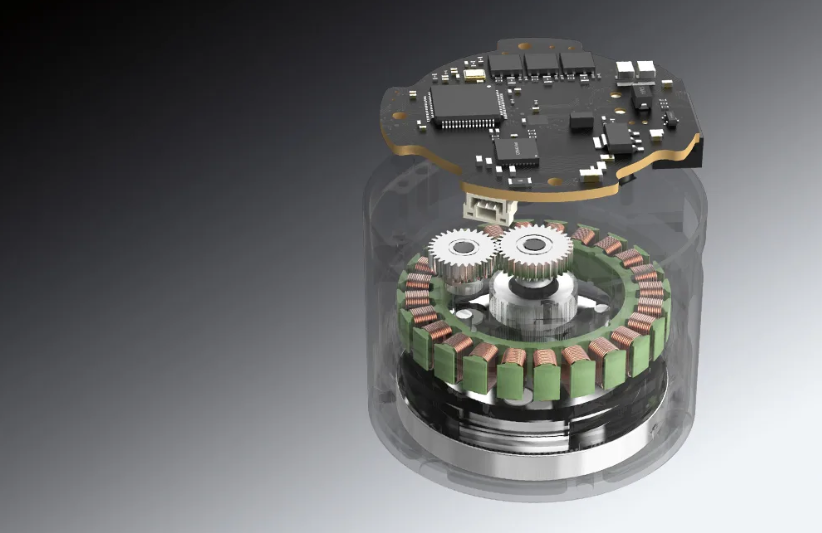
To meet these requirements, modern robotic joints typically integrate key components such as motors, reduction mechanisms, encoders, and drive systems through highly coordinated designs. This allows power output, motion control, and status feedback to form a complete closed-loop system.
This integrated approach not only determines the accuracy and response speed of robotic movements but also directly affects overall system compactness, reliability, and integration efficiency.
As robots continue evolving toward lightweight structures, high dynamics, and greater degrees of freedom, robotic joint systems are also advancing rapidly. As a critical component of robotic motion systems, actuators are becoming an essential link between control systems and mechanical movement, enabling robots to achieve more precise, flexible, and intelligent motion performance.
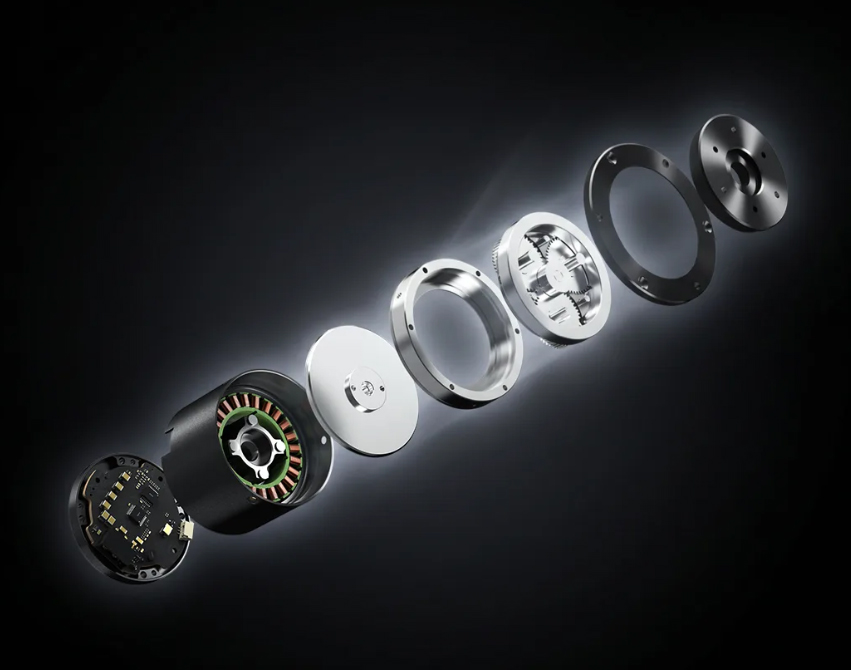
If algorithms determine whether robots can perceive their environment and plan actions, actuators determine whether those actions can ultimately be executed accurately and efficiently.
As robots continue transitioning from laboratories into real-world applications, the importance of motion systems is rapidly increasing. Whether it is a humanoid robot requiring natural human interaction, a quadruped robot designed for high-speed movement and dynamic balance, or a professional robot operating continuously in logistics, manufacturing, and public service scenarios, they all face the same fundamental challenge: how to achieve more precise, stable, and efficient motion within limited space.
This means that the focus of robotic competition is no longer limited to algorithm capabilities, but has expanded to the overall performance of the entire motion system. As the key link between control systems and mechanical movement, actuators have become one of the core components determining robotic motion quality.
Actuators Are Evolving from Power Components into Motion Control Cores
The improvement of robotic motion capabilities is not simply achieved by increasing motor power. Instead, it results from continuous optimization of the entire joint system.
Today, a modern robotic actuator typically integrates and coordinates key components such as motors, reduction mechanisms, encoders, and drive controllers. While delivering mechanical power, it also enables closed-loop control of position, velocity, and torque, while continuously providing feedback on motion status.
This means that the role of actuators has expanded far beyond their traditional function of simply “providing power.”
At the same time, the increasing number of degrees of freedom and growing joint complexity in robots have placed higher demands on actuator design. Developers are no longer focused only on output capability, but must also balance response speed, control accuracy, structural size, system integration, and long-term operational reliability.
In many ways, every improvement in robotic motion capability relies on the continuous advancement of actuator technology.
Growing Robotic Demands Are Driving Continuous Actuator Evolution
To meet the increasingly diverse requirements of robotic applications, modern robotic actuators are also undergoing significant changes in development direction.
Compared with the past, when the industry focused on individual performance metrics, today’s actuator designs emphasize comprehensive system performance. These changes are mainly reflected in the following areas.
High Torque Density: Creating Greater Design Flexibility
As robots continue moving toward lightweight and compact designs, the available space inside joints is becoming increasingly limited. This is especially true for critical areas such as wrists, elbows, and legs, where actuators must provide sufficient power output within highly constrained dimensions.
Higher torque density not only improves the robot’s power capability, but also enables greater degrees of freedom, reduced overall weight, and more flexible mechanical designs within the same physical space.
More Precise Motion Control: Enabling Complex Movement Coordination
Robotic motion has gradually evolved beyond traditional position control toward the coordinated use of multiple control methods, including position, velocity, torque, and impedance control.
For humanoid robots, multiple joints must maintain continuous and natural coordination during movement. For quadruped robots, actuators must rapidly adjust joint outputs during dynamic motion to maintain posture stability.
Therefore, actuators must not only respond quickly but also provide stable and predictable control performance.
High Integration: Reducing System Development Complexity
As robot degrees of freedom continue to increase, traditional distributed architectures face growing challenges, including complex wiring, difficult installation, and higher maintenance costs.
By highly integrating motors, reduction mechanisms, encoders, and drive controllers, modern actuator systems can improve reliability while reducing installation space. This helps developers shorten the design and tuning cycles of complete robotic systems and improve overall integration efficiency.
Long-Term Reliability: Supporting Real-World Applications
Robots are increasingly being deployed in environments that require continuous operation over extended periods.
Whether in logistics handling, industrial manufacturing, or public service applications, actuators must withstand challenges such as frequent start-stop cycles, continuous operation, and complex working conditions.
Consistent output performance, reliable mechanical structures, and long service life have become essential criteria for evaluating robotic actuators. They are also fundamental to enabling large-scale robotic deployment.
Different Robots Require Different Actuator Solutions
Although robotic actuators share common development trends, different types of robots have different requirements depending on joint locations, load demands, and motion characteristics.
| Application | Key Actuator Requirements |
| Humanoid Robots | High power density, lightweight design, precise torque control, multi-joint coordination |
| Quadruped Robots | Fast dynamic response, stable continuous output, high reliability |
| Industrial Robots | High repeatability, long-term continuous operation, consistent performance |
For this reason, robotic actuator development is gradually moving from a “general-purpose” approach toward more “application-specific” solutions.
Developers are paying greater attention to factors such as joint space limitations, output requirements, control methods, and installation conditions, selecting actuator solutions that better match specific applications.
Based on this trend, the following section will further explore how high torque density, highly integrated designs, and precise motion control are being realized in practical robotic actuator products.
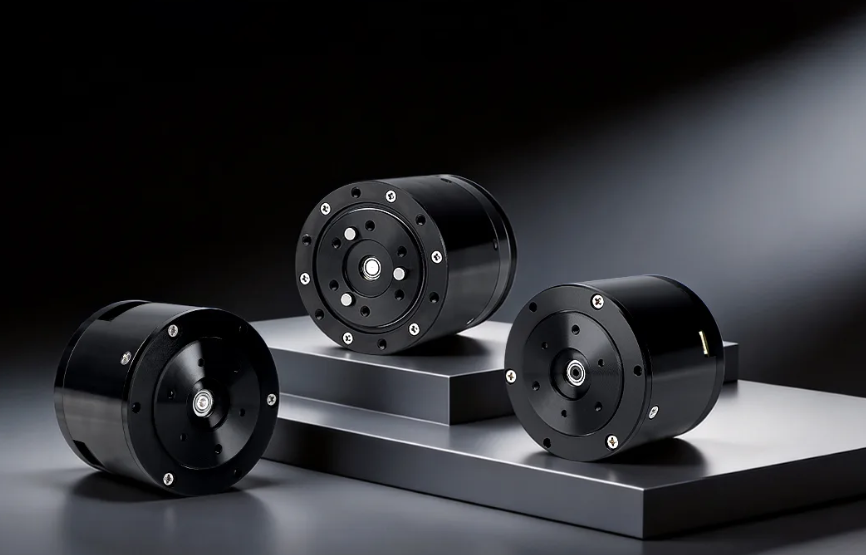
As robotic applications continue to expand, actuators are evolving from simple power transmission components into critical modules that directly influence robotic motion performance.
Different types of robots have different requirements for joint drive systems. For example, humanoid robot arm and wrist joints typically require lightweight, fast-response actuators to improve end-effector flexibility. Leg joints and quadruped robots place greater emphasis on power output, stability, and dynamic motion capabilities. Meanwhile, industrial and service robots often require actuators that can achieve reliable operation and precise control within limited installation spaces.
Therefore, there is no single actuator solution that can satisfy all robotic applications. Instead, actuator systems need to be optimized based on the structural characteristics, load requirements, and motion patterns of different robotic joints.
Based on this trend, CubeMars has further upgraded its AK Series robotic actuators and introduced three new products: AK40-10 V3.0 KV170, AK45-10 V3.0 KV75, and AK45-36 V3.0 KV80. These actuators provide more flexible power solutions for different robotic joint applications.
All three models adopt a highly integrated design that combines the motor, planetary gearbox, and drive system into a compact module. While maintaining a small form factor, they achieve a balanced combination of power output, control performance, and installation convenience.
From Compact Design to Precise Control: Meeting Robotic Motion Requirements
As robots continue to increase their degrees of freedom and the number of joints grows, actuators must not only provide sufficient power but also achieve an optimal balance between size, weight, and control accuracy.
The AK Series actuators adopt a highly integrated structure, combining the motor, reduction mechanism, and drive module within a compact package. This reduces additional connections and installation requirements commonly found in traditional distributed designs, making them particularly suitable for space-constrained robotic joint applications.
For high-degree-of-freedom platforms such as humanoid robots and lightweight robotic arms, compact joint designs enable more flexible mechanical layouts and help improve overall system integration.
In terms of motion control, all three models are optimized around the need for precise and responsive robotic joint control. They support both Servo and MIT control modes, while combining encoder feedback and advanced control algorithms to provide flexible motion control strategies. This allows developers to select suitable control approaches based on different robotic application requirements.
Furthermore, the highly integrated design enables easier deployment across various robotic platforms. From laboratory prototypes to real-world robotic systems, actuators must not only deliver strong performance but also maintain stable operation over extended periods.
Therefore, the AK Series focuses on achieving a comprehensive balance between power output, control precision, and overall reliability, providing a more complete motion solution for robotic systems.
Real-World Performance Demonstrates Actuator Motion Capabilities
For robotic actuators, specifications can reflect fundamental performance, but actual operating conditions provide a clearer understanding of their capabilities in real applications.
During robotic movements, actuators must continuously perform acceleration, deceleration, position adjustments, and multi-joint coordination. Their response speed, motion smoothness, and control stability directly affect the overall performance of the robot.
Therefore, in addition to parameters such as torque and speed, observing actual operation demonstrations is also an important reference during robotic development.
The following video demonstrates the real operating performance of AK Series actuators, providing a more intuitive view of their motion response, control performance, and stability during continuous operation.
Compared with simply reviewing specification sheets, real-world operation videos help developers better understand actuator motion characteristics and evaluate how different actuators match specific robotic joint requirements.
Three Actuators, Tailored Choices for Different Robotic Joints
Although AK40-10 V3.0, AK45-10 V3.0, and AK45-36 V3.0 all belong to the AK Series, each model is optimized for different robotic joint requirements, creating complementary advantages in terms of size, reduction ratio, and output capability.
| Product Model | Design Characteristics | Suitable Applications |
| AK40-10 V3.0 KV170 | Compact and lightweight design, emphasizing fast response and flexible movement | Humanoid robot wrists, small robotic arms, lightweight robotic joints |
| AK45-10 V3.0 KV75 | Balanced performance between size, speed, and output capability | Humanoid robot elbows, shoulders, and general robotic joints |
| AK45-36 V3.0 KV80 | Higher reduction ratio design, providing stronger output capability and holding torque | Quadruped robots, high-load joints, and applications requiring stable output |
Among them, AK40-10 V3.0 KV170 focuses on compact size and rapid response. With a weight of approximately 185g and a 10:1 planetary reduction structure, it delivers high power density for lightweight robotic applications. Meanwhile, AK45-36 V3.0 KV80 adopts a higher 36:1 reduction ratio to achieve stronger output capability, reaching a peak torque of 24N·m, making it more suitable for robotic joints requiring higher load capacity.
The AK45-10 V3.0 KV75 sits between these two models, focusing on the balance between output capability, compact dimensions, and motion response. It provides a flexible option for robotic applications requiring comprehensive performance.
From lightweight designs with high dynamic response to applications requiring higher loads and stable output, these three actuators address different robotic joint requirements. This application-oriented design approach also reflects an important trend in robotic actuator development: as robotic applications become increasingly diverse, actuators need to be optimized for specific tasks rather than simply pursuing a single performance metric.
The various robotic applications showcased at WAIC 2026 demonstrate that robots are continuously expanding beyond the boundaries of traditional automation equipment and entering more diverse and complex real-world environments. From natural human interaction enabled by humanoid robots, to dynamic movement in challenging environments achieved by quadruped robots, and practical applications in industrial, logistics, and public service fields, robots are moving toward higher degrees of freedom, stronger adaptability, and greater intelligence.
As robots take on increasingly complex tasks, motion capability has become a key factor determining their practical value. Algorithms provide robots with perception and decision-making capabilities, while actuators transform these intelligent commands into precise and stable physical movements. In the future, actuators featuring high torque density, precise control capabilities, and highly integrated designs will continue to drive robots from simply “being able to move” toward “being able to complete complex tasks with high-quality performance.”
As an important component of robotic motion systems, CubeMars continues to focus on the diverse requirements of different robotic applications. Through products such as the AK Series actuators, CubeMars provides developers with more flexible, efficient, and reliable motion solutions.As robotics technology continues to advance, actuators will play an increasingly important role in connecting intelligence with physical movement and enabling robots to enter a wider range of application scenarios.


