Create your CubeMars account

The number of motors in a robot can range from just one to dozens, depending on its complexity, structure, and intended application.There is no universal rule, because robotic motor count depends on robot complexity, mechanical design, intended function, and system constraints. Ultimately, determining how many motors a robot can incorporate requires careful engineering analysis, balancing motion requirements, structural considerations, and practical limitations.
To understand how many motors a robot actually needs, it is essential to first examine the key factors that define motor count in real-world robotic systems.
The number of motors in a robot is not arbitrary. In engineering practice, motor count is derived from a combination of the following key factors:
Degrees of Freedom (DOF)
Degrees of freedom (DOF) define how many independent movements a robot can perform. In most robotic systems, each degree of freedom requires at least one actuator:
A simple wheeled robot may have 2 DOF (forward motion and turning)
A typical robotic arm requires 6 DOF for full spatial manipulation
Humanoid robots often exceed 20 DOF to replicate human motion
As a general rule:
The number of motors is closely aligned with the number of degrees of freedom required by the system.However, this is not always a strict one-to-one relationship, as some designs use coupled mechanisms or shared actuation.
Load and Torque Requirements
Motor quantity is also influenced by how much load each joint or mechanism must handle.
High-load applications may require:
Larger motors
Multiple motors per joint
Lightweight systems may reduce motor count by using lower-torque solutions
For example:
Industrial robotic arms handling heavy payloads may require higher torque at key joints
Wearable robots prioritize lightweight actuation to reduce user fatigue
This means motor selection and motor count are often interdependent.
Motion and Kinematic Structure
The mechanical design of the robot directly affects how many motors are needed:
Serial structures (e.g., robotic arms)
Typically require one motor per joint Parallel or cable-driven systems
May reduce motor count by distributing force across multiple joints Differential or coupled mechanisms
Allow multiple motions to be driven by fewer motors Different kinematic architectures can significantly change the required number of actuators, even for similar motion outputs.
Control Architecture and System Complexity
The control system plays a critical role in determining how many motors a robot can effectively manage.
1. More motors require:
More control channels
Higher computational demand
More complex synchronization
2. Fewer motors:
Simplify control
Reduce system integration difficulty
In practice, engineers must ensure that the control system can handle the selected motor configuration without introducing instability or latency.
Power, Space, and Integration Constraints
Real-world systems are always constrained by physical and electrical limitations:
Power supply: limits total motor count and output
Space constraints: restrict motor size and placement
Thermal management: affects continuous operation
Wiring and integration complexity: increases with motor count
In compact robotic systems, these constraints often become the limiting factor rather than motion requirements.
These factors define the theoretical motor requirements of a robot. However, in practical engineering, the final motor count is rarely determined by theory alone.
Design decisions often involve balancing performance, complexity, and system efficiency—leading to important engineering trade-offs that further refine the optimal number of motors.
While theory sets the stage for motor count, real-world designs show a more nuanced picture. The type of robot determines not just how many actuators are needed, but where and why they are placed. Performance priorities, stability needs, and motion complexity all shape actuation strategies differently.
Wheeled Robot Motors — Efficiency Through Minimalism
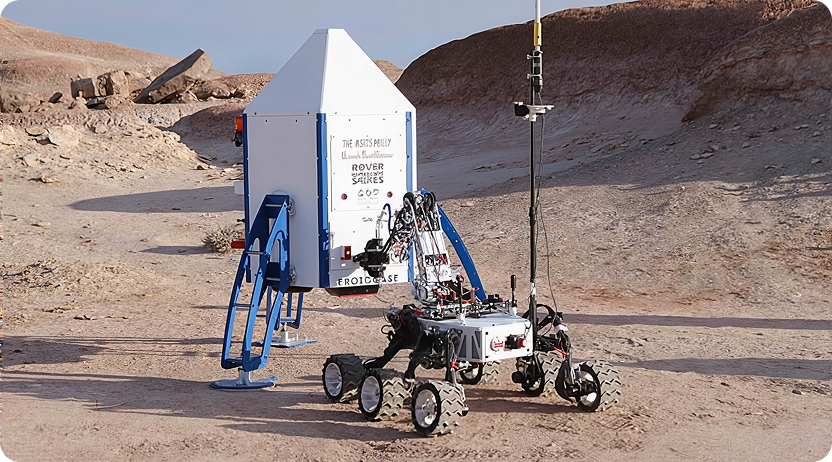
Wheeled robots achieve movement with surprisingly few actuators. Their primary objective is straightforward locomotion, often achieved without complex joint mechanisms. Engineers focus on drive strategy rather than joint articulation, making them inherently efficient.
Key characteristics:
1. Differential drive simplicity – Two motors control the left and right wheels, enabling forward, backward, and turning motion.
2. Optional four-wheel drive – Increases traction and load distribution without adding complex steering mechanisms.
3. Low control overhead – Fewer motors simplify synchronization and reduce computational requirements.
In practice, additional actuators are only added to support extra functionality, such as manipulators or sensors.
Insight: Motor count is minimal because motion complexity is low, not because performance requirements are weak.
Quadruped Robot Motors — Stability and Coordination
Quadruped robots highlight how motor requirements escalate with dynamic balance demands. Each leg must control multiple joints to maintain stability, absorb impact, and adapt to uneven terrain.
Illustrative motor allocation:
2–4 motors per leg depending on DOF
Additional motors may control ankle pitch or roll for terrain adaptation
High-speed locomotion requires precise torque distribution across all joints
These systems show that motor count grows with both DOF and stability needs. Unlike wheeled robots, missing even one actuator can compromise gait control. Why this matters:
Every actuator contributes to posture control and force distribution.
Engineers balance motor quantity against weight, power, and control complexity.
Robotic Arm Motors — Precision and Workspace Flexibility
Robotic arms rely on serial kinematics, where each joint directly affects end-effector positioning. The number of motors determines the arm’s reach, dexterity, and ability to perform complex tasks.
Design trade-offs are evident:
6 motors for standard 6 DOF industrial arms
Extra motors added for tool changers or redundancy
Motor size and torque must match payload and reach requirements
Rather than simply counting motors, engineers assess how motor placement influences accuracy and stability. A single high-torque motor can replace multiple smaller ones if space or weight constraints exist.
Summary point: Motor count is not just a number—it's a reflection of functional intent, not just physical joints.
Humanoid Robots — Complexity Amplified
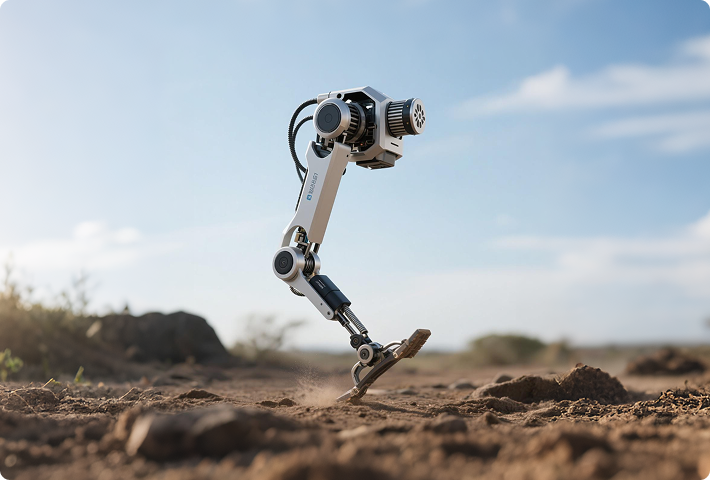
Humanoids are the ultimate test of actuator planning. With multiple limbs, a torso, and a head, motor distribution must support both dynamic locomotion and fine manipulation.
Typical features:
20–40+ motors for full-body control
Lower limb motors for walking and balance
Upper limb motors for dexterity
Torso and neck motors for orientation
Engineering perspective:
1. High motor count enables human-like motion but adds control and power challenges.
2. Compact, high-performance actuators reduce weight while maintaining torque.
3. Coordination across dozens of actuators demands advanced algorithms and real-time feedback.
Takeaway: The humanoid motor count illustrates the trade-off between biological mimicry and practical feasibility.
Wearable Robots — Targeted Assistance
Exoskeletons and wearable robots prioritize user comfort and motion alignment. Unlike fully autonomous robots, every additional actuator affects weight and user effort.
Key motor allocation strategies:
2–10 motors targeting critical joints (hip, knee, ankle)
Actuators optimized for torque-to-weight ratio
Placement designed to minimize interference with natural movement
Design philosophy:
Fewer, higher-performance motors are preferred
Each actuator’s contribution is measured against user fatigue and safety
Cross-Category Observations
Across all robot types, motor count decisions are shaped by three recurring factors:
1. Function over form – What the robot must do outweighs theoretical DOF
2. Stability and control – Additional motors are justified only if they improve motion reliability
3. Integration constraints – Weight, power, and control bandwidth limit feasible actuator counts
Determining the optimal number of motors is rarely a simple arithmetic exercise. While mechanical design and DOF provide a theoretical baseline, engineering practice requires balancing multiple competing objectives simultaneously.
Each motor adds not only torque and flexibility but also weight, energy demand, control complexity, and potential integration challenges. Successful designs arise from carefully evaluating the marginal benefit of each actuator relative to its cost—mechanical, electrical, and computational.
In this context, motor selection becomes a system-level optimization problem, where performance, reliability, and practicality must all converge.
Performance vs. Complexity
Adding more motors generally improves a robot’s ability to manipulate objects, maintain stability, or traverse complex terrain. However, the marginal gains diminish rapidly if the system cannot effectively coordinate the additional actuators.
Key considerations include:
Control complexity: More motors require advanced synchronization algorithms, precise timing, and potentially distributed control architectures. Without adequate control, extra actuators may introduce oscillations, delay, or instability.
Mechanical integration: Each additional motor occupies space, increases joint density, and can complicate assembly. In compact robotic arms or humanoids, careful actuator placement is crucial to avoid collisions or excessive leverage.
Power and thermal management: Every motor draws current, and densely packed actuators generate heat that must be dissipated, particularly in wearable or enclosed systems.
Insight: Engineers often evaluate whether the benefit of one more motor outweighs the additional system complexity and potential failure points.
Weight and Size Constraints
Weight is a primary constraint in mobile and wearable robots. Additional motors increase mass, impacting not only energy efficiency but also dynamic performance and user comfort.
Observations from engineering practice:
1. Heavy mobile robots require motors with higher torque, which themselves are larger and heavier, creating a feedback loop that can escalate total system weight.
2. Wearable robots and exoskeletons must minimize load on the user; here, each added actuator is evaluated for necessity versus added burden.
3. Thermal and spatial constraints limit how many actuators can be compactly integrated into a joint or segment.
By strategically selecting fewer, high-torque, compact motors, designers can achieve target performance while keeping weight and size manageable.
Engineering principle: The ideal motor count balances actuation needs against physical constraints, rather than blindly maximizing DOF.
Cost vs. Capability
In addition to mechanical and electrical constraints, cost is a critical consideration. More motors increase parts, assembly labor, and maintenance requirements.
High motor count systems offer maximum flexibility, redundancy, and dexterity, but with higher upfront and lifecycle costs.
Lower motor count systems are simpler, lighter, and less expensive, but may require creative mechanical designs—such as coupled joints or differential drives—to achieve similar motion capabilities.
Example insight: A 6-DOF robotic arm can be built with either six independent actuators or a combination of fewer high-torque motors with mechanical couplings. While the latter reduces motor count and cost, it may introduce additional mechanical complexity and reduce precision.Trade-off evaluation is a balancing act between capability, cost, and long-term maintainability.
Control Strategy Considerations
The number of motors directly influences control architecture:
Fewer motors may require complex kinematic linkages to achieve the same range of motion, demanding sophisticated mechanical engineering but simpler control.
More motors allow for decoupled joints and independent motion, simplifying kinematics but increasing computational requirements, communication bandwidth, and feedback sensor integration.
Real-world applications often strike a balance: sufficient actuators for precision and redundancy, but not so many that control complexity or failure risk outweighs the benefit.
Practical CubeMars Perspective
Modular, high-performance motors—like the CubeMars AK40, AK45, and AK60 series—illustrate how modern actuation solutions support trade-off optimization:
High torque density reduces the need for multiple motors per joint, simplifying mechanical design.
Compact, integrated modules enable tighter actuator placement, easing integration in space-constrained designs.
Flexible modularity allows engineers to scale actuator count based on performance needs, supporting both industrial robots and wearable applications without redesigning the entire system.
By leveraging modular, high-performance actuators, engineers can achieve desired motion and stability while minimizing excess complexity, effectively addressing the trade-offs outlined above.
Cross-Category Takeaways
Across all robot types, three recurring patterns emerge in motor count optimization:
1. Performance improvement vs. system complexity: More motors enhance dexterity and stability but increase integration challenges.
2. Physical constraints: Weight, volume, and thermal limits often define the maximum feasible actuator count.
3. Cost-effectiveness: High-quality, high-torque actuators can reduce the need for multiple low-torque motors, balancing capability with investment.
Bottom line: Motor count is always a strategic decision. Each actuator must justify its presence through tangible gains in performance, reliability, or efficiency. System-level thinking, informed by both engineering principles and modular actuator technologies, produces optimized robotic solutions.
The number of motors a robot uses is highly context-dependent, ranging from a single actuator to dozens. While theoretical calculations based on degrees of freedom (DOF) provide a starting point, practical engineering always balances performance, weight, cost, and control complexity. Understanding typical motor ranges helps engineers make informed design decisions without over-engineering or underpowering a system.
| Robot Type | Typical Motor Count | Primary Design Focus | Practical Notes |
| Wheeled Robots | 2–4 | Efficient locomotion | Minimal actuators for forward/backward motion and turning; extra motors only for manipulators or added functionality |
| Quadrupeds | 8–16 | Stability & gait coordination | Each leg uses 2–4 motors; extra actuators control ankle pitch/roll for uneven terrain |
| Robotic Arms | 6–12 | Workspace flexibility & precision | Motor count matches DOF and payload; redundancy or tool changers may increase count |
| Humanoids | 20–40+ | Full-body dynamic motion | Motors across limbs, torso, and head; high count supports dexterity but increases control complexity |
| Wearable Robots / Exoskeletons | 2–10 | User comfort & motion assistance | Focus on critical joints; fewer, high-performance motors reduce weight and user fatigue |
Determining the Right Motor Count
Rather than a single “correct number,” engineers select motor counts to meet specific motion and performance needs while considering physical, control, and cost constraints. Using modular, high-performance actuators like CubeMars series allows teams to:
Scale motor count efficiently according to application requirements.
Reduce weight and complexity without compromising functionality.
Maintain flexibility for future upgrades or system modifications.
Bottom line: Motor count is always a strategic engineering decision—it reflects the robot’s functional intent, not just the number of joints.
Selecting the optimal number of motors for a robot is more than a theoretical exercise—it requires system-level thinking. Motor count is not dictated solely by degrees of freedom or joint count; it reflects the balance between intended motion, mechanical design, and practical constraints. Making the right decision ensures the robot meets performance goals without unnecessary complexity, weight, or cost.
Assess Motion Requirements and Degrees of Freedom
The starting point for any design is understanding what motions the robot must perform:
Degrees of Freedom (DOF) vs. functionality: Each independent motion often requires at least one actuator, but some motions can be coupled or shared.
Task-specific needs: Manipulation tasks, dynamic locomotion, or precise orientation control may justify additional motors.
Redundancy for reliability: In high-stakes environments, extra actuators can provide backup without sacrificing efficiency.
Insight: Carefully mapping motion requirements to DOF prevents over-engineering while ensuring all necessary functions are achievable.
Consider Mechanical Structure and Kinematics
The robot's structural architecture directly affects how many motors are truly necessary:
Serial mechanisms: Typically one motor per joint, offering precise control but potentially higher motor counts.
Parallel or cable-driven systems: Can distribute forces across multiple joints, reducing actuator requirements.
Coupled mechanisms or differential drives: Allow multiple motions to be driven by fewer motors, optimizing efficiency.
Takeaway: Understanding the kinematic design allows engineers to align motor placement with functional needs, avoiding unnecessary additions.
Evaluate System Constraints
Once motion and structure are clear, practical limitations shape final decisions:
Control and computation limits: More actuators require sophisticated synchronization, communication bandwidth, and real-time feedback.
Weight, space, and power: Mobile and wearable robots are especially sensitive to actuator mass and size; thermal management also constrains continuous operation.
Cost and maintenance: Each additional motor increases parts, assembly effort, and potential maintenance requirements.
Engineering principle: Optimal motor count balances performance gains against complexity, physical limitations, and lifecycle cost.
Decision Framework
A structured approach helps transform theory into actionable design choices:
1. Define motion requirements and DOF.
2. Map motions to mechanical structure and kinematics.
3. Assess control, weight, space, and power constraints.
4. Determine motor count and placement.
5. Iterate using modular actuators to refine performance without redesigning the entire system.
By following this framework, engineers can tailor motor counts precisely, ensuring that each actuator contributes meaningfully to performance and functionality.
After determining the optimal motor count, selecting high-performance, modular actuators ensures that the robot achieves its intended functionality while maintaining efficiency, reliability, and scalability. CubeMars actuator modules are designed to meet these demands across a variety of robotic applications.
Modular Actuators for Flexible Motor Count
One of the biggest challenges in robot design is aligning the number of motors with performance, weight, and cost constraints. CubeMars modular motors provide engineers with the flexibility to:
Scale motor count efficiently according to application requirements.
Adjust torque and speed independently without redesigning the system.
Simplify integration in compact or space-constrained designs.
This modularity allows teams to iterate quickly during prototyping and optimize for production-ready systems without compromising performance.
High Torque Density and Compact Design
CubeMars actuators,such as the AKseries combine brushless motors, planetary gearboxes, and drivers in a single unit. This design provides:
High torque density: Fewer motors can achieve the same force output, reducing overall system weight.
Compact footprint: Enables tight placement in serial, parallel, or coupled kinematic structures.
Integrated control: Supports both motion and servo modes with adaptive PID tuning for precise actuation.
By leveraging high-performance, compact actuators, engineers can maintain required motion capability while minimizing excess hardware and integration complexity.
Application-Based Recommendations
| Robot Type | Recommended CubeMars Modules | Benefits |
| Wheeled Robots | Efficient differential or four-wheel drive, optimized for 2–4 motor setups | |
| Quadrupeds | High-torque, compact modules reduce total motor count while supporting stable gait | |
| Robotic Arms | AK60-6 V3.0 KV80 | Precise control for 6–12 motor serial arms with payload flexibility |
| Humanoids | AK45-36 KV80 | Scalable full-body control, supporting 20–40+ motors without integration complexity |
| Wearable Robots / Exoskeletons | AK70-10 KV100 | Lightweight, high-performance modules for user comfort and essential motion assistance |
Why CubeMars Works for Motor Count Optimization
Reduce redundancy: High-torque modules allow fewer actuators to achieve the same performance.
Ease system integration: Compact modules and built-in drivers simplify wiring and control complexity.
Support future upgrades: Modular design lets engineers increase or decrease motor count without major redesigns.
Reliable performance: Brushless motors and optimized manufacturing ensure stable, repeatable operation in industrial, mobile, or wearable robots.
Takeaway: Choosing the right CubeMars actuator modules enables teams to align motor count with performance goals, balancing functionality, weight, cost, and integration constraints efficiently.
Determining the ideal number of motors in a robot is a strategic engineering decision rather than a fixed rule. Motion requirements, mechanical structure, and system constraints—such as weight, space, and control complexity—collectively define how many actuators are truly necessary. More motors do not automatically improve performance; each actuator should serve a specific functional purpose while balancing efficiency and reliability.
Modular, high-performance actuators allow engineers to tailor motor counts to the robot’s application. By combining precise torque, compact design, and flexible integration, these modules help achieve required motion and stability with fewer actuators, minimizing weight, complexity, and cost while maintaining optimal performance.


