Créer votre compte CubeMars

Lors de la conception de systèmes sous-marins tels que les ROV, les robots d’inspection ou les drones marins, une hypothèse revient souvent dès les premières étapes du développement :
« Un moteur BLDC standard peut-il être utilisé sous l’eau s’il est correctement étanchéifié ? »
À première vue, l’idée semble pratique. Les moteurs à courant continu sans balais (BLDC) sont largement utilisés, économiques et offrent un rendement élevé. Avec l’ajout d’un boîtier étanche, ils peuvent sembler capables de fonctionner de manière similaire à un propulseur sous-marin.
Cependant, dans les applications réelles, cette approche conduit fréquemment à des défaillances critiques.
Les ingénieurs et développeurs qui tentent d’adapter des moteurs BLDC standards à un usage sous-marin rencontrent souvent des problèmes tels que :
infiltration d’eau due à une étanchéité peu fiable dans le temps
corrosion causée par une exposition prolongée à l’humidité ou à l’eau salée
surchauffe due à une gestion thermique insuffisante
poussée instable ou insuffisante pour la propulsion
réduction de la durée de vie et arrêts imprévus du système
Ces problèmes ne sont pas simplement liés à une mauvaise mise en œuvre — ils résultent d’une incompréhension fondamentale de la conception des systèmes de propulsion sous-marine.
Un propulseur sous-marin n’est pas simplement un moteur étanche.
Il s’agit d’un système entièrement intégré, spécialement conçu pour fonctionner en environnement immergé, où des facteurs tels que la pression, la dynamique des fluides, l’étanchéité et la résistance à la corrosion doivent être considérés conjointement.
Comprendre la différence entre un propulseur sous-marin conçu spécifiquement et un moteur BLDC standard est donc essentiel — non seulement pour les performances du système, mais aussi pour la fiabilité à long terme et la réussite du projet.
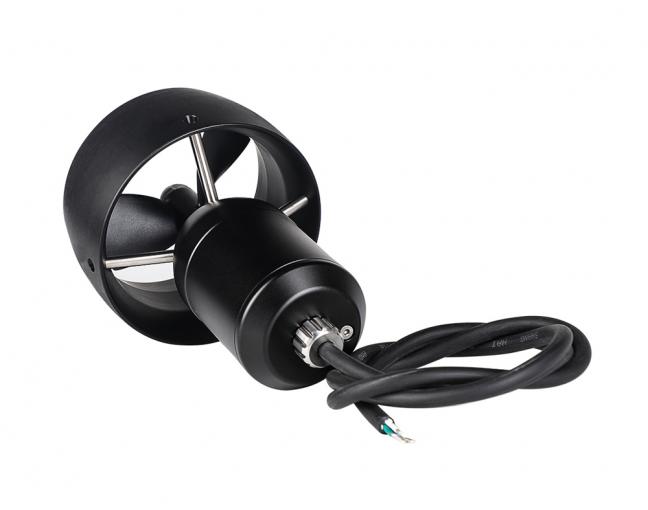
Un propulseur sous-marin est un dispositif de propulsion spécialement conçu pour générer une poussée dans des environnements immergés. Il est couramment utilisé dans des systèmes tels que les véhicules téléopérés (ROV), les véhicules sous-marins autonomes (AUV) et diverses applications de robotique marine.
Contrairement aux moteurs électriques standards, principalement conçus pour fournir une sortie rotative (couple et vitesse), un propulseur sous-marin est conçu pour convertir la puissance du moteur en une poussée contrôlée et efficace dans l’eau.
À la base, un propulseur intègre généralement plusieurs composants dans un système unique et optimisé :
un moteur adapté au fonctionnement en immersion
une hélice conçue pour une efficacité hydrodynamique
un carter étanche empêchant l’infiltration d’eau
des structures internes assurant la résistance à la pression et la fiabilité à long terme
Ces éléments ne sont pas indépendants — ils sont conçus pour fonctionner ensemble comme un système unifié. L’interaction entre le moteur, l’hélice et le fluide environnant joue un rôle essentiel dans la détermination des performances globales. C’est une distinction clé.
Alors qu’un moteur BLDC standard se concentre sur la sortie électrique et mécanique dans l’air, un propulseur sous-marin doit prendre en compte la dynamique des fluides, les conditions de pression, le transfert thermique dans l’eau et la résistance à la corrosion — le tout dans une structure compacte et fiable.
En d’autres termes, un propulseur n’est pas simplement un moteur placé sous l’eau. C’est un système de propulsion conçu dès l’origine pour un fonctionnement en milieu immergé.
Cette différence de philosophie de conception est à l’origine de l’écart de performance entre les propulseurs sous-marins et les moteurs BLDC standards — un écart qui devient particulièrement évident dans les applications réelles.
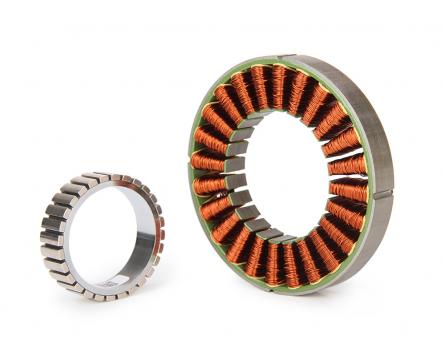
Pour mieux comprendre pourquoi les propulseurs sous-marins et les moteurs BLDC standards ne sont pas interchangeables, il est utile de comparer leurs caractéristiques principales côte à côte :
| Caractéristique | Propulseur sous-marin | Moteur BLDC standard |
| Environnement de fonctionnement | Totalement immergé | En air |
| Conception d’étanchéité | Étanchéité avancée (dynamique) | Généralement inexistante |
| Méthode de refroidissement | Refroidissement par eau | Refroidissement par air |
| Type de sortie | Poussée (N / kgf) | Couple et vitesse de rotation |
| Matériaux | Résistants à la corrosion (qualité marine) | Matériaux industriels standards |
| Intégration système | Système de propulsion complet | Moteur seul |
Bien que ce tableau donne une vue d’ensemble, les différences réelles résident dans la manière dont ces systèmes sont conçus pour leurs environnements respectifs.
1. Système d’étanchéité : protection statique vs ingénierie dynamique
L’un des défis les plus critiques en milieu sous-marin est d’empêcher l’infiltration d’eau — en particulier autour des composants en rotation tels que les arbres.
Les propulseurs sous-marins sont conçus avec des systèmes d’étanchéité avancés capables de résister à une exposition continue à l’eau, notamment :
joints dynamiques d’arbre
structures d’étanchéité par joints toriques (O-ring)
conceptions remplies d’huile ou équilibrées en pression (dans certaines configurations)
Ces solutions sont conçues pour maintenir leur performance d’étanchéité dans le temps, même sous pression et en mouvement.
À l’inverse, les moteurs BLDC standards ne sont pas conçus pour fonctionner en immersion. Même lorsqu’ils sont placés dans des boîtiers externes, il est difficile de garantir une étanchéité fiable sur le long terme — en particulier au niveau des connexions et des interfaces en rotation.
Dans les systèmes sous-marins, l’étanchéité ne se limite pas au boîtier : elle implique le maintien d’une étanchéité dynamique dans des conditions réelles de fonctionnement.
2. Mécanisme de refroidissement : contrainte vs avantage
La gestion thermique joue un rôle essentiel dans les performances et la durée de vie des moteurs.
Les moteurs BLDC standards reposent généralement sur un refroidissement par air, utilisant le flux d’air ambiant pour dissiper la chaleur. Une fois immergé, ce mécanisme devient inefficace, entraînant une accumulation de chaleur et une baisse d’efficacité.
Les propulseurs sous-marins, en revanche, sont conçus pour tirer parti du fluide environnant.
L’eau possède une conductivité thermique bien supérieure à celle de l’air, ce qui permet aux systèmes correctement conçus d’assurer une dissipation thermique efficace, directement ou indirectement.
Lorsqu’il est bien exploité, l’environnement sous-marin devient un avantage en matière de refroidissement plutôt qu’une contrainte.
3. Objectif de sortie : rotation vs poussée
Une différence fondamentale réside dans l’objectif de sortie :
Un moteur BLDC est conçu pour fournir un mouvement de rotation (couple et vitesse en RPM).
Un propulseur sous-marin est conçu pour générer une poussée, c’est-à-dire la force nécessaire pour déplacer un véhicule dans l’eau.
Cette différence influence l’ensemble de la conception du système, notamment :
la géométrie de l’hélice
l’adaptation moteur-hélice
l’optimisation du rendement face à la résistance du fluide
Les propulseurs sont optimisés pour l’efficacité de la poussée, et non uniquement pour les performances du moteur.
4. Matériaux et résistance à la corrosion
Les environnements sous-marins — en particulier l’eau salée — posent des défis importants en matière de corrosion et de dégradation des matériaux.
Les propulseurs sous-marins sont généralement fabriqués à partir de matériaux résistants à la corrosion, tels que :
alliages d’aluminium anodisé
composants en acier inoxydable
revêtements protecteurs pour une durabilité à long terme
Les moteurs BLDC standards, en revanche, sont conçus pour des environnements secs et contrôlés, et ne disposent pas des protections nécessaires contre l’humidité et les agents chimiques.
Sans un choix de matériaux approprié, même une exposition minimale à l’eau peut entraîner une détérioration rapide et une défaillance.
Résumé de la section
Les différences entre les propulseurs sous-marins et les moteurs BLDC standards vont bien au-delà de la simple étanchéité.
Elles reflètent deux approches de conception fondamentalement différentes :
l’une optimisée pour un fonctionnement dans l’air
l’autre conçue spécifiquement pour la propulsion en milieu immergé
Ces distinctions deviennent particulièrement critiques lorsque les systèmes sont déployés dans des conditions réelles, où la fiabilité, l’efficacité et la durabilité sont essentielles.
Compte tenu de la disponibilité et des avantages économiques des moteurs BLDC standards, il est compréhensible que certains développeurs envisagent de les adapter à un usage sous-marin en ajoutant des boîtiers étanches ou des enveloppes de protection.
Dans des conditions contrôlées ou pour des usages à court terme, cette approche peut sembler fonctionner.
Cependant, dans des applications réelles — en particulier celles impliquant un fonctionnement continu, des variations de profondeur ou une exposition à des environnements agressifs — cette solution s’avère souvent peu fiable.
Ces limites ne sont pas simplement liées à des détails d’implémentation, mais à un décalage fondamental entre l’intention de conception et les conditions d’utilisation.
1. La fiabilité de l’étanchéité à long terme est difficile à maintenir
La plupart des solutions d’étanchéité externes reposent sur des structures statiques.
Or, les systèmes sous-marins impliquent souvent des arbres rotatifs, des interfaces de câbles et des variations de pression — autant de facteurs qui introduisent des défis d’étanchéité dynamique.
Avec le temps, même de petites imperfections peuvent entraîner :
une infiltration progressive d’eau
une accumulation d’humidité interne
une dégradation des composants internes
Une fois que l’eau pénètre dans le système, la défaillance devient généralement inévitable.
2. Défaillance des roulements et des composants internes
Les moteurs BLDC standards ne sont pas conçus pour empêcher l’humidité d’atteindre des composants internes tels que les roulements et les enroulements.
En présence d’eau :
les roulements perdent leur lubrification et se corrodent
l’isolation électrique se dégrade
le frottement et l’usure augmentent fortement
Ces effets réduisent rapidement les performances du moteur et entraînent une défaillance prématurée.
3. La gestion thermique devient une contrainte
En théorie, enfermer un moteur le protège de l’eau.
En pratique, cela l’isole également des mécanismes efficaces de dissipation thermique.
Sans un chemin thermique correctement conçu :
la chaleur générée par le moteur s’accumule
l’efficacité diminue
le risque de surchauffe augmente
Contrairement aux propulseurs conçus spécifiquement pour interagir avec l’eau afin d’assurer le refroidissement, les systèmes BLDC étanchéifiés ont tendance à piéger la chaleur à l’intérieur.
4. Absence d’optimisation de la poussée
Même si un moteur BLDC peut être rendu fonctionnel sous l’eau, il n’est pas optimisé pour la propulsion.
Les limitations courantes incluent :
un mauvais appariement avec l’hélice
un faible rapport poussée/puissance
des performances instables sous résistance hydrodynamique
Le système peut donc tourner, mais sans générer une poussée stable et exploitable.
5. Complexité et risques accrus du système
Adapter un moteur standard à un usage sous-marin nécessite souvent des composants supplémentaires et des efforts d’ingénierie, tels que :
des boîtiers sur mesure
des interfaces d’étanchéité
des solutions de gestion thermique
Cela augmente non seulement la complexité du système, mais aussi le nombre de points potentiels de défaillance.
Dans de nombreux cas, le temps et les coûts nécessaires pour rendre ce type de solution fiable dépassent ceux d’un propulseur sous-marin conçu dès le départ pour cet usage.
Résumé de la section
Bien que la modification d’un moteur BLDC standard pour un usage sous-marin puisse sembler être un raccourci économique, elle conduit souvent à une fiabilité réduite, des performances moindres et des risques accrus à long terme.
Dans les applications sous-marines, les compromis de conception apparaissent rapidement — et les défaillances sont rarement progressives.
Pour les systèmes nécessitant une propulsion stable et une grande durabilité, les propulseurs sous-marins conçus spécifiquement offrent une solution bien plus fiable.
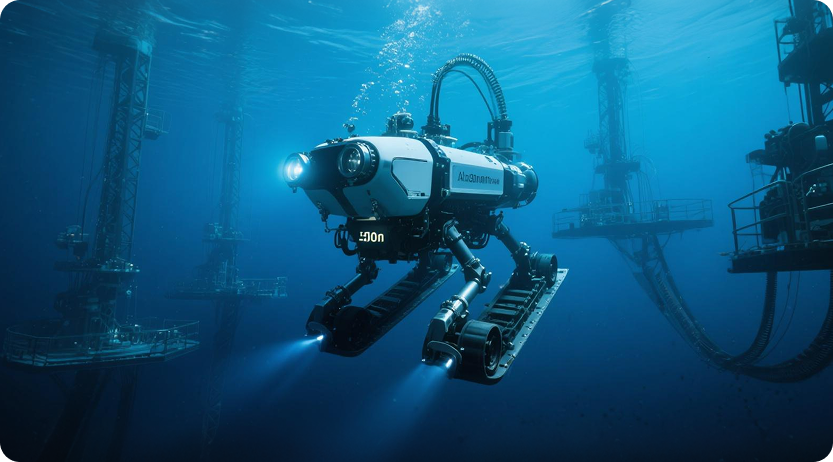
Les propulseurs sous-marins sont largement utilisés dans des applications nécessitant une propulsion contrôlée et fiable en environnement immergé. Avec l’évolution continue de la robotique sous-marine et des technologies marines, la demande en systèmes de propulsion à la fois efficaces et durables a fortement augmenté.
L’une des applications les plus courantes concerne les véhicules téléopérés (ROV), où les propulseurs assurent une manœuvrabilité précise pour des tâches d’inspection, de maintenance et d’exploration dans des environnements sous-marins complexes.
Dans les véhicules sous-marins autonomes (AUV), les propulseurs jouent un rôle essentiel pour permettre des missions de longue durée. L’efficacité et la stabilité y sont particulièrement importantes, car elles influencent directement la consommation d’énergie et les performances de navigation.
Les drones sous-marins utilisés pour l’imagerie, les relevés et la surveillance environnementale reposent également sur des propulseurs compacts et performants afin de garantir un déplacement et un positionnement stables dans l’eau.
Au-delà de la robotique, les propulseurs sous-marins sont de plus en plus utilisés dans des applications marines et offshore, notamment :
systèmes d’inspection de pipelines, de coques de navires et de structures offshore
équipements d’aquaculture pour la circulation de l’eau et le contrôle de l’environnement
plateformes de recherche pour la collecte de données océanographiques
Chacune de ces applications impose des exigences spécifiques en matière de poussée, d’efficacité, de taille et de durabilité.
Par conséquent, le choix d’un propulseur sous-marin adapté ne relève pas d’une solution universelle, mais d’un processus fortement dépendant de l’application et des contraintes propres au système.
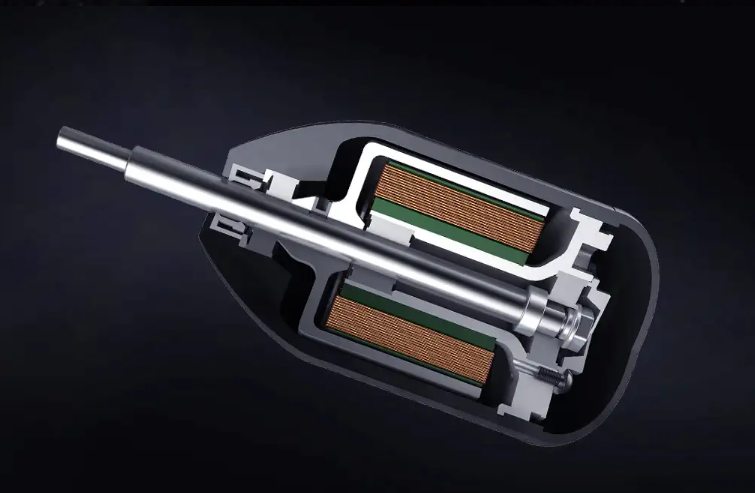
La sélection d’un propulseur sous-marin doit être abordée comme un processus structuré plutôt que comme une simple comparaison de spécifications. Une méthode étape par étape permet de garantir que les performances de propulsion, la compatibilité du système et la fiabilité à long terme sont correctement alignées.
Étape 1 : Définir la poussée requise
La poussée est la base de tout système de propulsion sous-marine. Elle détermine directement si le véhicule peut se déplacer efficacement, maintenir sa position et surmonter les résistances environnementales telles que la traînée et les courants.
Commencer par la poussée permet de s’assurer que toutes les décisions suivantes — puissance, taille et efficacité — reposent sur des exigences opérationnelles réelles plutôt que sur des hypothèses.
En pratique, la poussée doit être estimée en prenant en compte :
Le poids du véhicule et son équilibre de flottabilité
La traînée hydrodynamique en mouvement
La vitesse et la maniabilité souhaitées
Une estimation précise de la poussée améliore non seulement les performances, mais évite également le surdimensionnement, qui peut entraîner une consommation d’énergie inutile.
Étape 2 : Déterminer l’environnement d’exploitation
L’environnement d’exploitation définit les conditions limites du propulseur et a un impact direct sur la fiabilité du système.
Les applications sous-marines varient considérablement en termes de pression, d’exposition et de modes d’utilisation. Un propulseur performant en eau douce peu profonde peut ne pas convenir à des environnements marins profonds ou à l’eau salée.
Les principaux facteurs environnementaux incluent :
La profondeur de fonctionnement, qui détermine les exigences de résistance à la pression
Le type d’eau, en particulier l’eau salée, qui pose des défis de corrosion
Ces facteurs influencent la conception de l’étanchéité, le choix des matériaux et la durabilité globale. Les ignorer conduit souvent à une dégradation ou à une défaillance prématurée du système.
Étape 3 : Adapter le système d’alimentation
Une fois la poussée et les conditions environnementales définies, l’étape suivante consiste à s’assurer que le propulseur est compatible avec le système d’alimentation disponible.
Des incompatibilités électriques peuvent entraîner des performances instables, une efficacité réduite, voire des dommages au système. Un bon alignement entre le propulseur et l’alimentation est donc essentiel.
Une attention particulière doit être portée à :
La compatibilité de tension avec l’architecture du système
La capacité en courant et les limites de puissance de l’alimentation
Un système d’alimentation bien adapté garantit des performances constantes sans surcharge ni gaspillage d’énergie.
Étape 4 : Évaluer l’efficacité et les performances thermiques
L’efficacité est particulièrement importante dans les applications où l’énergie est limitée, comme les ROV et AUV alimentés par batterie.
Un propulseur à haut rendement peut fournir la poussée requise tout en minimisant la consommation d’énergie, ce qui prolonge directement le temps de fonctionnement et améliore l’efficacité globale du système.
Les performances thermiques sont étroitement liées. En environnement sous-marin, des systèmes bien conçus peuvent utiliser l’eau pour dissiper la chaleur, assurant ainsi un fonctionnement stable même en charge continue.
Choisir un propulseur équilibré en termes d’efficacité et de gestion thermique permet de garantir des performances constantes sur de longues missions.
Étape 5 : Considérer la taille et l’intégration
Une fois les exigences de performance et électriques définies, l’intégration physique devient la dernière étape du processus de sélection.
Le propulseur doit s’intégrer dans les contraintes mécaniques du système tout en maintenant une répartition du poids et une compatibilité structurelle appropriées.
Les points clés à considérer incluent :
La configuration de montage et la méthode d’installation
L’espace disponible dans l’architecture du système
Une conception compacte et bien intégrée simplifie non seulement l’assemblage, mais améliore également la fiabilité et la maintenabilité globales du système.
En suivant un processus de sélection structuré, l’utilisation de propulseurs sous-marins conçus spécifiquement pour cet environnement permet de réduire considérablement la complexité de développement et d’améliorer les performances globales du système.
Les propulseurs sous-marins CubeMars se divisent principalement en deux séries :
Série DW — conçue pour les applications en eau profonde (ROV/AUV)
Série SW — optimisée pour les eaux peu profondes, les USV et la propulsion portable
Ces deux séries se distinguent principalement par leur profondeur d’utilisation, leur capacité de poussée et leur domaine d’application.
Sélection de propulseurs par application (avec modèles et spécifications)
| Scénario d’application | Modèles recommandés | Poussée max. | Profondeur max. | Caractéristiques clés |
| Petits drones sous-marins / ROV compacts | DW10 Underwater Thruster | ≥10 kgf | Jusqu’à 350 m | Compact, léger, adapté aux grandes profondeurs |
| ROV d’inspection de taille moyenne | DW15 Underwater Thruster / DW20 Underwater Thruster | 15–20 kgf | Jusqu’à 350 m | Bon équilibre entre poussée et efficacité |
| ROV lourds / systèmes offshore | DW25 Underwater Thruster | ≥25 kgf | Jusqu’à 350 m | Forte poussée, structure robuste pour charges élevées |
| Forte poussée, structure robuste pour charges élevées | SW12 Underwater Thruster | ≥12 kgf | Jusqu’à 30 m | Optimisé pour faible profondeur, propulsion efficace |
| Propulseurs portables / DPV / surf électrique | SW17 Underwater Thruster | ≥17 kgf | Jusqu’à 30 m | Forte poussée dans un format compact et profilé |
Comment interpréter ce tableau
Plutôt que de comparer uniquement des spécifications brutes, ce tableau relie directement les applications réelles aux modèles adaptés, ce qui simplifie considérablement le processus de sélection :
Si votre système fonctionne en grande profondeur (ROV/AUV) → privilégiez la série DW
Si votre application est en surface ou en eau peu profonde → la série SW est plus adaptée
À mesure que la taille du système augmente → passer de DW10 → DW25
Exemples :
Un petit ROV d’inspection → utilise généralement DW10 ou DW15
Un ROV offshore lourd → nécessite DW20 ou DW25
Un dispositif de propulsion portable → mieux adapté à la série SW
Pour des informations plus détaillées — courbes de puissance, dimensions ou options d’intégration — il est recommandé de consulter la gamme complète des propulseurs sous-marins CubeMars
La différence entre les propulseurs sous-marins et les moteurs BLDC standard va bien au-delà d’une simple étanchéité.
Alors que les moteurs BLDC sont conçus pour fonctionner dans l’air, les propulseurs sous-marins sont développés comme des systèmes de propulsion complets, intégrant dès la conception des éléments tels que la dynamique des fluides, la pression, l’étanchéité et la résistance à la corrosion.
Dans des conditions réelles, tenter d’adapter un moteur standard entraîne souvent des problèmes de fiabilité, de gestion thermique et d’efficacité de propulsion. Ces défis ne peuvent pas être résolus facilement par des modifications externes, car ils proviennent de différences fondamentales de conception et de conditions d’utilisation.
En adoptant une approche structurée — en partant des exigences de poussée et de l’environnement d’exploitation — les développeurs peuvent prendre des décisions plus éclairées et éviter des erreurs courantes.
Choisir un propulseur sous-marin conçu spécifiquement pour cet usage permet, au final, d’assurer des performances plus stables, une meilleure efficacité et une fiabilité durable du système.


