Registrieren

Da Roboter immer kompakter, leistungsfähiger und multifunktionaler werden, schränken traditionelle Aktuatordesigns ihre Leistung zunehmend ein. Probleme wie komplexe Verkabelung, sperrige Baugruppen und unzureichende Drehmomentdichte führen zu erheblichen Integrationsherausforderungen für moderne Robotergelenke. Das Verständnis dieser Schwachstellen verdeutlicht, warum Aktuatormodule der nächsten Generation erforderlich sind.
Komplexe Verkabelung und eingeschränkte Integration
Traditionelle Aktuatormodule sind häufig auf externe Kabel für Stromversorgung, Kommunikation und Feedback angewiesen, was die Systemkomplexität und das Ausfallrisiko erhöht. Die Verwaltung dieser Kabel wird insbesondere bei Robotern mit mehreren Gelenken schwierig und kann zu Störungen, Verschleiß und erhöhtem Wartungsaufwand führen.
Sperrige Struktur und schwierige Integration
Herkömmliche Aktuatorsysteme bestehen häufig aus separaten Motoren, Getrieben, Encodern und Treibern. Diese verteilte Architektur erhöht Größe und Gewicht, erschwert die Integration in kompakte Robotergelenke und schränkt die allgemeine Designflexibilität ein.
Unzureichende Drehmomentdichte für kompakte Roboter
Viele Robotikanwendungen – wie Hüftgelenke humanoider Roboter, Beine von vierbeinigen Robotern oder Roboterarme – erfordern ein hohes Drehmoment bei gleichzeitig kompakter Baugröße. Konventionelle Aktuatormodule können häufig keine ausreichende Drehmomentdichte bereitstellen, ohne Größe oder Gewicht zu erhöhen, was zu Kompromissen zwischen Leistung, Geschwindigkeit und Designflexibilität führt.
Zur Überwindung dieser Herausforderungen haben sich Hohlwellen-Planetenaktuatormodule als integrierte Hochleistungslösung etabliert und bilden die Grundlage für die CubeMars AKH-Serie in der Robotergelenkentwicklung der nächsten Generation.
Ein Hohlwellen-Planetenaktuator ist ein vollständig integriertes robotisches Aktuatormodul, das einen bürstenlosen Motor, ein Planetengetriebe, Sensoren und Antriebskomponenten in einer kompakten Einheit mit zentraler Hohlwelle kombiniert. Diese Hohlstruktur ermöglicht es, Kabel, Signalleitungen oder mechanische Komponenten direkt durch den Aktuator zu führen, was sauberere Konstruktionen und effizientere Robotergelenkdesigns ermöglicht. Mit der zunehmenden Kompaktheit und Komplexität robotischer Systeme gewinnt diese integrierte Aktuatorarchitektur immer mehr an Bedeutung, da sie Leistung, Zuverlässigkeit und Integrationsfähigkeit verbessert.
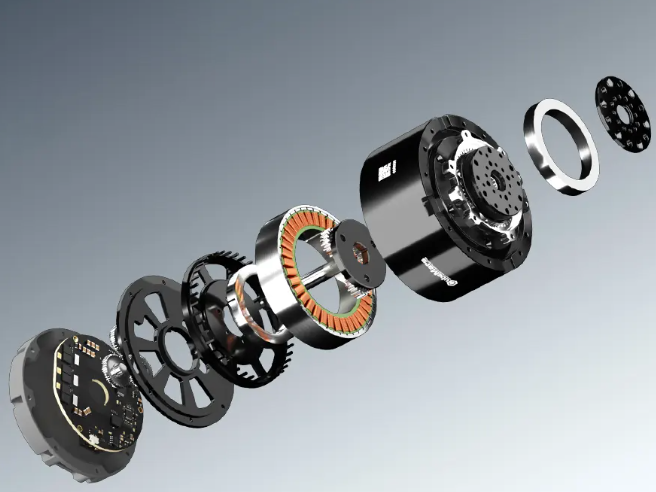
Kernstrukturkomponenten
Ein Hohlwellen-Planetenaktuator integriert mehrere zentrale Antriebskomponenten in einem einzigen Aktuatormodul:
Hohlwellenkanal – ermöglicht interne Kabelführung und strukturelle Durchführung
Bürstenloser Motor – bietet effiziente und präzise Bewegungssteuerung
Planetengetriebe – erhöht das Drehmoment bei gleichzeitig kompakter Baugröße
Integrierte Sensoren und Feedbacksysteme – ermöglichen präzise Positions- und Bewegungssteuerung
Kompaktes Gehäuse – gewährleistet strukturelle Stabilität und vereinfacht die Installation
Dieses integrierte Design reduziert den Bedarf an externen Komponenten und vereinfacht die Architektur robotischer Systeme.
Ein Hohlwellen-Planetenaktuator wandelt elektrische Energie über ein integriertes Motor- und Planetengetriebesystem in eine kontrollierte mechanische Bewegung um. Dieser Prozess ermöglicht eine effiziente Drehmomentverstärkung und eine präzise Bewegungsausgabe innerhalb eines kompakten Aktuatormoduls.
Der Funktionsablauf lässt sich in die folgenden Phasen unterteilen:
1. Elektrischer Eingang
Das Aktuatormodul erhält elektrische Energie vom Motorcontroller. Diese elektrische Eingabe erzeugt ein kontrolliertes elektromagnetisches Feld im bürstenlosen Motor und initiiert eine Drehbewegung.
2. Rotation des bürstenlosen Motors
Der bürstenlose Motor wandelt elektrische Energie in eine hochdrehende Rotationsbewegung um. Bürstenlose Motoren bieten hohe Effizienz, schnelle Reaktionsfähigkeit und präzise Steuerbarkeit, wodurch sie ideal für Robotikanwendungen sind.
3. Planetary Gear Planetengetriebe-Untersetzung
Die Hochgeschwindigkeitsrotation des Motors wird an das Planetengetriebe übertragen. Das Planetengetriebesystem reduziert die Drehzahl und vervielfacht gleichzeitig das Drehmoment. Dadurch kann das Aktuatormodul ein deutlich höheres Drehmoment liefern, ohne die Motorgröße zu erhöhen.
4. Drehmomentverstärkung und -übertragung
Durch die Getriebeuntersetzung wird das Drehmoment verstärkt und effizient auf die Ausgangsstufe des Aktuatormoduls übertragen. Die integrierte Struktur gewährleistet minimale Energieverluste und eine hohe mechanische Effizienz.
5. Hohlwellenausgang zum Robotergelenk
Das verstärkte Drehmoment wird über den Hohlwellenausgang übertragen, der das Robotergelenk direkt antreibt. Die Hohlwelle ermöglicht außerdem die Durchführung von Kabeln, Sensoren oder strukturellen Komponenten durch die Mitte und unterstützt dadurch kompakte, saubere und hochintegrierte Robotergelenkdesigns.
Durch die Kombination effizienter Drehmomentübertragung mit einer zentralisierten Hohlwellen-Architektur eröffnet dieses Aktuatordesign eine Vielzahl von Integrations- und Leistungsvorteilen für Robotersysteme der nächsten Generation.
(Warum die Hohlwellen-Architektur die Roboterintegration verbessert)
Hohlwellen-Planetenaktuatoren bieten gegenüber herkömmlichen Aktuatordesigns erhebliche Vorteile, indem sie Integration, Effizienz und Zuverlässigkeit verbessern. Ihre einzigartige Strukturarchitektur und das integrierte Aktuatormodul machen sie besonders geeignet für moderne Robotersysteme, die kompakte Bauweise, hohe Leistung und skalierbare Integration erfordern.
Zu den wichtigsten Vorteilen zählen:
Interne Kabelführung
Die Hohlwelle ermöglicht es, Stromkabel, Signalleitungen oder mechanische Komponenten direkt durch den Aktuator zu führen. Dies beseitigt externe Kabelführungen, reduziert Kabelsalat und minimiert das Risiko von Kabelstörungen, Verschleiß oder Beschädigungen während des Betriebs.
Höhere strukturelle Integration
Durch die Integration von Motor, Planetengetriebe und Feedbacksystemen in einem einzigen kompakten Aktuatormodul reduzieren Hohlwellen-Aktuatoren die Anzahl externer Komponenten. Dies vereinfacht das mechanische Design und verbessert die Gesamtkompaktheit des Systems.
Vereinfachtes Robotergelenk-Design
Die zentralisierte, modulare Aktuatorarchitektur erleichtert das Entwerfen, Montieren und Warten von Robotergelenken. Ingenieure können sauberere und effizientere Robotersysteme mit weniger mechanischen und elektrischen Einschränkungen entwickeln.
Diese Vorteile machen Hohlwellen-Planetenaktuatoren zu einer idealen Lösung für fortschrittliche Robotersysteme und zu einer zentralen Innovation, die die Weiterentwicklung von Robotergelenken der nächsten Generation vorantreibt.
Aufbauend auf diesen Integrations- und Strukturvorteilen sind Hohlwellen-Planetenaktuatoren zu einer zunehmend wichtigen Lösung in modernen Robotersystemen geworden. Ihre zentralisierte Architektur ermöglicht kompaktere Gelenkdesigns, reduziert die mechanische Komplexität und unterstützt die skalierbare Integration von Aktuatoren. Infolgedessen werden Hohlwellen-Aktuatoren inzwischen in vielen fortschrittlichen Robotikanwendungen eingesetzt, in denen Leistung, Kompaktheit und Systemzuverlässigkeit entscheidend sind.
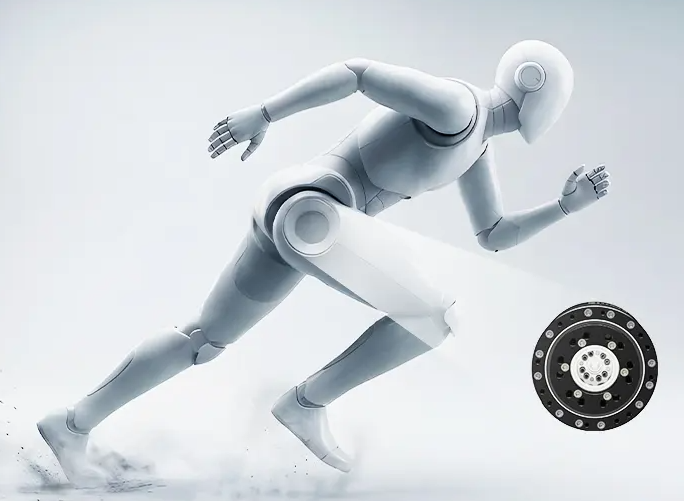
Gelenke humanoider Roboter müssen in einem stark begrenzten Raum hohes Drehmoment liefern und gleichzeitig eine gleichmäßige und stabile Bewegung gewährleisten. Hohlwellen-Aktuatoren unterstützen kompakte, zentralisierte Gelenkdesigns, indem sie interne Kabelführung ermöglichen und externe Komponenten reduzieren. Dies verbessert die strukturelle Effizienz, verringert das Gelenkvolumen und steigert die Gesamtbewegungsleistung.
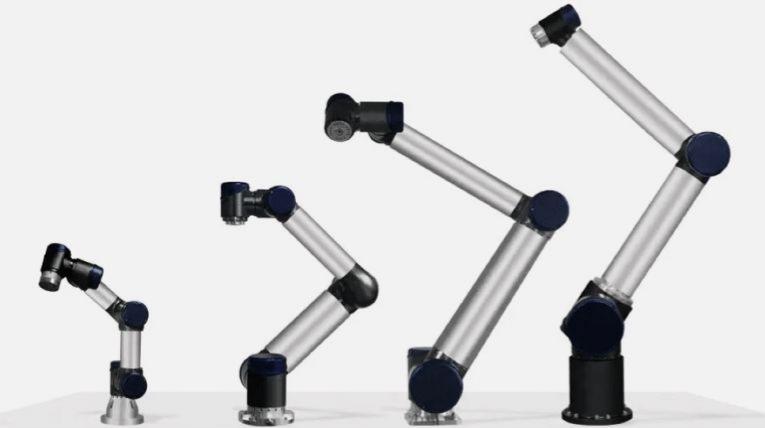
Für Roboterarme und kollaborative Roboter sind einfache Integration und strukturelle Einfachheit zentrale Designprioritäten. Hohlwellen-Antriebsmodul reduzieren die externe Verkabelung und minimieren die Anzahl separater Antriebskomponenten, wodurch klarere und aufgeräumtere mechanische Layouts ermöglicht werden. Dies vereinfacht die Montage, verbessert die Systemzuverlässigkeit und ermöglicht es Ingenieuren, kompaktere und effizientere Roboterarme zu entwickeln.
Exoskelettsysteme legen besonderen Wert auf leichte und kompakte Antriebsmodullösungen, die sich nahtlos in tragbare Strukturen integrieren lassen. Hohlwellen-Antriebsmodul ermöglichen es Entwicklern, zentralisierte Gelenkmechanismen zu realisieren, die das Gesamtvolumen reduzieren und die mechanische Effizienz verbessern. Dies trägt zu höherem Benutzerkomfort, geringerem Systemgewicht und natürlicheren unterstützten Bewegungen bei – entscheidende Faktoren für tragbare Robotikanwendungen.
Industrieroboter setzen zunehmend auf modulare Antriebsmodularchitekturen, um die Skalierbarkeit zu verbessern und die Systemintegration zu vereinfachen. Hohlwellen-Planetenantriebsmodul ermöglichen kompakte, eigenständige Gelenkmodule, die sich problemlos in Roboterarme und automatisierte Maschinen integrieren lassen. Dieser modulare Designansatz erhöht die Systemflexibilität, reduziert den Wartungsaufwand und unterstützt eine schnellere Entwicklung skalierbarer Roboterplattformen.
Um die Herausforderungen moderner Robotersysteme in Bezug auf Integration, Effizienz und Zuverlässigkeit zu bewältigen, hat CubeMars die AKH Serie der Hohlwellen-Planetenantriebsmodul entwickelt. Als kompakte, integrierte Antriebsmodul vereint die AKH Serie eine hohe Drehmomentdichte, interne Kabelführung und ein Planetengetriebe in einer einzigen platzsparenden Einheit. Diese Eigenschaften machen die AKH Serie besonders geeignet für fortschrittliche Robotergelenke, bei denen Leistung, Kompaktheit und Zuverlässigkeit entscheidend sind.
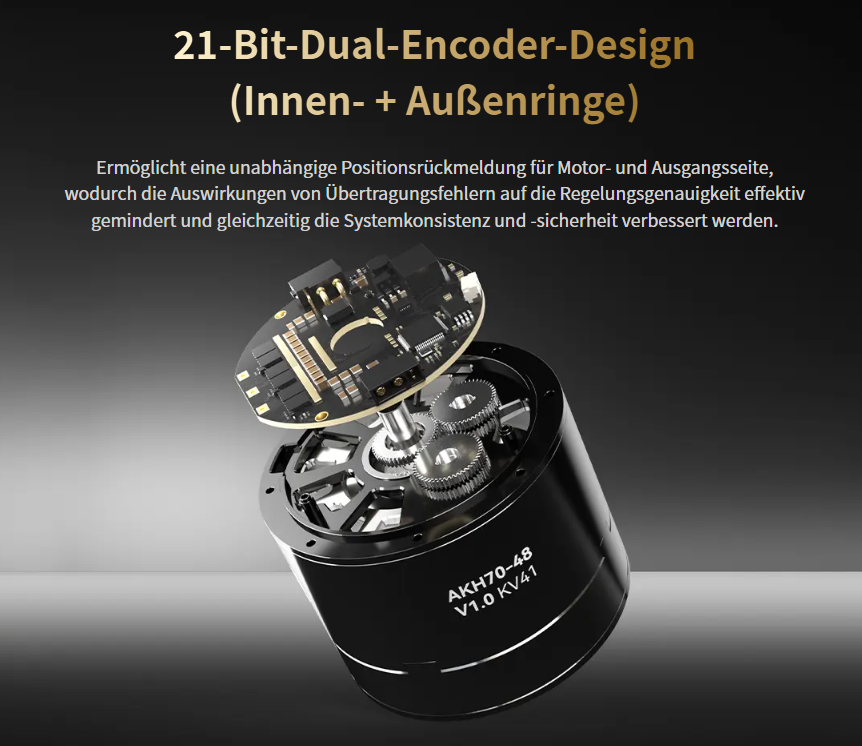
Hohe Drehmomentdichte: Starke Drehmomentleistung bei kompakter Baugröße, wodurch leistungsfähigere Gelenke ohne Vergrößerung des Bauraums ermöglicht werden.
Integriertes Planetengetriebe: Verbessert die mechanische Effizienz und reduziert das Spiel für höhere Präzision.
Hohlwellenarchitektur: Ermöglicht die interne Führung von Kabeln und Sensoren und vereinfacht dadurch das Gelenkdesign.
Modulares Design: Kombiniert Motor, Getriebe und Rückmeldesysteme in einer einzigen Einheit für einfachere Montage und Wartung.
Erhöhte Zuverlässigkeit: Weniger externe Komponenten und geschützte Verkabelung gewährleisten eine langfristige Haltbarkeit in anspruchsvollen Umgebungen.
| Merkmal | AKH70‑16 V1.0 KV41 | AKH70‑48 V1.0 KV41 | Auswahltipp |
|---|---|---|---|
| Untersetzungsverhältnis | 16:1 | 48:1 | Höheres Verhältnis = höheres Drehmoment |
| Spitzendrehmoment | 78 Nm | 222 Nm | Auswahl basierend auf Gelenkbelastung |
| Drehmomentdichte | 88.74 Nm/kg | 159 Nm/kg | Höhere Dichte = stärkere Leistung pro Gewicht |
| Gewicht | 879 g | 1396 g | Kompakt vs. hohe Leistung – Abwägung |
| Idealer Gelenktyp | Gelenke mit mittlerer Last, kompakte Bauweise | Gelenke mit hoher Last, lastintensive Anwendungen | Antriebsmodul an Anwendungsanforderungen anpassen |
| Hauptvorteil | Ausgewogen und leicht | Maximale Drehmomentleistung | Fokus auf Kompaktheit oder Drehmoment |
| Hohlwelle | Verfügbar | Verfügbar | Unterstützt interne Verkabelung und Kabelführung |
| Integrierte Elektroniks | Verfügbar | Verfügbar | Vereinfacht Steuerung und Rückmeldeintegration |
| Typische Anwendungen | Mittelgroße Roboterarme, kleinere Laufroboter | Hüft-/Kniegelenke größerer Laufroboter, schwere Roboterarme | Unterstützt die schnelle Auswahl des richtigen Antriebsmoduls |
Tipp: Verwenden Sie das AKH70-16, wenn Bauraum, Gewicht und mittleres Drehmoment Priorität haben. Verwenden Sie das AKH70-48, wenn hohes Drehmoment und hohe Tragfähigkeit entscheidend sind, auch bei etwas größerem Bauraum.
(AKH Serien Testclip)
Mit Hohlwellenarchitektur, integrierten Planetengetrieben und kompaktem modularen Design bietet die CubeMars AKH Serie eine leistungsstarke, skalierbare und zuverlässige Lösung für Robotergelenke der nächsten Generation. Die Vergleichstabelle hebt die wichtigsten Unterschiede zwischen AKH70-16 und AKH70-48 hervor und ermöglicht es Ingenieuren, schnell das richtige Antriebsmodul für ihre Anwendung auszuwählen und gleichzeitig Integrationseffizienz und Systemzuverlässigkeit sicherzustellen.
Die Auswahl eines Hohlwellenaktuators muss nicht kompliziert sein. Durch die Aufteilung des Prozesses in klare Schritte können selbst Einsteiger fundierte Entscheidungen treffen, die Leistung, Baugröße und Systemintegration optimal ausbalancieren.
Der erste Schritt besteht darin, zu bestimmen, wie viel Drehmoment Ihr Gelenk benötigt. Dazu gehören sowohl statische Lasten (das Gewicht, das gehalten werden muss) als auch dynamische Lasten (Kräfte während der Bewegung). Die Auswahl eines Aktuators, der diese Lasten zuverlässig bewältigen kann, stellt einen reibungslosen Betrieb sicher und verhindert vorzeitigen Verschleiß.
(Tipp: Eine Überschätzung des Drehmoments führt zu unnötiger Größe und Gewicht, während eine Unterschätzung das Risiko eines Ausfalls erhöht.)
Untersuchen Sie als Nächstes, wie viel Platz am Gelenk verfügbar ist und wie viel Gewicht es tragen kann. Hohlwellenaktuatoren sind grundsätzlich kompakt, jedoch unterscheiden sich die Modelle in ihren Abmessungen und ihrer Masse.
Für kompakte Roboter oder tragbare Geräte sollten kleinereund leichtere Aktuatoren bevorzugt werden.
Für Hochleistungs-Roboterarme oder große Gelenke können Aktuatoren mit höherem Drehmoment etwas größer sein, sind jedoch für eine zuverlässige Leistung erforderlich.
(Begründung: Das richtige Gleichgewicht zwischen Größe und Drehmoment sorgt dafür, dass der Roboter beweglich und effizient bleibt, ohne an Leistungsfähigkeit zu verlieren.)
Hohlwellenaktuatoren verfügen häufig über integrierte Funktionen wie interne Kabelführung, Planetengetriebe und integrierte Rückmeldungselektronik. Bewerten Sie, welche Funktionen Ihr Design benötigt:
Interne Kabelführung reduziert Kabelgewirr und schützt Leitungen vor Verschleiß.
Integrierte Getriebe verbessern die mechanische Effizienz und reduzieren das Spiel.
Integrierte Rückmeldesysteme vereinfachen die Steuerung und reduzieren externe Komponenten.
(Tipp: Die Abstimmung der Aktuatorfunktionen auf Ihre Systemarchitektur verhindert unerwartete Neuentwicklungen zu einem späteren Zeitpunkt.)
Berücksichtigen Sie abschließend Ihre spezifische Anwendung und deren Prioritäten:
Humanoide oder tragbare Roboter → Kompaktheit, geringes Gewicht und sanfte Gelenkbewegung priorisieren..
Industrielle oder lastintensive Roboter → Drehmomentleistung Haltbarkeit und Präzision priorisieren..
(Begründung: Das Verständnis der Anwendung stellt sicher, dass der ausgewählte Aktuator nicht nur die technischen Anforderungen erfüllt, sondern auch optimal für den praktischen Einsatz geeignet ist.)
Zusammenfassung
Durch die Befolgung dieser Schritte—Bewertung der Lastanforderungen, Analyse von Platz und Gewicht, Prüfung der Integrationsfunktionen und Abstimmung auf die Anwendung—können Ingenieure systematisch den richtigen Hohlwellenaktuator auswählen. Dieser strukturierte Ansatz stellt sicher, dass Robotergelenke effizient, zuverlässig und optimal für ihre jeweilige Roboterplattform geeignet sind, ohne auf Versuch und Irrtum angewiesen zu sein.
Hohlwellen-Planetenaktuatoren stellen eine Schlüsselinnovation in der modernen Robotik dar und bieten kompakte Integration hohe Drehmomentdichte und vereinfachtes Gelenkdesign. Von der internen Kabelführung bis hin zur modularen Aktuatorarchitektur ermöglichen diese Eigenschaften Ingenieuren denAufbau zuverlässigerer, effizienterer und skalierbarer Robotersysteme.
Durch das Verständnis der Vorteile von Aktuatoren, die Bewertung der Anwendungsanforderungen und die Anwendung eines strukturierten Auswahlprozesses können Ingenieure — sowohl Einsteiger als auch erfahrene Entwickler — den passenden Aktuator für ihre Robotikprojekte der nächsten Generation sicher auswählen.


