Create your CubeMars account

A gimbal motor is a specialized motor designed to precisely control rotation along one or more axes. It provides smooth, repeatable motion with minimal mechanical play or friction, distinguishing it from standard motors and making it ideal for tasks that demand high precision.
These motors are an essential component in robotic and vision systems, where accurate orientation and stability are critical. By enabling precise rotational control, gimbal motors form the foundation for devices such as cameras, sensors, or measurement instruments, allowing reliable operation in dynamic environments.
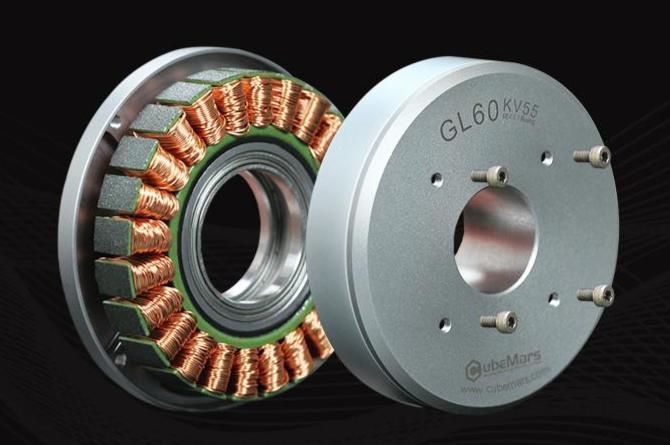
In robotic and vision platforms, maintaining accurate orientation is often as important as generating motion. Sensors must remain aligned with their targets, cameras must maintain stable viewpoints, and robotic tools must follow precise trajectories. Gimbal motors address these requirements by providing controlled rotational motion across one or multiple axes.
1. Within robotics, gimbal motors commonly serve several functional roles:
Precision motion control is one of their primary functions. When integrated into robotic arms, sensor mounts, or inspection mechanisms, gimbal motors enable the system to follow predetermined trajectories with high positional accuracy. This capability is essential for manipulation tasks, automated inspection, and measurement systems where consistent positioning is required.
Another important role is multi-axis coordination. Many robotic platforms require simultaneous control across several rotational axes. By synchronizing multiple gimbal motors, systems can achieve complex spatial movements such as coordinated pitch, yaw, and roll adjustments. This coordinated motion is particularly important in articulated robots and sensor tracking systems.
Gimbal motors also support adaptive sensor positioning. In robotic perception systems, sensors must frequently adjust orientation to maintain optimal data acquisition. Gimbal mechanisms allow sensors to dynamically reposition themselves, ensuring reliable measurements and feedback for navigation, mapping, or control algorithms.
2. In vision systems, the importance of gimbal motors becomes even more apparent. Imaging devices are highly sensitive to motion disturbances, and even minor vibrations can degrade image quality. Gimbal motors therefore enable several key capabilities:
Camera stabilization: ensuring that cameras remain steady even when the platform is moving.
Smooth panning and tilting: allowing controlled camera movement for tracking or monitoring tasks.
Disturbance compensation: reducing the effects of vibration, shock, or environmental motion.
Through these roles, gimbal motors form a critical mechanical layer that connects control algorithms with physical motion. Their ability to translate electronic control signals into stable and precise orientation adjustments makes them indispensable in modern robotic and vision platforms.
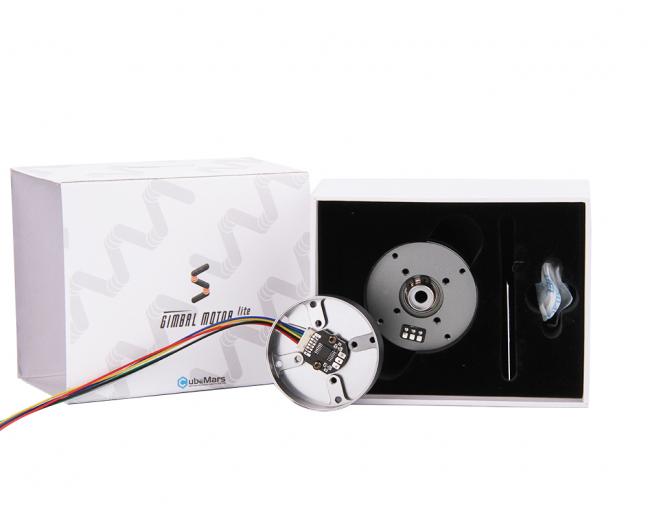
Gimbal motors achieve precise rotation by converting electrical control signals into controlled mechanical motion along one or more axes. Their operational principles are designed to ensure smooth, accurate, and repeatable movement, even under dynamic conditions or varying loads. The core aspects of their operation can be divided into the following areas:
1. Torque Generation and Motion Control
At the fundamental level, gimbal motors generate rotational torque through electromagnetic interaction between the stator windings and the rotor's permanent magnets. When electrical current is applied to the windings, a rotating magnetic field is produced, which drives the rotor and generates controlled rotational motion.
Unlike conventional motors used for continuous rotation, gimbal motors are typically optimized for precise angular positioning and smooth torque output. By adjusting the current supplied to the motor windings, the control system can dynamically regulate torque to achieve the desired orientation.
This real-time torque regulation allows the motor to:
precisely position the attached platform
perform rapid corrections when disturbances occur
maintain stable motion during acceleration or directional changes
As a result, the system can achieve accurate and repeatable rotational movement, which is essential for both robotic manipulation and vision stabilization tasks.
2. Multi-Axis Stabilization
Many robotic and vision systems require orientation control across multiple axes. Gimbal assemblies are therefore commonly designed with two or three orthogonal rotational axes that manage pitch, yaw, and sometimes roll. Each axis is typically driven by an independent motor, while the control system coordinates their motion to maintain overall stability. When disturbances affect one axis, the system can simultaneously adjust multiple motors to restore the desired orientation.
Through this coordinated multi-axis control, the platform can achieve smooth panning and tilting motion while maintaining stable sensor alignment during movement. At the same time, the system can effectively compensate for environmental disturbances such as vibration or sudden platform motion. As a result, multi-axis gimbal systems are able to preserve accurate orientation even when the host platform undergoes complex or dynamic movement.
3. Performance Considerations by System Type
The operational performance of gimbal motors can vary depending on the system's demands:
Lightweight or mobile platforms require motors with low inertia for rapid response.
Industrial or heavy-duty systems prioritize high torque and robust stability to handle larger payloads.
Vision-intensive systems focus on minimizing vibration and mechanical play to preserve image quality and sensor accuracy.
The combination of stability, precision, and adaptability provided by gimbal motors allows systems to perform effectively, setting the stage for exploring their specific applications across robotics and vision platforms.
Gimbal motors provide multiple advantages at the system level, enabling robotics and vision platforms to achieve higher precision, stability, and operational efficiency. By translating controlled motor actions into smooth and accurate motion, these motors enhance the overall performance of the system and improve the reliability of tasks that depend on precise orientation.
Key system-level advantages include:
Enhanced Stability: Compensates for vibrations, shocks, and unexpected movements, maintaining steady orientation of cameras or sensors.
Improved Accuracy: Supports precise positioning and angular control, critical for inspection, measurement, or imaging tasks.
Faster Response: Allows rapid adjustments to dynamic changes in the system or environment, improving real-time performance.
Payload Adaptability: Maintains consistent performance across different payloads, from lightweight cameras to heavier robotic tools.
Integration Flexibility: Can be applied to a variety of robotic and vision platforms, including mobile robots, drones, and industrial inspection systems.
| Platform Type | System Advantage | Example Use Case |
| Mobile Robots | Rapid multi-axis adjustment | Navigation and sensor alignment |
| UAV Vision Systems | Vibration compensation | Aerial imaging stability |
| Industrial Inspection | High positional accuracy | Automated quality control |
| Robotic Arms | Smooth coordinated motion | Multi-axis assembly or manipulation |
In summary, these advantages allow gimbal motors to directly improve system performance across different platforms, enabling more precise, stable, and responsive operation. With their versatility and reliability, they are key components that support both robotic and vision applications in dynamic and demanding environments.
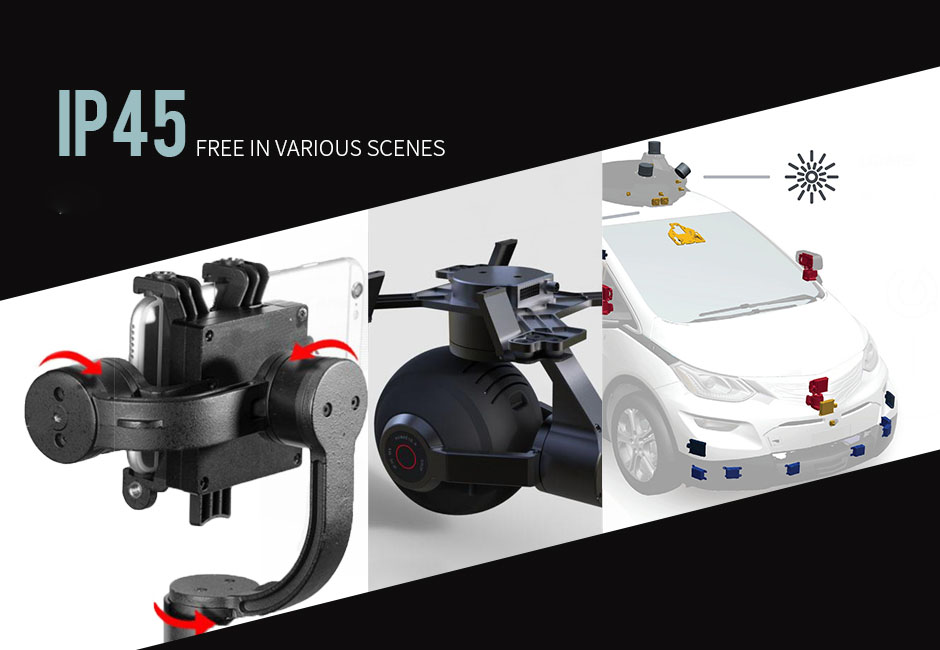
Gimbal motors are widely used across robotic and vision platforms, providing precise rotational control and active stabilization. Their ability to maintain consistent orientation under dynamic conditions makes them essential for systems that rely on accurate sensor alignment, stable imaging, and responsive motion control.
Lightweight Vision Systems
Compact vision platforms rely on gimbal motors to ensure smooth and controlled movement of cameras or sensors. By stabilizing the imaging module, the motor helps preserve image clarity even when the device is moving or exposed to minor disturbances. Typical platforms include handheld inspection tools, small UAVs, and portable imaging devices.
In these systems, motors must balance low inertia with sufficient torque output, enabling rapid orientation adjustments while maintaining stable sensor positioning. This combination allows imaging devices to remain steady while still responding quickly to motion commands or environmental changes.
Mobile Robotics Platforms
Mobile robots, including autonomous vehicles and aerial drones, use gimbal motors to stabilize onboard sensors and cameras during navigation. Maintaining consistent sensor orientation is critical for reliable perception, mapping, and environmental awareness.
To support these capabilities, gimbal motors typically enable:
Stable sensor alignment during platform movement
Multi-axis motion for flexible observation and target tracking
Reduced vibration influence on onboard vision systems
These functions allow robots to maintain accurate sensing and reliable data acquisition even while navigating uneven terrain or dynamic environments.
Industrial and Heavy-Duty Vision Platforms
In industrial environments, gimbal motors are commonly integrated into robotic arms, automated inspection systems, and assembly stations where precise orientation control is required. These systems often operate continuously and may carry heavier payloads such as industrial cameras, measurement sensors, or monitoring instruments.
To maintain reliable performance under these conditions, gimbal motors must deliver higher torque output, stable multi-axis motion, and consistent positioning accuracy. This ensures that cameras and sensors remain correctly aligned during inspection or monitoring processes.
| Industrial Application | Role of the Gimbal Motor |
| Automated Inspection Systems | Stabilizes cameras for consistent image capture |
| Robotic Assembly Lines | Enables precise orientation of sensors or tools |
| Process Monitoring Equipment | Maintains stable sensor positioning during operation |
Across these platforms, gimbal motors act as a critical interface between control systems and physical motion. By enabling stable orientation, smooth rotational movement, and responsive adjustment to disturbances, they support reliable operation across a wide range of robotic and vision applications.
Selecting a gimbal motor requires evaluating a combination of performance parameters. While specific requirements vary across applications, several key characteristics consistently define how gimbal motors perform in robotics and vision systems.
Torque and Load Capability
Torque determines whether a motor can maintain stable orientation under load, especially when the payload is offset from the rotational axis.In practical systems, required torque typically ranges from below 0.5 Nm for lightweight camera setups to over 1–2 Nm for larger stabilized platforms. This makes it essential to match motor torque to both payload mass and structural geometry.
For example, mid-size gimbal motors such as those in the CubeMars GL35 KV100 class are designed to deliver torque in this range, supporting stable operation in mobile robotics and vision platforms.
KV Rating and Motion Behavior
KV rating directly influences how a motor responds to control input.Gimbal motors generally operate within a 20–100 KV range, where lower KV values enable smoother low-speed control and improved stability. Designs around 25–30 KV are commonly used in precision stabilization scenarios, while higher KV options provide faster response for lightweight systems.Selecting the appropriate KV is critical for balancing responsiveness and motion smoothness.
Smoothness and Low-Speed Stability
For gimbal applications, smooth motion at low speed is essential.A key factor is cogging torque, which affects micro-vibration and control precision. Reducing cogging torque improves motion continuity and enhances imaging stability. In optimized motor designs, cogging torque can be reduced by more than 30%, resulting in noticeably smoother operation.
This improvement is particularly evident in advanced models such as the CubeMars GL60 II KV28, where low cogging characteristics support high-precision vision tasks.
Control Precision and System Responsiveness
Gimbal motor performance depends not only on the motor itself but also on the control system.High-performance setups typically use:
Closed-loop control
High-frequency current regulation
Precise position feedback
Integrated solutions that combine motor and driver, and support communication protocols such as CAN or PWM, can simplify system architecture while improving response speed and control accuracy.
Mechanical Design and Integration Constraints
Mechanical design plays a key role in system integration and overall performance.Typical gimbal motor features include:
Hollow shaft structures (e.g., ~20 mm bore) for cable routing or slip ring integration
Compact designs, with smaller motors weighing under 100 g for lightweight platforms
Scalable form factors to support multi-axis configurations
These characteristics enable flexible deployment across UAV gimbals, robotic vision modules, and rotating inspection systems.
In real-world applications, torque, KV rating, smoothness, control precision, and mechanical design must be considered together. Properly balancing these parameters ensures stable, accurate, and responsive performance across a wide range of robotic and vision systems.
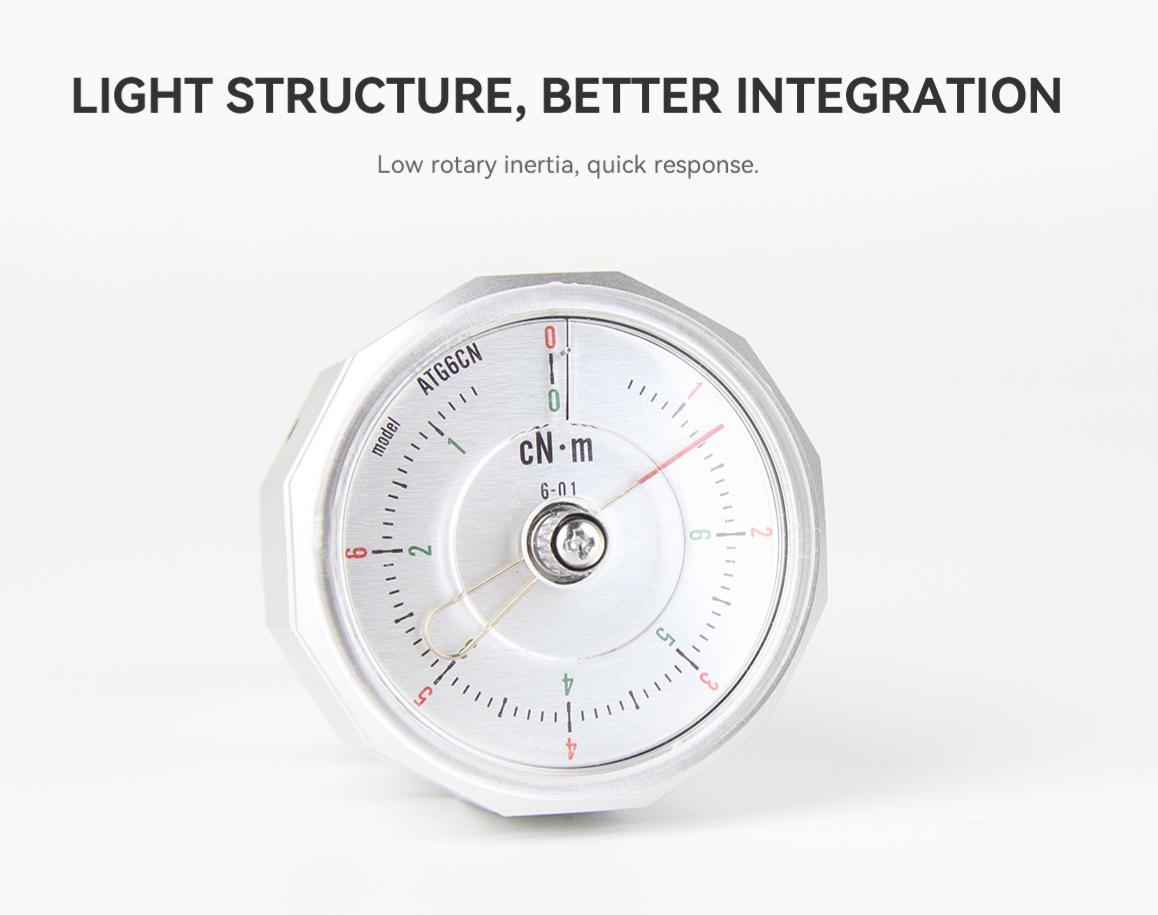
Although gimbal motors are derived from brushless DC (BLDC) technology, they are designed for fundamentally different purposes.
Gimbal motors prioritize precision, smoothness, and stabilization at low speed, while BLDC motors focus on efficient continuous rotation and power output. The choice between them depends on whether the system requires accurate positioning or sustained rotational motion.
Comparison and Selection Guide
| Criteria | Gimbal Motor | BLDC Motor | Recommended Choice |
| Primary Function | Precision positioning & stabilization | Continuous rotation & power delivery | Depends on system goal |
| Speed Range | Low speed / near-static | Medium to high speed | Gimbal (low-speed)/BLDC (high-speed) |
| Torque Behavior | Smooth torque at low speed | Torque peaks at higher RPM | Gimbal (control)/BLDC (power) |
| Motion Smoothness | Very high (low cogging) | Moderate | Gimbal |
| Control Method | Closed-loop precision control | Open-loop / speed control | Gimbal (precision)/BLDC (simplicity) |
| Disturbance Response | Fast stabilization | Limited compensation | Gimbal |
| Mechanical Structure | Direct drive, often hollow shaft | Often with gearbox | Gimbal (integration)/BLDC (drive systems) |
| System Complexity | Higher (requires feedback/control) | Lower (simpler implementation) | BLDC |
Gimbal motors and BLDC motors serve distinct roles despite sharing a common brushless architecture.
Gimbal motors are better suited for applications requiring precision, smooth motion, and real-time stabilization, while BLDC motors are more effective in scenarios that demand continuous rotation, efficiency, and power output.
Selecting the appropriate motor type ensures optimal system performance and avoids unnecessary design complexity. For a more detailed understanding of BLDC motor characteristics and applications, please refer to our guide Brushless DC Motors: A Comprehensive Overview.
Selecting a gimbal motor requires evaluating how the actuator interacts with the platform, the payload it must support, and the level of motion control required by the system. Rather than focusing on a single specification, engineers typically analyze several factors that influence orientation stability, responsiveness, and positioning accuracy in real operating conditions.
1. Define Torque and Load Requirements
From an engineering perspective, motor selection starts with defining payload and mechanical constraints. The motor must generate enough torque to support the mass of attached components such as cameras, sensors, or robotic tools, as well as the moment created by their distance from the rotational axis.
Adequate torque capacity ensures that the system can maintain stable orientation during acceleration, sudden directional changes, or external disturbances. If the available torque margin is too small, the platform may experience delayed response or difficulty maintaining precise alignment.
2. Evaluate Inertia and Dynamic Responsiveness
In addition to torque capability, the dynamic characteristics of the motor significantly affect system performance. Rotor inertia influences how quickly the motor can accelerate or decelerate when responding to control commands.
Lower inertia typically improves stabilization speed and motion responsiveness, which is particularly valuable for mobile and lightweight platforms. Key benefits of low-inertia motor design include:
Faster orientation correction during movement
Improved responsiveness to control inputs
Smoother motion during rapid adjustments
These characteristics help maintain stable sensor orientation in systems that experience frequent motion or environmental disturbances.
3. Assess Precision and Repeatability
For many robotic and vision applications, maintaining accurate and repeatable orientation is essential. Even small angular deviations can affect image quality, measurement accuracy, or robotic manipulation tasks.
Important performance indicators often include angular positioning accuracy, repeatability, and motion smoothness. Motors designed for precision control frequently incorporate high-resolution encoders and refined control algorithms, allowing the system to maintain stable positioning even under varying loads.
4. Consider Integration and Control Compatibility
Beyond raw performance specifications, practical integration is a key factor in selecting a suitable gimbal motor. The actuator must fit within the mechanical structure of the gimbal while remaining compatible with the platform's control architecture.
| Integration Factor | Engineering Consideration |
| Motor Size and Mounting | Determines compatibility with the mechanical structure |
| Weight Distribution | Influences balance and dynamic stability |
| Control Interface | Must match the system's motion controller |
| Feedback Sensors | Enable closed-loop orientation control |
Ensuring compatibility across these elements helps engineers integrate the motor efficiently while maintaining reliable motion control.
By considering torque capability, dynamic responsiveness, positioning precision, and system integration together, engineers can identify gimbal motors that match the specific performance requirements of robotic and vision platforms.
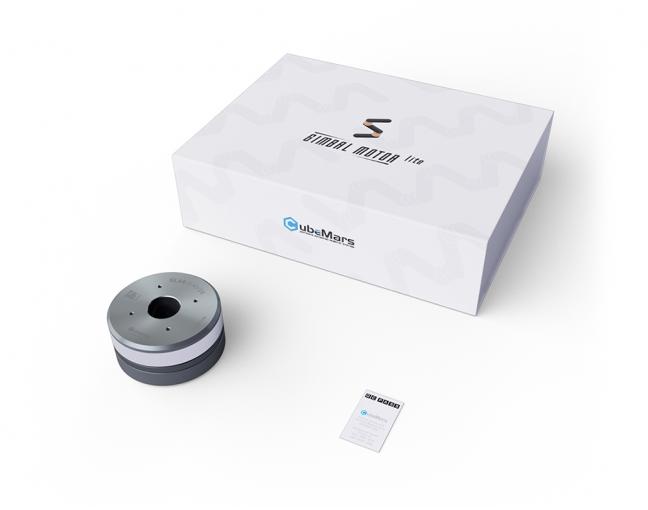
CubeMars Gimbal Motor Series for Robotics and Vision Systems
Based on the selection principles discussed above, the following CubeMars gimbal motor models illustrate how different specifications align with practical system requirements.
These motors integrate brushless motor technology with compact mechanical design, enabling precise torque control, fast response, and reliable operation in systems that require accurate sensor positioning or camera stabilization.
| Model | Rated Torque (Nm) | Peak Torque (Nm) | Rated Speed (rpm) | Key Feature | Best For |
| GL35 KV100 | 0.15 | 0.46 | 815 | Ultra-lightweight, fast response | Small cameras, compact sensors |
| GL60 KV25 | 0.6 | 1.75 | 310 | Balanced torque & size | Mobile robotics, vision modules |
| GL60 II KV28 | 0.6 | 1 | 153 | Low cogging + integrated driver | High-precision stabilization |
| G80 (KV30/KV60) | 1.0 | 2.9 | 450–1010 | High torque, large hollow shaft | LiDAR, radar, heavy payloads |
These models represent typical configurations within the CubeMars gimbal motor lineup, helping engineers match motor characteristics to system requirements such as payload weight, stabilization performance, and motion precision.
For a broader range of options and detailed specifications, please explore the full CubeMars gimbal motor series to identify the most suitable solution for your application.
Gimbal motors are essential in robotic and vision systems, providing stability, precision, and responsive motion control. Throughout this article, we have discussed their roles, operational principles, system-level advantages, practical applications, and key engineering considerations for selecting the right motor.
Considering these aspects gives engineers and designers a clear understanding of how gimbal motors enable accurate orientation and reliable performance within robotics and vision platforms.


