Cubemars - 17 Year Motor Manufacturer info@cubemars.com +86 13755649079
English
English
中文简体
日本語
Deutsch
Français
한국어
Español
Pусский
Quick Registration
Create your CubeMars account


Moment
TABLE OF CONTENTS
What Is a Frameless Torque Motor
Frameless Torque Motor vs BLDC Motor
Frameless Torque Motor Architecture
Structural Differences Between Outrunner and Inrunner Motors
Key Performance Differences Between Outrunner and Inrunner Motors
Integration Considerations for Frameless Torque Motors
Frameless Torque Motor Applications in Robotics
How to Choose the Right Frameless Torque Motor
Match Motor Type to Load and Motion Profile
Evaluate System-Level Constraints
Trade-Offs and Final Selection
Conclusion

2026 Frameless Torque Motors for Robotics Selection Guide

CubeMars / Mar 10,2026

What Is a Frameless Torque Motor


Unlike conventional motors that come with a complete housing and shaft assembly, frameless motors consist only of a stator and rotor. This simplified structure allows engineers to integrate the motor directly into a mechanical system, such as a robotic joint or actuator, providing more freedom in customizing the actuator layout. Frameless designs also enable more efficient use of space and can reduce the weight of the overall system, which is especially valuable in mobile or wearable robots.


In robotics, frameless torque motors are widely used in applications where compact packaging, high torque density, and flexible mechanical integration are important. By embedding the stator into the robot structure and mounting the rotor directly to the moving component, designers can reduce overall size and eliminate unnecessary mechanical parts. This approach also facilitates the implementation of direct-drive or low-reduction designs, improving torque control and responsiveness in demanding robotic tasks.


When designing frameless actuators, engineers often choose between outrunner and inrunner layouts, each offering different trade-offs in torque, speed, and integration flexibility. These distinctions also provide a useful perspective when comparing frameless motors to traditional BLDC motors, which are typically packaged as complete units. Understanding both frameless and BLDC architectures helps designers select the most suitable motor type for each robotic application. This comparison becomes even more practical when considering specific outrunner and inrunner configurations within frameless designs.


Frameless Torque Motor vs BLDC Motor


Traditional BLDC motors are typically delivered as complete units with an integrated housing, shaft, and bearings. This packaged design makes them easy to install and widely applicable across many electric drive systems.


In contrast, frameless torque motors consist only of the stator and rotor as separate components. Instead of being used as standalone devices, these components are integrated directly into the mechanical structure of a robot joint or actuator.


Because of these structural differences, the two motor types are often used in different ways when designing robotic systems:

  • BLDC motors are commonly installed as standalone drives and are frequently paired with gearboxes to achieve the torque required for robotic joints.

  • Frameless torque motors are typically integrated into custom actuator housings, allowing engineers to build compact joints and implement direct-drive or low-reduction designs.


From a system design perspective, neither approach is inherently better. Instead, they support different actuator architectures:

  • BLDC motors offer ease of integration and modular deployment across many robotic subsystems.

  • Frameless torque motors provide greater flexibility in actuator design, especially for compact or highly integrated robotic joints.


In practice, modern robotic platforms often use both motor types depending on the specific requirements of each subsystem.


 Key Differences

FeatureFrameless Torque MotorTraditional BLDC Motor
StructureSeparate stator and rotorFully enclosed motor unit
IntegrationEmbedded into robot structureInstalled as standalone motor
Design flexibilityHigh for custom actuatorsHigh for modular systems
Typical actuator designDirect drive / low reductionGear-driven or modular drives
Typical applicationsRobot joints, exoskeletons, actuatorsFans, pumps, drones, general drives

Understanding these differences helps engineers choose the most suitable motor architecture for their robotic system.


If you'd like to learn more about BLDC motors, please see  Brushless DC Motors: A Comprehensive Overview


Frameless Torque Motor Architecture


As mentioned before,frameless torque motors are composed of two primary components: the stator and the rotor. These elements form the electromagnetic system that generates torque and motion in robotic actuators togetherHowever, when discussing motor architecture, engineers often focus on how the rotor is positioned relative to the stator within the motor structure. This rotor arrangement defines the two common frameless motor configurations—outrunner and inrunner—each with distinct structural and performance characteristics.


Structural Differences Between Outrunner and Inrunner Motors


The primary difference between outrunner and inrunner motors lies in the location of the rotor and stator. This structural arrangement directly affects the motor's size, torque capability, and rotational speed.


  • Outrunner Motor Architecture


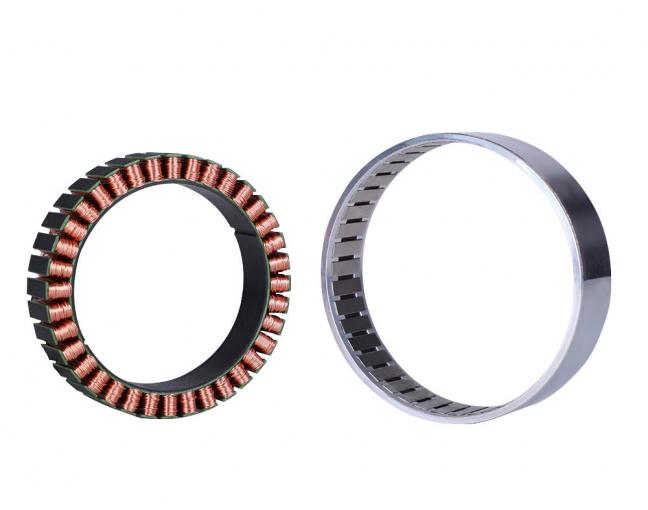
In an outrunner motor, the stator is fixed at the center while the rotor forms an outer rotating shell around it. The magnets are mounted on this outer rotor, which spins around the stator windings.


Because the rotor sits farther from the center, outrunner motors typically have a larger diameter and longer torque arm. This design allows them to generate higher torque at lower speeds, which is why they are commonly used in applications that require strong rotational force.


outrunner-motor-architect


  • Inrunner Motor Architecture


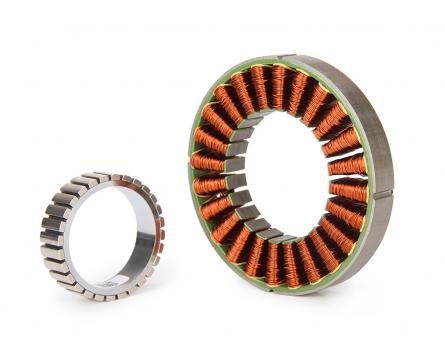
In contrast, an inrunner motor places the rotor inside the stator. The stator windings surround the rotor, and the shaft rotates at the center of the motor.


This configuration usually results in a smaller diameter and longer motor body. Inrunner motors are generally capable of much higher rotational speeds, making them suitable for applications where high RPM is more important than maximum torque.


inrunner-motor-architect

 Side-by-Side Structural Comparison:

FeatureOutrunner MotorInrunner Motor
Rotor positionOutside the statorInside the stator
Motor diameterLargerSmaller
Motor lengthShorterLonger
Torque capabilityHigherLower
Speed capabilityLowerHigher


With these structural differences in mind, we can now explore how outrunner and inrunner motors perform under different robotic tasks, considering torque, speed, rotor inertia, and thermal behavior.


Key Performance Differences Between Outrunner and Inrunner Motors


Although outrunner and inrunner motors share the same basic components, their rotor layouts create clear differences in torque, speed, rotor inertia, and thermal behavior, all critical for robotic performance. Understanding these differences helps engineers choose the right motor architecture for a specific actuator design.


Torque Density


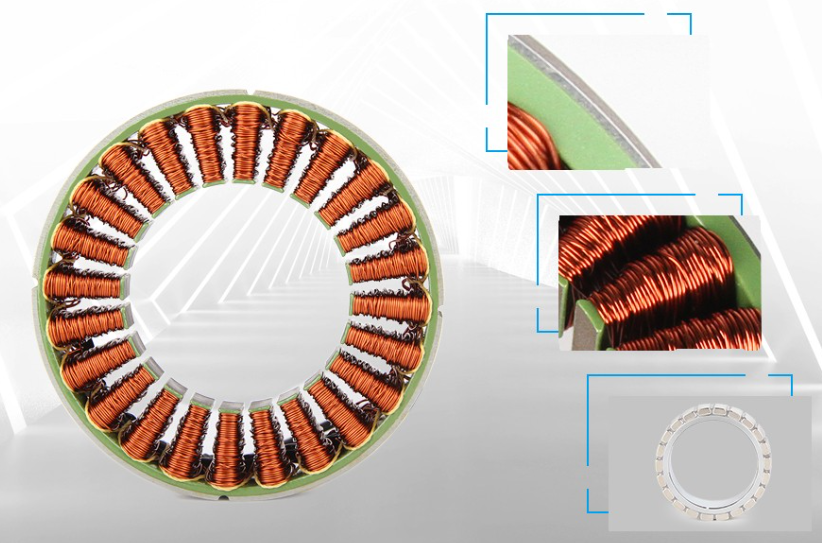
Outrunner motors excel in torque output for a given motor size. With the rotor wrapped around the stator, the effective radius at which magnetic forces act becomes larger, giving outrunners a longer torque arm. This design allows them to produce higher rotational force and handle continuous loads effectively, which is essential in robotic legs, exoskeleton actuators, and heavy-duty joints. The distributed rotor mass also helps maintain smooth torque delivery, reducing vibrations in sensitive actuator applications.


In contrast, inrunner motors have the rotor inside the stator, resulting in a shorter torque arm and therefore lower torque output for the same size. This design shifts the trade-off toward higher rotational speed and compactness, which can be advantageous in high-speed end-effectors or space-constrained actuators. Gear reductions or increased motor size can compensate for the lower raw torque, but these solutions add complexity and potential efficiency losses.


frameless-motor-with-high-torque-density


Speed Capability


Maximum speed is generally inversely related to torque. Outrunner motors, optimized for torque, tend to have lower top-end RPM, whereas inrunner motors achieve very high rotational speeds due to smaller rotor mass and lower inertia. A detailed comparison illustrates the trade-offs:


FeatureOutrunner MotorInrunner MotorPerformance Implication
Rotor MassHighLowHigher rotor mass reduces max speed but improves torque stability
KV RatingModerateHighHigher KV enables faster RPM, suitable for rapid actuation
Max RPM5,000–10,00015,000–25,000Inrunner supports high-speed cycles and rapid end-effector motion
Torque per AmpHighModerateOutrunner provides stronger force at lower current, better for load-bearing
AccelerationModerateHighInrunner accelerates quickly due to low rotor inertia, improving responsiveness
Best ForDirect-drive joints, high-torque actuatorsGeared systems, high-speed end-effectors, UAV propulsionMatch motor dynamics to your motion profile


Performance takeaway: Use outrunners where steady torque under load is critical. Inrunners are ideal for high-speed actuation or rapid cycling, particularly in small robotic arms or fast-moving end-effectors.


Rotor Inertia and Dynamic Response


Rotor inertia directly impacts how quickly a motor responds to acceleration and control changes:


  • Frameless outrunner torque motor: Larger rotor → higher inertia → slower acceleration, but maintains stable torque during heavy load changes, providing predictability for cyclic or high-load robotic tasks.


  • Frameless inrunner torque motor: Smaller rotor → lower inertia → faster acceleration and more agile response, ideal for rapid manipulations or compact, fast-moving actuators.


Unlike torque and speed, inertia considerations are primarily about dynamic response and control performance, rather than raw force. Engineers must weigh response speed versus load stability depending on the actuator's intended operation.


Thermal Performance


Thermal behavior affects continuous performance and operational efficiency:


1.  Heat Generation: Both motor types produce heat proportional to torque and current, but the rotor-stator configuration changes how heat is conducted.


2.  Heat Dissipation Path:

  • Frameless inrunner torque motor: Stator near housing → short conduction path → efficient heat removal → supports sustained high-RPM operation.

  • Frameless outrunner torque motor: Stator at the center, rotor forms the outer shell → relies more on structural conduction or airflow, which may require additional thermal management for prolonged high-torque operation.


3.  Integration Implications: Proper mounting, cooling channels, and airflow management are crucial to maintain consistent performance under load. Thermal efficiency is thus a combination of rotor layout and mechanical integration.


powerful-performance-of-ri-ph-series-frameless-inrunner-torque-motor


Integration Considerations for Frameless Torque Motors


Selecting the right motor is only part of the equation. Even the best outrunner or inrunner motor cannot reach its full potential without careful mechanical, electrical, and thermal integration. The way a motor is mounted, coupled, controlled, and cooled has a direct impact on torque stability, responsiveness, and long-term reliability.


Mounting and Mechanical Coupling


Frameless outrunner torque motors, with their larger outer rotor, require rigid and precise mounting. Flexible mounts or misalignment can introduce vibrations and torque ripple, reducing performance in high-load or repetitive motion tasks. Ensuring a stiff structure and proper alignment allows the motor to deliver smooth, predictable torque, which is especially critical for humanoid joints, exoskeleton actuators, or industrial robotic arms.


Frameless inrunner torque motors, with a more compact rotor and lower inertia, are generally easier to integrate into tight actuator housings. Reduced rotor mass lowers susceptibility to oscillations caused by mounting imperfections, making them well-suited for fast, precise movements in small robotic arms or UAV actuators.


Additional insight: For frameless designs, bearing selection and encoder integration are crucial to maintain accuracy while supporting the mechanical loads of the rotor.


Direct Drive vs Gear Reduction


CubeMars frameless outrunner motors often allow direct-drive configurations, eliminating the need for gearboxes. This simplifies the mechanical design and avoids common issues such as:

  • Backlash, which can degrade positional accuracy

  • Maintenance demands, increasing downtime

  • Efficiency losses, especially under cyclic high-torque conditions


Inrunner motors typically rely on gear reduction to achieve the required torque at the joint. While compact, this introduces trade-offs in precision, efficiency, and long-term reliability.


Key takeaway: When designing low-reduction, high-torque robotic joints, direct-drive outrunners can reduce mechanical complexity while preserving torque and backdrivability.


Control Electronics and Feedback


Motor integration also shapes the design of control loops and sensor feedback:

1.  Torque Control: Outrunner motors, with higher rotor inertia, require careful current regulation to prevent overshoot during heavy-load changes.

2.  Backdrivability: Direct-drive outrunners can be backdriven more smoothly, enabling safer human-robot interaction.

3.  Impedance Control: Frameless low-reduction designs allow engineers to implement compliant yet precise motion for dynamic robotic tasks.

4.  High-Frequency Loops: Inrunner motors, with low rotor inertia, support rapid acceleration and agile responses, leveraging fast sensors and drivers for high-RPM operation.


Properly tuning control electronics ensures that each motor's physical characteristics translate into real-world performance, whether the goal is smooth, powerful movement or high-speed precision.


Cooling and Thermal Integration


Heat management is critical for maintaining performance under continuous load:

  • Outrunner motors: The rotor surrounds the stator; heat must dissipate through structural conduction or airflow. For high-torque, long-duration tasks, additional heat sinks or active cooling may be required.

  • Inrunner motors: The stator near the housing allows efficient passive cooling, which supports high-speed, sustained operation.


Design implication: Mechanical mounting, airflow, and thermal paths must be carefully planned to prevent temperature-induced torque loss or component wear.


System-Level Considerations


Integration decisions are closely tied to the robot's functional requirements:

  • High-torque, cyclic joints (humanoid legs, industrial arms) benefit from outrunner direct-drive motors with robust mechanical support and thermal management.

  • Compact, fast-moving joints (robotic arms, drones, gimbals) favor inrunner motors, where low rotor inertia and tight integration enable rapid acceleration.

  • Control strategies, sensor resolution, and actuator coupling must align with the chosen motor architecture to fully leverage its strengths.


By addressing mechanical, control, and thermal integration together, engineers can convert the motor’s raw performance into consistent, predictable, and reliable robotic motion.


Application Examples


When all integration factors are considered,mechanical support, control strategy, and thermal management, motor choice can be matched to the robot’s functional needs:

  • Heavy-load, slower joints (humanoid legs, industrial exoskeletons) often favor outrunners, which deliver high torque and stable performance under load.

  • Rapid, precise movements (robotic arms, drone gimbals) are better suited to inrunners, providing low inertia and quick responsiveness.


By evaluating the complete integration context, engineers can leverage each motor type's strengths to meet application-specific performance goals, rather than relying solely on raw torque or speed ratings.


ri-series-frameless-inrunner-torque-motor


Frameless Torque Motor Applications in Robotics


Once engineers understand the differences in motor performance and integration requirements, the next step is to match motor architecture to the robot type and functional needs. Each robotic application emphasizes a different combination of torque, speed, responsiveness, and packaging constraints, making certain motor types more suitable than others.


Humanoid Robots


Humanoid robots demand high torque, low gear ratio, and impact tolerance to support walking, balancing, and handling payloads. The joints must handle continuous loads while maintaining stability during dynamic motions.


Frameless outrunner torque motors are often selected for these joints.In many humanoid joint designs, frameless motors such as RO80 or larger RO100 torque motors are selected to provide sufficient joint torque while maintaining compact actuator packaging.

Their larger rotor radius delivers consistent torque under cyclic loads, and integration flexibility allows embedding directly into hip, knee, or ankle actuators without excessive gear reductions.


Quadruped Robots


Quadruped platforms prioritize cyclic high-torque output and dynamic locomotion, requiring rapid force control while supporting body weight. Outrunner motors or QDD actuators are particularly effective because they combine high torque density with controllable rotor inertia.


Example: For a quadruped leg joint, an outrunner direct-drive motor provides both predictable torque for stable walking and smooth dynamic response for jumping or running maneuvers.


Robotic Arms


Robotic manipulators often need precision and compact joints. Depending on the application:

  • Inrunner + Gearbox: Offers high speed and low rotor inertia, ideal for small, high-speed manipulators.

  • Outrunner Direct Drive: Suitable for arms that handle heavier loads or require smooth torque under cyclic tasks.


Insight: In arms with limited space, inrunners are easier to package, whereas outrunners excel in load-bearing joints with fewer mechanical components.


Summary Table (Quick Reference):

Robot Type
Key RequirementsRecommended Motor Type
Humanoid RobotsHigh torque, low gear ratio, impact toleranceFrameless outrunner
Quadruped RobotsCyclic high torque, dynamic locomotionOutrunner / QDD actuators
Robotic ArmsPrecision, compact jointsInrunner + gearbox / Outrunner direct drive


How to Choose the Right Frameless Torque Motor


Selecting between outrunner and inrunner motors goes beyond simply comparing torque or speed. The best choice depends on the specific requirements of your robot, including load characteristics, movement speed, space constraints, and duty cycle. By synthesizing performance data, integration considerations, and application context, engineers can make informed motor decisions.


lower-cogging-torque-of-ri-series-frameless-inrunner-motor


Match Motor Type to Load and Motion Profile


Frameless outrunner torque motors excel in high-torque, high-load applications. Their larger rotor radius allows them to maintain consistent torque under heavy, cyclic loads, making them ideal for humanoid legs, exoskeleton joints, or robotic arms handling payloads.


Framelss inrunner torque motors, on the other hand, shine in high-speed, precision tasks. Low rotor inertia and compact size enable rapid accelerations and agile responses, which are essential for fast manipulators, drones, or small robotic end-effectors where space is limited and response time is critical.


When selecting a motor, engineers should ask: Does this joint prioritize torque stability under load, or speed and responsiveness? The answer strongly influences the choice between outrunner and inrunner architectures.


Evaluate System-Level Constraints


Motor performance must also be evaluated in the context of the entire robotic system:

1.  Space limitations: Inrunner motors fit more easily into compact actuators. Outrunners require additional clearance for the rotor’s external shell.

2.  Mechanical coupling: Outrunner torque benefits are realized only with stiff, precise mounting; inrunners are less demanding on housing tolerances.

3.  Control system design: High-inertia outrunners need carefully tuned acceleration profiles; inrunners allow rapid control loops but demand responsive sensors.

4.  Thermal management: Continuous high-load operation favors outrunners with extra cooling provisions, whereas inrunners dissipate heat efficiently in tight housings, especially for high-speed tasks.


By reviewing these constraints, designers can avoid mismatches that limit motor performance or reduce actuator longevity.


Trade-Offs and Final Selection


No single motor type is universally better. The choice always involves trade-offs:

  • Outrunner motors: High torque, stable under load, slightly lower top speed, require careful mechanical and thermal integration.

  • Inrunner motors: High speed, agile response, compact, may need gear reduction or advanced control for high-torque applications.


A practical approach is to prioritize the robot’s functional requirements first, then select the motor architecture that aligns with these needs, and finally optimize integration—mounting, control, and thermal management—to extract the motor’s full potential.


Case Example


Consider a humanoid leg actuator: it must lift body weight repeatedly and maintain stability. Outrunner motors are preferred for their high torque and predictable performance, even if the actuator sacrifices some acceleration speed.


For a robotic arm that sorts small objects at high speed, an inrunner motor enables rapid, precise movements, fitting neatly into compact linkages while achieving fast cycle times.


These examples demonstrate that understanding trade-offs and integration factors transforms motor selection from a theoretical exercise into a system-level design decision, ensuring the robot meets both performance and reliability goals.


Outrunner vs Inrunner: Quick Selection Guide

This quick guide summarizes the key factors engineers should consider when choosing between outrunner and inrunner motors for robotic applications. Use it to match performance priorities, integration requirements, and system constraints with the right motor architecture.


Requirement / PriorityBetter ChoiceReasoning / Notes
High torqueOutrunnerLarger rotor radius provides stable torque under continuous or cyclic loads, ideal for humanoid legs, exoskeletons, and heavy-duty actuators.
High speed / rapid accelerationInrunnerLower rotor inertia enables high RPM and fast dynamic response for manipulators, UAVs, and compact fast joints.
Direct-drive jointsOutrunnerExternal rotor allows gearless integration, reducing mechanical complexity and improving torque stability.
Space-constrained actuatorsInrunnerSmaller diameter fits tightly into compact housings, suitable for robotic arms or drone mechanisms.
High dynamic response / agilityInrunnerLow rotor inertia enables rapid changes in velocity or direction, critical for high-frequency actuation.
Gearless robot jointsOutrunnerDirect-drive operation avoids backlash and maintenance issues associated with gear reductions.
Thermal efficiency in continuous operationInrunner / Outrunner (depends on integration)Inrunner benefits from shorter conduction path; outrunner may require extra cooling for sustained high-torque tasks.
Payload-heavy applicationsOutrunnerMaintains torque under load with less reliance on gearboxes, reducing efficiency loss.
High-precision small motionInrunnerCompact rotor and responsive control loops allow fine positioning and rapid micro-movements.


Quick Tip: No single motor is perfect for every application. The best choice always comes from balancing torque, speed, integration constraints, and control requirements while considering the robot’s functional objectives. Often, evaluating system-level factors first and then using this guide ensures an informed and effective selection.


Example Frameless Motorswith Typical Applications


For engineers exploring real actuator implementations:

Motor ModelDescriptionTypical Application
RO80 KV105Frameless outrunner motorMedium-size robotic joints, e.g., humanoid robot knee actuators
RI100 KV105Torque motor for high torqueHigh-load joints, e.g., exoskeleton hip actuators
RI75-PH KV70High-speed inrunner motorCompact high-speed systems, e.g., UAV propulsion or fast manipulator arms


Conclusion


Choosing between frameless outrunner and inrunner motors for robotic applications requires balancing torque, speed, rotor inertia, thermal behavior, and system integration. Outrunners excel in high-torque, load-bearing, and direct-drive scenarios, while inrunners offer high speed, rapid response, and compact integration.


Ultimately, the right motor depends on the robot's functional needs, space constraints, and control strategy. By considering both performance characteristics and integration factors, engineers can make informed selections that maximize efficiency, precision, and reliability across a wide range of robotic systems.


For tailored robotic solutions, welcome to explore our Frameless Torque Motor / Robot Manufacturing & Customization Service. Our team can guide you in choosing the ideal motor architecture and optimizing actuator integration for your specific robotic application.


Next : 2026 Quasi Direct Drive (QDD) Motors for Humanoid & Quadruped Robots Overview
User name:
Anonymous
* E-mail:
* Name:
Phone:
Comments:
Verification code:
captcha
Warm prompt
Warm prompt
Please Sign In
Sign In
Sign Up
Forgot Password?
Warm prompt