Create your CubeMars account

In robotic systems, the motor is the power source, but whether the system can achieve stable motion is not determined solely by the motor itself. Instead, it is determined by the entire transmission system.
Most robotic applications are not simply about rotational motion requirements, but instead require:
Low-speed high-torque output
Stable force control capability
Fast dynamic response
Predictable motion behavior
Therefore, between the motor and the joint, the gearbox becomes a key component that determines system performance.
Among them, planetary gearboxes, due to their structural characteristics and comprehensive performance, have already become one of the most mainstream transmission solutions in robotic motion systems.
Many people usually simply understand a gearbox as a mechanical component for “speed reduction and torque increase,” but in robotic systems, its role goes far beyond that.
Between the motor and the joint, planetary gearboxes not only undertake the function of power transmission, but more importantly determine the dynamic behavior characteristics of the entire actuation unit, including:
The influence of system inertia characteristics on acceleration and deceleration response
Torque transmission and dynamic response speed
Precision and stability during the force control process
The balancing relationship between mechanical rigidity and compliance
Stability and controllability throughout the overall motion process
From the system level, it can be more accurately understood as: the motor determines the system’s power output capability, while the planetary gearbox determines how the power is converted into actual motion behavior.
This difference is particularly obvious in highly dynamic robotic systems, such as quadruped robots and humanoid robots. In these applications, the dynamic characteristics of the gearbox directly affect:
Impact response and energy absorption capability during foot-ground contact
Adaptive locomotion capability under complex terrain conditions
Overall stability during high-speed gait motion
Energy transmission efficiency and control precision during continuous dynamic movement
Therefore, in highly dynamic robotic systems, planetary gearboxes are not only power transmission components, but also key components that determine overall motion quality and control performance.
From the structure itself, the core advantage of planetary gearboxes lies in the fact that they are not single-gear transmissions, but instead achieve efficient power distribution through multiple planetary gears sharing the load simultaneously.
This structure brings three key characteristics:
First is high torque density, enabling higher output capability within limited space, making it highly suitable for joint-level drive systems.
Second is the compact and coaxial design, allowing the input and output shafts to remain aligned on the same axis, making it more suitable for the spatial layout and integration requirements of robotic joints.
Third is excellent load distribution capability. Through multiple planetary gears jointly sharing the load, the system achieves higher stability and reliability under dynamic operating conditions.
Based on these characteristics, planetary gearboxes in robotic systems are commonly used in:
Quadruped robot joints
Humanoid robot actuators
Industrial collaborative robotic arms
Integrated servo joint modules
In the field of robotics, different gearbox solutions show clear differences in precision, dynamic performance, and load capacity, and are generally divided into three categories: harmonic drives, cycloidal drives, and planetary gearboxes.
Transmission Solution Comparison Table
Transmission Type | Core Advantages | Main Limitations | Typical Applications |
Harmonic Drive | High precision, low backlash, compact structure | High reduction ratios increase inertia, limiting backdrivability and dynamic response in highly dynamic motion and high-frequency force-control scenarios, making them unsuitable for high-frequency motion control | Precision positioning systems, industrial robotic arms, semiconductor equipment, and other high-precision scenarios |
Cycloidal Drive | High load capacity, strong impact resistance | Larger size and higher weight, which are unfavorable for lightweight designs | Heavy industrial robots, large-scale automation equipment, high-load mechanical systems |
Planetary Gearbox | High torque density, compact structure, balanced dynamic performance, easy modular integration | Inferior to specialized structures in terms of precision or extreme load performance, but offers good balance between dynamic response and system integration | Quadruped robots, humanoid robots, collaborative robots, integrated servo joints |
In modern robotics, planetary gear reducers are typically not used independently, but are instead integrated with the motor, encoder, and drive system as part of a complete actuator unit.
In practical robot design, planetary gearboxes are often integrated into unified joint actuators consisting of “motor + gearbox + encoder (+ driver),” directly participating in dynamic control and motion execution as part of a highly integrated actuation system, rather than being used as standalone external mechanical components.
For example, in the CubeMars robotic actuator ecosystem, planetary gearboxes are one of the core transmission foundations.
Quadruped Robots
In quadruped robots, planetary gearboxes are commonly used in hip joint and knee joint drive units. During dynamic walking, jumping, or adaptation to uneven terrain, their primary role is reflected in increasing torque density and improving low-speed control precision, thereby enhancing gait stability and terrain adaptability.
A typical example comes from the JSK Laboratory at the University of Tokyo. Their new-generation quadruped robot KLEIYN is not only capable of stable locomotion on uneven terrain, but also demonstrated for the first time the ability of a quadruped robot to perform chimney-style vertical climbing at high speed, reflecting a design direction that expands from two-dimensional ground motion toward three-dimensional spatial maneuverability.
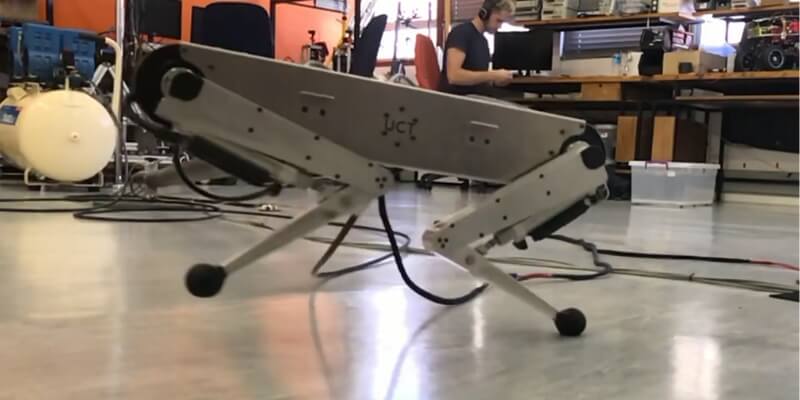
In another study, a team from the University of Cape Town proposed Kemba, a quadruped robot platform combining hybrid electric drive and pneumatic drive. By assigning motors and pneumatic actuators to different joints, the system achieves a balance between dynamic performance and control precision.
Exoskeletons
In exoskeleton assistance systems, planetary gearboxes are used for power assistance output at the hip and knee joints, enabling the system to more accurately follow human motion intention and achieve torque compensation. In this process, their key value lies in achieving a balance between torque output capability and human-machine interaction compliance.
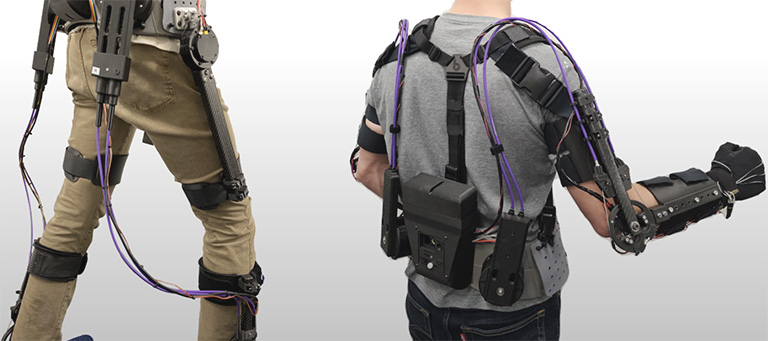
For example, the modular open-source exoskeleton system OpenExo decouples modules such as the hip joint, knee joint, and ankle joint through standardized structural design, allowing users to freely combine exoskeleton configurations according to different research requirements, thereby adapting to different body types and experimental tasks.
In the power configuration of this system, the CubeMars AK series robotic actuator modules are used as one of the core actuation units to provide compact joint drive capability with high torque density, working together with low reduction ratio planetary transmission structures to satisfy the exoskeleton system’s requirements for response speed and torque output continuity.
Humanoid Robots and Robotic Arms
In humanoid robot systems, planetary gearboxes are widely used in upper-limb and lower-limb joint drives to support multi-degree-of-freedom motion control. While improving joint load capacity, they must also ensure motion continuity and controllability, thereby avoiding the negative impact of impulsive motion on mechanical structures and control systems.
Beyond the joint-level applications mentioned above, planetary gearboxes are also widely used in high-dynamic-control systems.
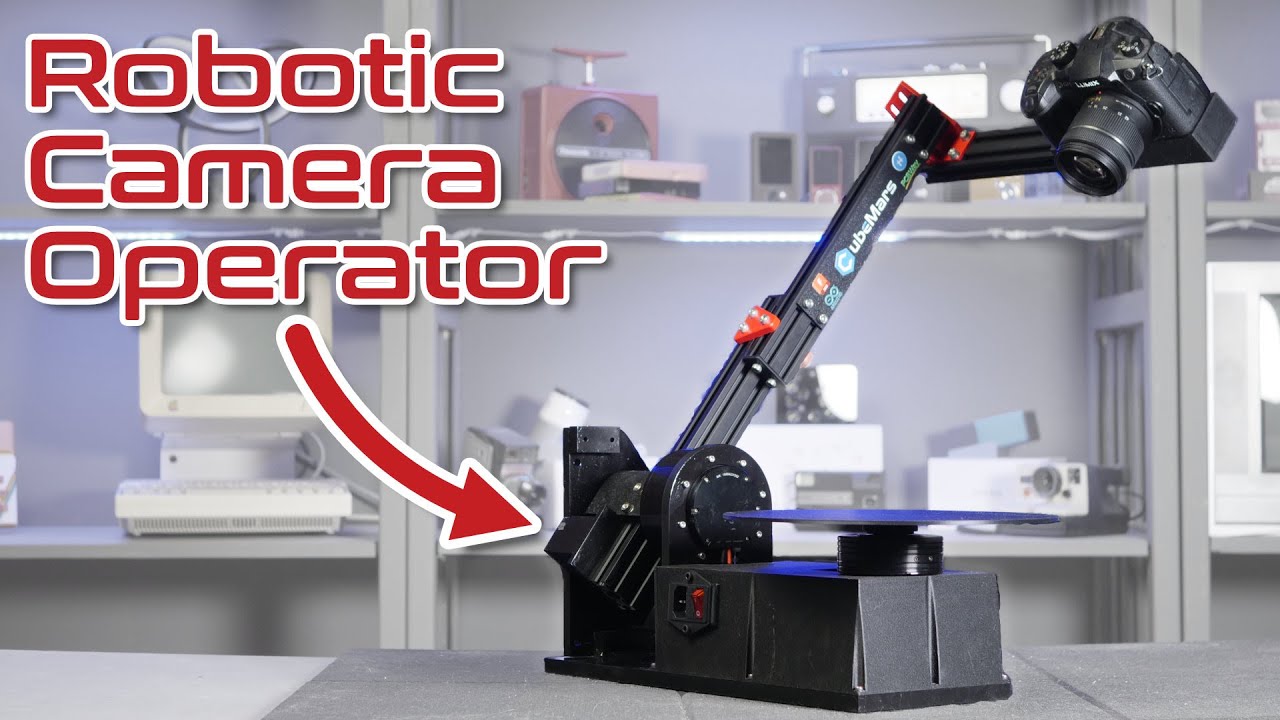
A typical example is the open-source dual-axis stabilized camera robotic arm system CamRo.
This system is a remotely controllable and programmable dual-axis stabilized camera platform. Its core objective is to achieve stable camera attitude control and smooth following capability under high-speed motion or complex posture changes. In this system, the core actuation units use CubeMars AK series integrated actuators, including the AK80-64 and AK60-6 V1.1, to drive motion control on different axes respectively. Planetary actuators provide higher torque limits than traditional brushless motors, while also offering faster dynamic response than harmonic drive systems, ensuring smooth camera attitude following during motion.
The emergence of this type of high-dynamic-control system also reflects ongoing changes in robotic transmission architectures.
In the past, robotic joint systems emphasized the torque amplification capability and positioning precision brought by high reduction ratios. However, in recent humanoid robots, quadruped robots, and exoskeleton systems, the design focus has gradually shifted toward dynamic response, force control capability, and human-machine interaction compliance.
Under this trend, the design objective of transmission systems has also begun shifting from “maximum output capability” toward “a balance between dynamic performance and control capability,” making low reduction ratio planetary transmission structures an emerging technical direction.
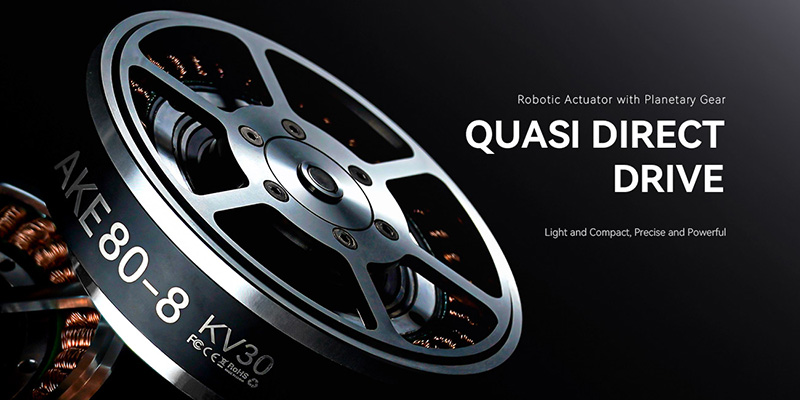
Based on this combination, the so-called Quasi-Direct Drive (QDD) architecture has gradually formed. In the QDD architecture, planetary gearboxes are not replaced, but instead redefined as “dynamic performance regulation units.”
By reducing the reduction ratio, the transmission system can achieve a better balance between torque output capability and dynamic response performance, while effectively suppressing the amplification effect of reflected inertia, thereby improving joint controllability and adaptability in complex environments.
For example, in exoskeleton research based on QDD technology, the research team adopted the CubeMars AK10-9 V1.1 integrated motor module and achieved direct hip-joint drive control through a low reduction ratio configuration. Based on the motor dynamics model, interaction forces were estimated, thereby enabling the estimation of human-machine interaction force without requiring additional force sensors.
This method indirectly estimates output torque and contact force by utilizing current, angular velocity, and system dynamic models, reducing system complexity and hardware dependence while maintaining control precision.
Relevant experimental results show that this type of method can maintain relatively low error levels in gait assistance scenarios while improving overall system response performance and interaction stability.
This type of research further demonstrates that, in low reduction ratio architectures, the role of planetary gearboxes is shifting from “pure torque amplification components” toward “dynamic characteristic regulation components.” Their design focus is also gradually shifting from maximum torque output toward overall optimization of dynamic performance, control bandwidth, and human-machine interaction capability.
In robotic joint systems, transmission structures are no longer merely simple “speed reduction and torque amplification components,” but have become key elements that directly affect overall dynamic performance and control quality. Planetary gearboxes, with their high torque density, compact structure, and excellent load distribution capability, are widely applied in highly dynamic systems such as quadruped robots, humanoid robots, and exoskeletons, and are extensively integrated into unified joint actuators.
Through analysis of multiple application cases including quadruped robots, exoskeleton systems, and humanoid robots, it can be seen that modern robotics is gradually evolving from traditional high reduction ratio designs toward low reduction ratio and Quasi-Direct Drive (QDD) architectures. During this process, the role of planetary gearboxes is also changing from pure power amplification toward key structural units for inertia regulation, response optimization, and improvement of human-machine interaction compliance.
Overall, the development trend of robotic transmission systems is moving from “mechanical performance optimization” toward “integrated dynamics and control design,” and planetary gearboxes are positioned at the core of this evolution process.