Create your CubeMars account

Exoskeleton robots are rapidly transforming the way humans interact with machines, enabling enhanced strength, improved mobility, and more efficient rehabilitation. From medical assistive devices that support patients with mobility impairments to industrial systems that reduce worker fatigue and injury risk, exoskeletons are becoming an essential part of modern robotics applications.
Unlike conventional robots, exoskeleton systems operate in direct physical contact with the human body. This fundamental characteristic introduces a unique set of engineering challenges, where performance cannot be evaluated by output capability alone. Instead, actuator design must carefully balance power, weight, responsiveness, and safety within a highly constrained, human-centered environment.
Among all components, the motor plays a decisive role in determining system performance. It directly affects torque output, motion smoothness, energy efficiency, and overall user comfort. However, increasing motor power is not a straightforward solution. Higher output often leads to increased weight, thermal load, and control complexity—factors that can negatively impact wearability and user safety.
As a result, two critical considerations define motor selection for exoskeleton robots:
Power Density — ensuring sufficient output while minimizing size and weight
Human Safety — guaranteeing compliant, predictable, and safe interaction with the user
Achieving an optimal balance between these factors is essential for designing effective and reliable exoskeleton systems. In the following sections, we will explore the key motor requirements, the importance of power density, and the safety considerations that guide actuator design in wearable robotics.
Designing motors for exoskeleton robots requires a fundamentally different approach compared to traditional robotic systems. Because these devices operate in direct contact with the human body, actuator performance must go beyond output capability—it must enable safe, natural, and efficient human movement.
Below are the key factors engineers must consider when selecting motors for wearable robotics:
High Power-to-Weight Ratio
Exoskeletons are wearable systems, making weight a critical constraint. Every additional kilogram increases metabolic cost and reduces user comfort, particularly in long-duration use cases such as rehabilitation or industrial assistance.
Motors must therefore deliver sufficient torque and power while maintaining minimal mass. A high power-to-weight ratio enables:
Reduced physical burden on the user
Improved energy efficiency and battery life
Enhanced dynamic performance without oversized components
In lower-limb exoskeletons, joint torque requirements can be substantial (e.g., knee joints often require tens of Nm), reinforcing the need for compact yet powerful actuators.
Compact and Lightweight Integration
Beyond raw motor weight, overall actuator packaging is equally important. Exoskeleton joints must align closely with human anatomy, leaving limited space for mechanical components.
Highly integrated actuator designs—combining motor, gearbox, and driver electronics—offer key advantages:
Reduced system complexity and wiring
Easier mechanical integration into joints
Improved reliability and faster deployment
Compact modular actuators are particularly beneficial for wearable robotics, where space constraints and ergonomics directly affect usability.
Backdrivability and Mechanical Compliance
Unlike industrial robots, exoskeletons must allow natural human motion, even when the system is unpowered or operating in assistive modes. This requires actuators to be backdrivable, meaning external forces (from the user) can drive the motor with minimal resistance.
Key benefits include:
More natural and intuitive movement
Reduced risk of joint misalignment or injury
Improved safety during unexpected interactions
Backdrivability is strongly influenced by factors such as gear reduction ratio, friction, and motor inertia. Lower reduction ratios and optimized transmission design can significantly improve system compliance.
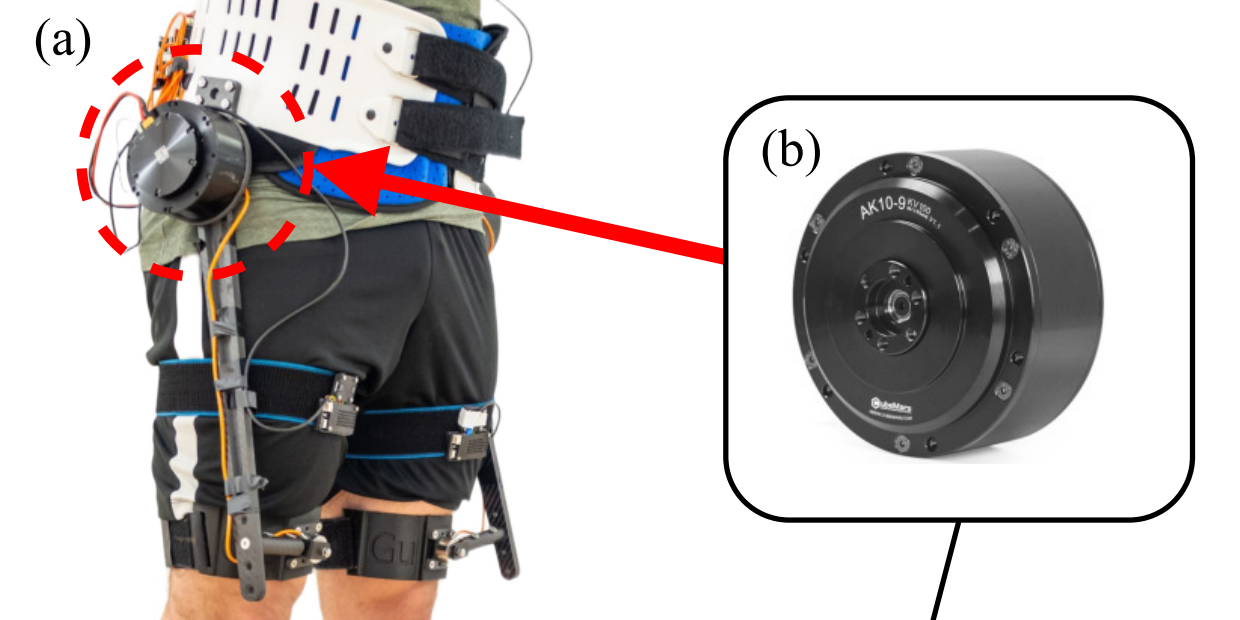
This concept is further validated in recent research on quasi-direct drive (QDD) actuation, which demonstrates that low-impedance actuators significantly improve backdrivability and interaction safety.
For example, a study on QDD-based exoskeleton systems shows that accurate human–robot interaction force estimation can be achieved with a mean error of approximately 6.4% of rated force output, enabling more responsive and safe assistance.
Precise Torque and Position Control
Exoskeleton performance depends heavily on how accurately the system can synchronize with human motion. This requires precise control over both torque output and position.
In many applications, torque control is particularly critical:
Rehabilitation systems require controlled assistance or resistance
Gait support systems must adapt to real-time movement patterns
Human-robot interaction depends on smooth and predictable force output
High-resolution sensors and advanced control algorithms enable actuators to deliver stable and responsive performance, ensuring seamless coordination between the user and the machine.
Efficiency and Thermal Management
Since exoskeletons are typically battery-powered, motor efficiency directly impacts operating time and system practicality. Inefficient motors not only drain power quickly but also generate excess heat.
Thermal performance is especially important in wearable systems:
Heat buildup can affect user comfort and safety
Limited space restricts cooling options
Continuous operation requires stable temperature control
Efficient motor design, combined with optimized drive electronics, helps maintain consistent performance while minimizing thermal risks.
Taken together, these requirements illustrate a key reality: Motor selection for exoskeleton robots is a multi-variable engineering problem.
Power, size, compliance, control accuracy, and thermal behavior must all be balanced to achieve a system that is not only powerful,but also wearable, safe, and intuitive.
Power density is a key factor in exoskeleton motor design. It describes how much power a motor can produce relative to its size or weight. In wearable robotics, high power density allows the exoskeleton to provide strong assistance without adding unnecessary bulk, keeping the device comfortable and easy to wear.
What Power Density Means for Exoskeletons
Simply put, a motor with high power density delivers more output while staying compact and lightweight. This is especially important because exoskeletons are worn directly on the body, and any extra weight can increase user fatigue and reduce comfort.
High power density helps the robot respond quickly to human movement and maintain smooth, natural motion.
Why Power Density Matters
High power density brings several advantages for wearable robotics:
Comfortable Wearability – Lighter motors reduce strain on the user.
Energy Efficiency – Smaller, efficient motors consume less battery power.
Responsive Movement – Low-inertia actuators react quickly, allowing natural motion.
Simpler Integration – Compact motors fit more easily into joint assemblies.
In short, power density enables exoskeletons to be both strong and wearable at the same time.
A real-world example of this principle can be seen in CubeMars Robotic Actuator Powering Georgia Tech's AI Exoskeletons Featured In Science Advances, where high power density actuators enable adaptive assistance across different terrains.
The system dynamically adjusts torque output based on real-time terrain recognition, achieving both strong assistance and natural movement while maintaining a lightweight wearable structure.
Trade-offs in High Power Density Design
While high power density offers clear benefits, it introduces several engineering challenges:
Thermal Management – Small, high-output motors can overheat quickly if not properly cooled.
Mechanical Stress – Compact designs may increase stress on gears or bearings, reducing lifespan.
Cost and Material Constraints – Advanced alloys, magnets, and winding techniques often increase production cost.
Torque vs Speed Trade-off – High-speed motors can achieve power density but may require gear reduction to meet torque requirements.
Balancing these trade-offs is crucial for delivering a motor that is powerful, wearable, and reliable.
Implications for Exoskeleton Motor Selection
When selecting motors for exoskeletons, engineers must consider not only peak power, but also continuous power output, thermal limits, and response characteristics.
Guiding principles include:
Choose high-efficiency brushless motors to maximize power per unit weight.
Evaluate gear reduction ratios carefully to maintain backdrivability and compliance.
Consider modular actuator designs, which combine motor, gearbox, and driver electronics to save space while maintaining high output.
In practice, high power density motors are often the cornerstone of modern exoskeleton systems, enabling both performance and user comfort.
Exoskeleton robots operate in direct contact with the human body, which makes safety a top priority in motor selection. Unlike traditional robots, these devices must respond smoothly to human movement and prevent any risk of injury. Human safety in exoskeletons depends on both mechanical design and control strategies.
Mechanical Safety
A safe exoskeleton starts with its hardware. Motors and joints should be designed to minimize the risk of injury:
Low Inertia Motors – Lighter moving parts reduce the impact of sudden stops or collisions.
Compliant Actuators – Flexible or series-elastic designs allow the joint to absorb unexpected forces.
Safe Joint Range – Limiting the motion of each joint prevents overextension or unnatural positions.
Mechanical safety ensures that even in case of malfunction or sudden user movement, the system will not cause harm.
Control-Level Safety
Motor control plays a critical role in maintaining safe human-robot interaction:
Torque Limiting – Motors are programmed to never exceed safe force levels for the user.
Collision Detection – Sensors can detect unexpected resistance and stop or adjust motion.
Smooth Motion Profiles – Gradual acceleration and deceleration prevent jerky movements.
Effective control strategies allow the exoskeleton to assist without overpowering the wearer, making the experience intuitive and predictable.
Thermal Safety
Because exoskeletons are worn directly on the body, heat management is an essential safety consideration:
Motors should be designed to minimize heat generation during continuous operation.
Surface temperatures must remain safe to the touch, even under extended use.
Efficient cooling strategies or low-heat designs help protect both the device and the user.
These features ensure that the system remains safe under unexpected conditions or power failures.
Implications for Motor Selection
When selecting motors for exoskeletons with human safety in mind:
Choose motors with low inertia and smooth, controllable output.
Prioritize backdrivability and compliance for natural, safe movement.
Consider modular actuator solutions that integrate safety-focused features while maintaining compact design.
By focusing on safety at both the mechanical and control levels, exoskeletons can provide effective assistance without compromising user well-being.
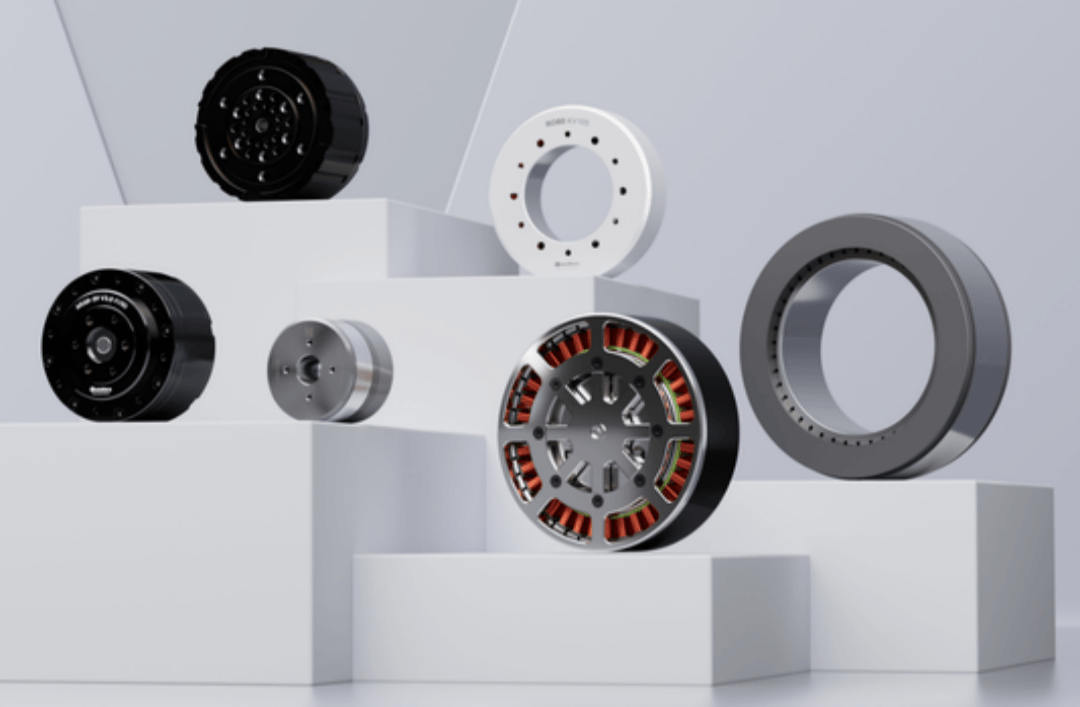
Choosing the right motor technology is a cornerstone of exoskeleton design. The motor directly affects performance, wearability, and safety, and different technologies offer unique strengths that suit different applications. Understanding these options helps engineers design systems that feel natural, safe, and efficient.
1. Brushless DC Motors (BLDC)
Why they are widely used:
High efficiency converts more electrical energy into mechanical power, extending battery life.
Compact and lightweight, enabling stronger output without increasing user fatigue.
Smooth and precise torque control ensures natural, human-like motion.
Ideal for:
Both lower-limb and upper-limb exoskeletons
Applications requiring reliable, responsive assistance
BLDC motors are the backbone of many wearable robots, offering a balance of performance and practicality.
2. Frameless Motors
Frameless motors are motor cores without housings, which allows direct integration into the exoskeleton joint.
Advantages:
Space Efficiency: Perfect for compact joints and tight assemblies.
Custom Integration: Can be combined with gearboxes, sensors, or encoders for specialized applications.
High Power Density: Delivers strong torque in minimal space.
Applications:
Lightweight rehabilitation devices
Robotic arms or legs where every millimeter counts
Frameless motors provide designers the flexibility to embed actuators seamlessly into the human interface.
3. Integrated Actuator Modules
These are complete units combining motor, gearbox, and driver electronics into a single compact assembly.
Benefits:
Simplifies mechanical and electrical integration
Reduces wiring and potential points of failure
Delivers consistent, predictable performance
Why CubeMars Modules Stand Out:
High torque density in a lightweight design
Smooth and controllable motion suitable for human interaction
Modular architecture allows easy customization for different joints or exoskeleton types
Integrated actuators allow engineers to focus more on system-level design rather than individual components.
4. Comparing Technologies at a Glance
| Technology | Key Strengths | Best Use Case |
| BLDC Motor | High efficiency, smooth control | General-purpose exoskeletons |
| Frameless Motor | Space-saving, customizable | Compact joints, specialized designs |
| Integrated Robotic Actuator | Simplified integration, consistent performance | Industrial or medical wearable robots |
5. Matching Technology to Application
Rehabilitation Exoskeletons: Smooth motion, compliance, and safety take priority. Frameless or integrated actuators are often preferred.
Industrial Assistance Robots: High torque and continuous output matter most; BLDC or integrated modules may be chosen.
Performance Enhancement Systems: Rapid response and high dynamic power are critical, often requiring high-power-density BLDC or advanced integrated actuators.
Selecting the right motor technology is about balancing performance, safety, and comfort to create exoskeletons that feel natural and reliable.
Designing exoskeletons requires careful balancing between power, safety, and user comfort. Unlike traditional robots, wearable devices must deliver assistance without compromising human well-being. Each design choice impacts multiple aspects of performance.
1. Power vs Wearability
High-power motors enable stronger assistance and faster responses, but they also add weight and bulk. This can make the exoskeleton harder to wear for extended periods.
Considerations:
Heavier motors increase fatigue during long sessions
Bulky actuators can limit joint range of motion
Designers must find the minimal motor size that still meets torque requirements
Optimal design delivers sufficient power while keeping the system lightweight and comfortable.
2. Safety vs Responsiveness
Motors that respond too aggressively can pose risks to the wearer, while overly cautious systems may feel unresponsive. Safety requires precise control over torque and motion.
Key approaches:
Use torque limits to prevent excessive force
Incorporate compliance or series-elastic elements to absorb unexpected loads
Implement smooth motion profiles to avoid sudden jerks
Balancing safety and responsiveness ensures that the exoskeleton assists naturally without risking injury.
3. Comfort vs Mechanical Complexity
Integrating advanced motors often involves gearboxes, sensors, and electronics. While these improve performance, they can increase complexity, weight, and maintenance needs.
Design strategies:
Favor modular actuator modules for compact, integrated solutions
Minimize wiring and exposed components that may interfere with movement
Consider ergonomics of joint placement and attachment points
Comfort is a critical factor, as even high-performance exoskeletons will be underutilized if they are uncomfortable to wear.
4. Finding the Right Balance
Every exoskeleton project involves trade-offs. Engineers must prioritize based on application:
Rehabilitation devices: Emphasize safety and comfort over maximum power
Industrial assistive exoskeletons: Higher power is needed, but safety and ergonomics remain critical
Performance augmentation: Power and responsiveness take priority, but comfort cannot be ignored
The most successful designs balance these three factors, creating exoskeletons that are powerful, safe, and wearable.
Exoskeletons require motors that balance high power density with user safety. CubeMars offers a variety of actuators optimized for these criteria, enabling designers to select motors that deliver sufficient assistance while maintaining comfort and reliability.
| Motor Category | Recommended CubeMars Models | Typical Applications | Why CubeMars? |
| Joint Actuator Modules | AK10‑9 V3.0 KV60, AK80-9 V3.0 KV100 | Rehabilitation exoskeletons, wearable assistive devices, lightweight industrial support | Compact, plug-and-play modules; balance between power output and safe human interaction |
| Quasi Direct Drive Motors | AKE90‑8 KV35, AKE80‑8 KV30 | Performance augmentation exoskeletons; lower-limb actuation requiring fast response | Streamlined motor-gear integration; responsive and safe for dynamic movements |
| Frameless Torque Motors | RI60 KV120, RO80 KV105 | Custom industrial or research exoskeletons; rapid prototyping; bespoke mobility systems | Flexible for unique designs; ensures high torque density with safe, natural motion |
By aligning CubeMars motor technologies with specific exoskeleton requirements, developers can ensure their designs are powerful, wearable, and safe, while also leveraging the flexibility and integration advantages of CubeMars product families.
Exoskeleton motor selection is a careful balance of power density, responsiveness, and human safety. High-performance, compact actuators enable strong assistance while keeping wearable systems lightweight, comfortable, and intuitive. CubeMars motors—including AK series joint actuators, AKE quasi direct drive units, and RI/RO frameless modules—deliver smooth motion, precise torque control, and efficient power-to-weight ratios, addressing the unique challenges of human-centered robotic systems.
By matching motor technologies to specific applications—rehabilitation, industrial assistance, or performance augmentation—developers can create exoskeletons that are safe, effective, and user-friendly. CubeMars solutions provide modularity, integration flexibility, and high power density, ensuring exoskeleton designs that are not only technically robust but also optimized for wearability and human interaction.


