Create your CubeMars account

As robots evolve from “being able to move” to achieving “high-performance motion,” the demands on real-time responsiveness, precision, and stability are rapidly increasing. Whether in humanoid robots, quadruped robots, or exoskeleton systems, the core challenge is no longer just completing movements, but achieving more natural, faster, and safer motion control.
In this process, traditional distributed actuation solutions are gradually exposing clear limitations: long control chains lead to increased latency, multi-module coordination raises system complexity, and it becomes difficult to stably implement advanced control algorithms such as force control and impedance control.
The emergence of highly integrated actuators is precisely aimed at solving these “system-level problems.” By moving the control loops inside the actuator, they significantly reduce signal latency, improve response speed, and greatly enhance overall control stability. This enables robots to achieve higher-frequency and more precise motion control, allowing them to maintain balance and perform complex movements in dynamic environments.
Therefore, robots are increasingly relying on highly integrated actuators because:
The performance bottleneck is gradually shifting from the “algorithm layer” to the “actuation system layer.”
A highly integrated robotic actuator is a modular power unit that integrates multiple core components into a single system, typically including:
Motor (provides fundamental driving force)
Gear reducer (increases torque output)
Motor driver (enables precise current control)
Sensors (such as encoders for position and velocity feedback)
Control algorithms (enable current / velocity / position closed-loop control)
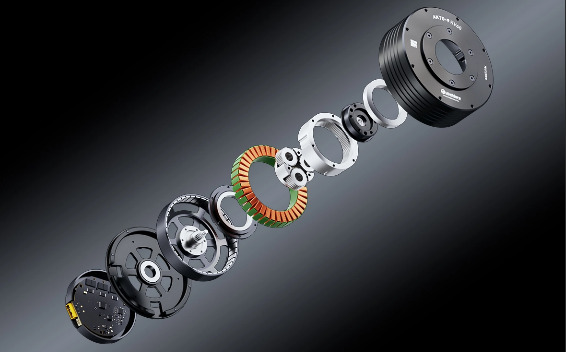
Compared with the traditional “motor + external driver + external sensors” architecture, a highly integrated actuator encapsulates all these functions into a compact module, achieving:
Lower-latency local closed-loop control
Higher system integration and reliability
Simpler engineering deployment (plug-and-play)
From an engineering perspective, it is not only a form of hardware integration, but also an upgrade in system architecture—transforming complex control systems into standardized and reusable functional modules.
In modern robotics, highly integrated actuators are becoming the core power unit. By deeply integrating motors, reducers, drivers, and sensors, these actuators significantly improve system compactness and reliability, while reducing control latency and system complexity. This allows robots to achieve a better balance between performance and engineering implementation. In simple terms, the actuation system largely determines a robot’s torque capability, control precision, and dynamic response.
Under this technological trend, the “performance ceiling” of robots is being redefined.
As robots transition from “being able to move” to “being truly usable,” the limiting factor is no longer the mechanical structure itself, but the actuation system.
Especially in humanoid robots, quadruped robots, and exoskeleton devices, actuators must not only “drive motion,” but also simultaneously deliver:
Power output
Precise control
Dynamic response
Safe interaction
The CubeMars AK series of highly integrated actuators (AK60 / AK70 / AK80) was developed under this background, aiming to solve the limitations of traditional solutions in size, latency, and control complexity.
The CubeMars AK series is not a single product, but a modular actuation system covering different load requirements.
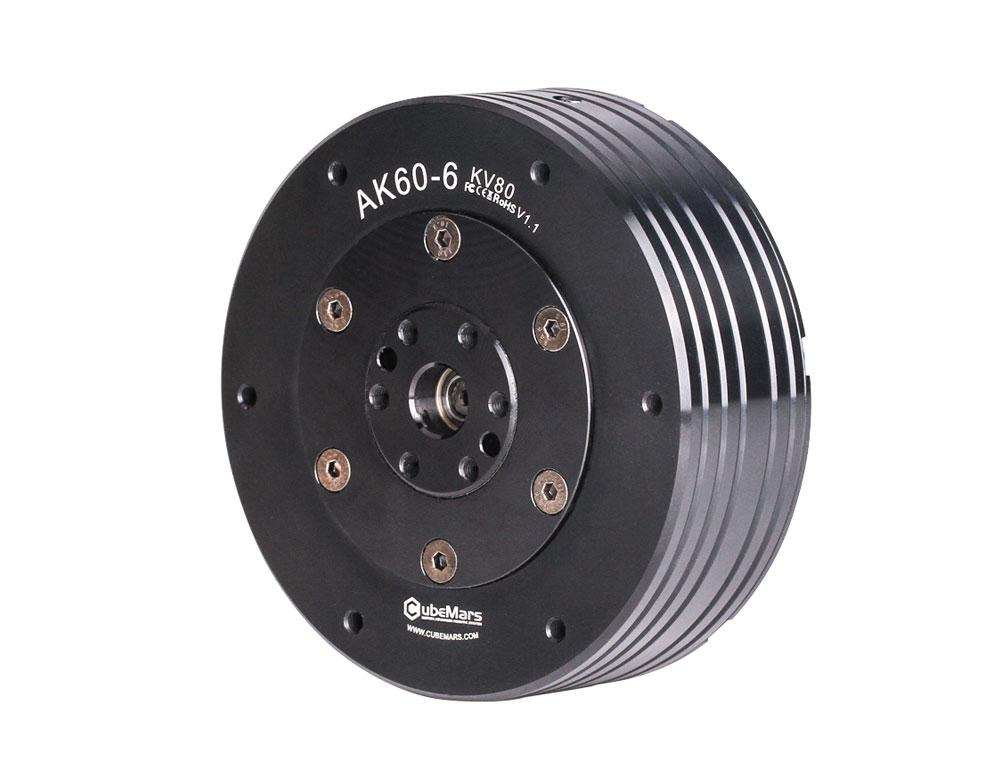
Positioning keywords: Lightweight / Compact / Precision control
Suitable for:
Small robot joints
Educational and research platforms
Light-load robotic arms
Features:
Compact size, easy integration
High control precision
Low energy consumption
Key advantage: Ideal for fine motion in space-constrained scenarios
AK60 Series Core Parameter Comparison
| Model | Reduction Ratio | Peak Torque | Rated Torque | No-Load Speed | Weight |
| AK60-6 V3.0 KV80 | 6:1 | 9 | 3 | 320 / 640 | 380 |
| AK60-6 V1.1 KV80 | 39:1 | 72 | 24 | 98 | 750 |
| AK60-6 V1.1 KV80 | 6:1 | 9 | 3 | 320 | 368 |
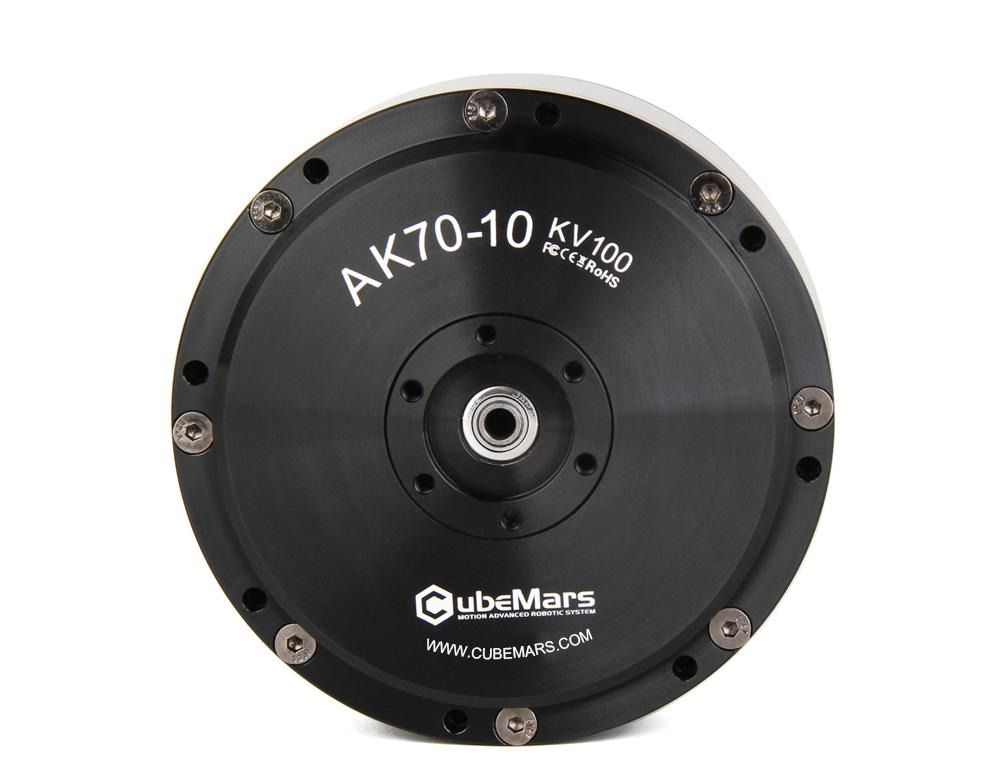
Positioning keywords: Versatile / Balanced / Dynamic performance
Suitable for:
Quadruped robots
Medium-sized robotic joints
Mobile robots
Features:
● Balanced torque and size
● Excellent dynamic response
● Strong stability
Summary advantage: Ideal for “dynamic motion + general development” scenarios
AK70 Series Core Parameter Comparison
| Model | Reduction Ratio | Peak Torque | Rated Torque | No-Load Speed | Weight |
| AK70-10 KV100 | 10:1 | 24.8 | 8.3 | 240/480 | 521 |
| AK70-9 KV60 | 9:1 | 29.2 | 8.5 | 320 | 540 |
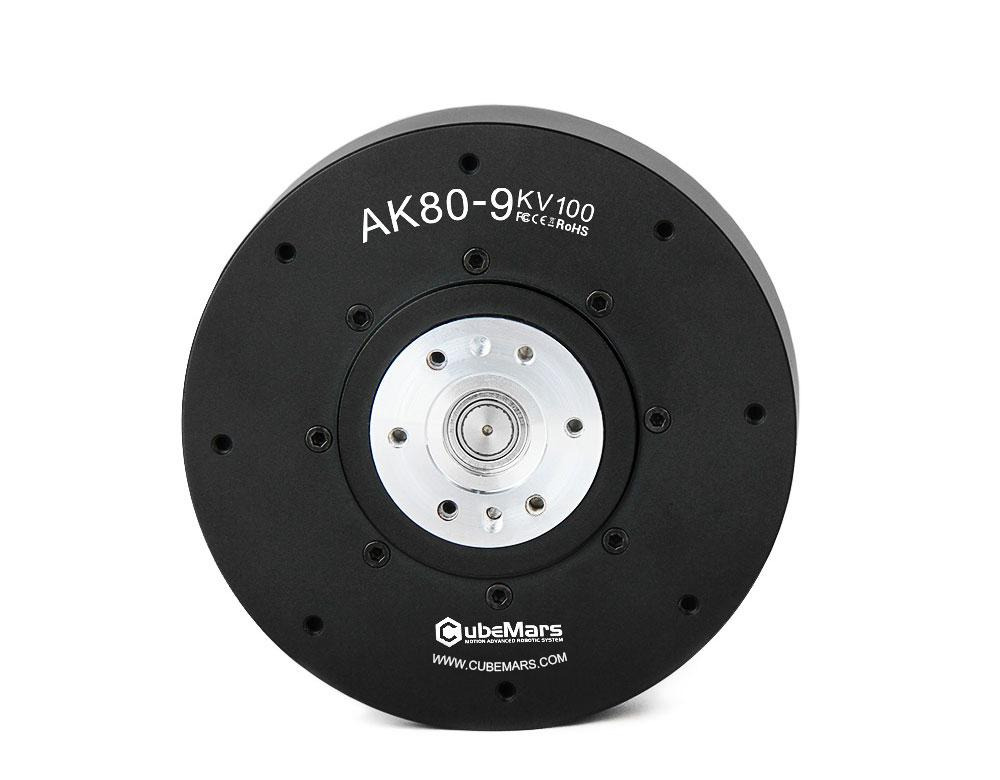
Positioning keywords: High load / High power / Strong output
Suitable for:
Humanoid robot hip joint motors
Humanoid robot knee joint motors
Exoskeleton systems
Industrial robots
Features
High torque output
Enables complex motions such as jumping and load-bearing tasks
Excellent force control performance
Summary advantage: Ideal for “load-bearing + high dynamic motion” scenarios
AK80 Series Core Parameter Comparison
| Model | Reduction Ratio | Peak Torque | Rated Torque | No-Load Speed | Weight |
| AK80-9 V3.0 KV100 | 9:1 | 22 | 9 | 390 | 490 |
| AK80-8 KV60 | 8:1 | 25 | 10 | 360 | 570 |
| AK80-6 KV100 | 6:1 | 12 | 6 | 800 |
High Torque Density: Breaking the Size Constraint
Traditional motors often face the limitation that “larger size → higher torque.” The AK series
overcomes this through:
High-performance permanent magnet materials
Optimized magnetic circuit design
Improved slot fill factor and electromagnetic efficiency
Achieving: higher torque output in a smaller volume
Engineering significance:
Reduces overall robot weight
Improves energy efficiency
Enhances motion agility
FOC (Field-Oriented Control): The Key to Smooth Motion
The AK series adopts advanced FOC control algorithms, implementing a three-loop control
system:
Current loop
Velocity loop
Position loop
Benefits:
Jitter-free start and stop
Smooth acceleration and deceleration
High-precision trajectory tracking
Compared to traditional control:
Faster response (millisecond-level)
Significantly improved control accuracy
High-Resolution Encoding System: Precise Motion Sensing
Built-in high-precision encoders enable:
Real-time angle feedback
High-resolution position detection
Multi-turn absolute measurement (on some models)
Supporting advanced control:
Torque control
Impedance control
Compliant control
Integrated Structure: From Component Assembly to System Optimization
The core advantage of the AK series lies in its high level of integration.
Traditional solution:
Motor + reducer + driver + encoder → separated
CubeMars solution:
Highly integrated actuator module
Engineering value::
Reduced signal latency
Improved system stability
Simplified mechanical and electrical design
Significantly shortened development cycle
In robotics, “better specifications” do not equal “successful applications.” True value is proven in real-world scenarios such as medical, competition, and extreme environments.
The CubeMars AK series (AK60-6, AK70, AK80) has already been deployed in multiple real projects.
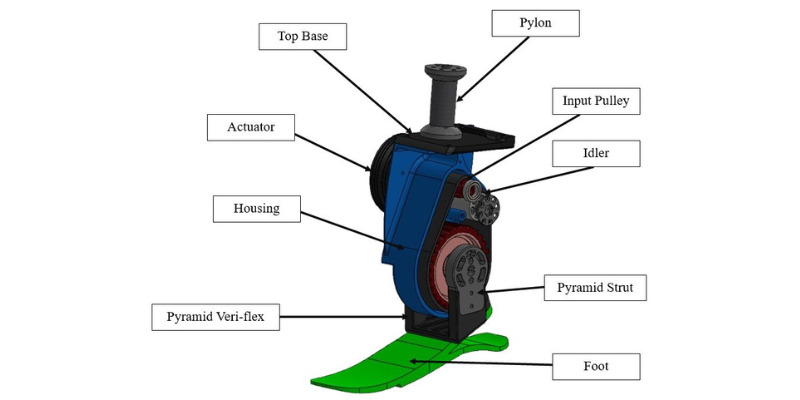
一、 Low-Cost Intelligent Prosthesis: How AK60-6 Improves Accessibility
Project background
A student team in Nepal developed a low-cost ankle-foot prosthesis to address the high cost and limited accessibility of prosthetics in developing countries.
Challenges:
High cost
Limited functionality
Difficulty replicating natural gait
Solution:
3D-printed structure
Human-motion-based control logic
CubeMars AK60-6 actuator as core drive
Key contributions:
High torque + high precision control
Fast response
High reliability
Results:
Successful prototype development and validation
Significant cost reduction
Practical solution for developing regions
Core value:
High-performance actuators = key driver of accessible medical technology
二、 Mars Rover Competition: Reliable Drive in Extreme Environments
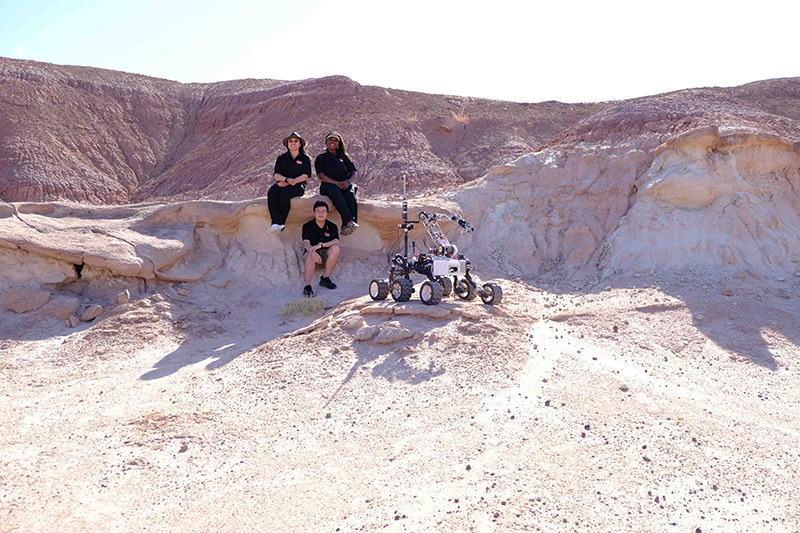
Project background
Toronto MetRobotics participated in the University Rover Challenge (URC), aiming to develop robots capable of operating in Mars-like environments.
Challenges:
Complex terrain
High-load mobility
Long-duration operation
Solution:
High torque output
High reliability design
Efficient energy use
Results:
Achieved 2nd place in Canada in the URC competition
Stable performance in harsh environments
Core value:
High reliability + high torque = sustained operation in extreme conditions
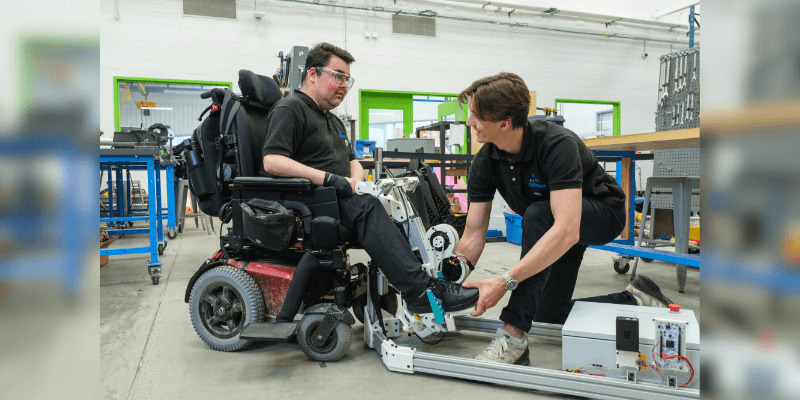
三、 Autonomous Rehabilitation Stretching Device
Project background
A patient with muscular dystrophy collaborated with a team to develop an autonomous calf stretching device for daily rehabilitation.
Challenges:
Manual dependency
Inconsistent training
Low control precision
Solution:
Smooth and safe motion control
Real-time adjustment
Low noise and high stability
Results:
Automated rehabilitation
Improved user experience
Promoted home rehabilitation development
Core value:
Precision control + stability = medical-grade user experience
1、Performance advantages
High torque density
Fast response
High precision
2、Engineering advantages
Integrated design
Easy integration
Shorter development cycle
3、Application advantages
Multi-scenario coverage
Proven in real-world projects
Robot actuation systems are evolving toward:
Higher power density
Lower latency control
Smarter control (AI + force control)
More standardized and modular solutions
CubeMars continues to iterate in this direction, driving robots from “functional” to “high-performance.”
From an industry perspective, robotics is evolving from a stage of functional realization to one of performance-driven competition. In this transition, the true factor that determines a robot’s upper performance limit is no longer just mechanical design or algorithm capability, but the performance and integration level of the actuation system itself.
Represented by the CubeMars AK series, highly integrated all-in-one actuators are redefining the design paradigm of robotic power systems:
From discrete components → highly integrated systems
From basic operation → high-performance motion
From complex development → rapid deployment
From a product perspective, the AK series establishes a comprehensive actuator ecosystem:
AK60: Lightweight + high-precision control
Designed for fine motion, small joints, and research applications AK70: Balanced performance + dynamic response
Ideal for quadruped robots and general motion control AK80: High torque + high load capacity
This product matrix not only covers a wide range of load and application requirements, but more importantly, it unifies control logic and system architecture. This enables developers to rapidly transfer and reuse solutions across different robotic platforms, significantly improving R&D efficiency.
From an engineering standpoint, the value of highly integrated actuators goes far beyond parameter improvements—it represents a leap in system-level capability:
Lower latency → enabling true real-time control
Higher integration → reducing system failure points
Greater consistency → improving overall system stability
Simplified development → shortening time-to-market
In real-world applications—whether low-cost medical prosthetics, Mars exploration robots, or rehabilitation devices—these cases demonstrate one key fact:
High-performance actuators are becoming the critical infrastructure that enables robots to move from the laboratory into the real world.
Looking ahead, the evolution of robotic actuation systems is becoming increasingly clear:
Higher power density (smaller size, greater output)
Lower control latency (millisecond-level or beyond)
Smarter control (integration of force control and AI)
More standardized modules (true plug-and-play systems)
Through continuous iteration of the AK series, CubeMars is driving robots forward—from simply being able to move, to moving better, and ultimately to moving more like humans.