Create your CubeMars account

Actuators are not only the source of power but also the core component that determines the upper performance limits of a system.
In a typical industrial automation system, the controller sends commands through a driver to the actuator, which ultimately converts them into mechanical motion. The performance of the actuator directly affects the system’s dynamic response, positioning accuracy and repeatability, energy efficiency, and thermal management, while also playing a critical role in overall system stability.
Hydraulic actuators transfer energy to mechanical structures through fluid pressure, offering irreplaceable advantages in heavy-load scenarios. Hydraulic systems can provide extremely high force output, strong shock resistance, and stable performance under long-term, high-load conditions, making them indispensable in construction machinery and heavy industry.
In practical applications, manufacturers such as Caterpillar and Komatsu widely use hydraulic actuators for excavation, lifting, pressing, and other high-load operations. These machines often operate continuously on uneven or complex terrain while handling ton-level loads. Hydraulic actuators maintain output force and responsiveness through high-pressure fluid, ensuring stable operation even under extreme working conditions.
Additionally, hydraulic actuators offer scalability and flexibility in system design. By adjusting pump pressure and flow, actuator performance can be optimized for different loads and tasks, supporting complex multi-degree-of-freedom motions. This makes hydraulic solutions irreplaceable in large industrial equipment, mining machinery, and port cranes.
From a technological perspective, although electric actuators are gaining ground in light to medium load applications, hydraulic actuators remain the most reliable choice in extreme load conditions and environments requiring high impact resistance.
Pneumatic actuators use compressed air to drive mechanical motion. With fast response and high-frequency repeatability, they play a key role in automated production lines. Compared to hydraulic systems, pneumatic systems have limitations in force output but offer simple structure, low cost, and easy maintenance, making them ideal for high-speed repetitive tasks.
For example, in food packaging, electronic component sorting, logistics sorting centers, and automotive assembly lines, pneumatic actuators from companies like SMC Corporation are widely used. They ensure reliable continuous operation under high cycle rates while maintaining stable system response.
From an engineering standpoint, pneumatic actuators are easy to integrate with sensors, PLCs, and other control systems. By adjusting air pressure and flow rate, motion range, speed, and force output can be controlled. Modern pneumatic systems, combined with intelligent control and feedback technologies, are gradually improving precision and expanding into automation, collaborative robotics, and light industry.
Although pneumatic systems are less capable in precise torque control and long-term stability compared to electric or hydraulic solutions, their high-frequency operation, cost-effectiveness, and reliability make them indispensable in high-speed production and logistics environments.
Electric actuators convert electrical energy directly into mechanical motion through motors, offering significant advantages in precision control and intelligent applications. Leveraging servo motors or brushless motors combined with closed-loop control systems, electric actuators enable precise regulation of position, speed, and torque.
They deliver superior performance in dynamic response, control accuracy, and energy efficiency, making them essential components in industrial robots and intelligent mobile systems.
In industrial or robotics applications, collaborative robots commonly use electric actuators as joint drive units. These systems must deliver stable torque within limited space while ensuring smooth and controllable low-speed operation. In human-robot interaction scenarios, actuators must provide rapid response, high precision, safe and stable power output.
For example, Mentee Robotics’ MenteeBot uses integrated actuators with high torque output and precise torque control in its joints. During assisted shopping tasks, it adjusts motion rhythm in real time based on user behavior, achieving smooth and natural interaction during pushing and following tasks.
In addition, electric actuators offer high integration and modularity. By integrating motors, gearboxes, encoders, and drivers into a single unit, system complexity and wiring requirements are reduced while improving response performance and control efficiency. Software optimization further enhances energy efficiency and thermal management, ensuring stable long-term operation.
From a development perspective, as industrial automation evolves toward intelligence and flexibility, electric actuators are gradually replacing traditional solutions and becoming the mainstream choice—especially in applications requiring high precision, fast response, and advanced control capabilities.
Performance Comparison of the Three Main Actuator Types
Type | Control Accuracy | Output Force | Application Scenarios | Characteristics |
Hydraulic Actuator | Medium precision, suitable for heavy-duty motion | Extremely high force, supports ton-level loads | Construction machinery, heavy industrial equipment | Strong impact resistance, ideal for extreme loads |
Pneumatic Actuator | Limited precision, suitable for simple motions | Medium force, suitable for repetitive tasks | High-speed packaging, sorting lines | Low cost, high speed, not precision-focused |
Electric Actuator | High-precision closed-loop control | Medium to high load capability | Industrial robots, cobots, medical devices | Fast response, high integration, supports industrial communication |
Industrial actuator technology will exhibit the following major trends in the coming years:
Intelligence and Automation
With the widespread adoption of Industry 4.0, the Internet of Things (IoT), and industrial big data technologies, industrial actuators are rapidly evolving toward “intelligence.” Future actuators will be more than just mechanical drive components; they will be intelligent devices capable of self-awareness, analysis, and decision-making.
Self-Diagnosis and Predictive Maintenance: Intelligent actuators can monitor their own status in real time, collect data such as vibration, temperature, and current via sensors, automatically analyze potential failure risks, and implement predictive maintenance to reduce downtime and improve equipment reliability.
Adaptive Control: By integrating artificial intelligence (AI) and machine learning algorithms, actuators can automatically adjust control strategies based on real-time changes in the operating environment and load, achieving higher precision and faster response times.
System Collaboration: Smart actuators can communicate seamlessly with other devices and industrial systems, participate in production process optimization, and enable global automation and resource scheduling to enhance overall production efficiency.
Flexible and Lightweight Design
Modern industrial production places higher demands on equipment flexibility, response speed, and the ability to adapt to diverse tasks. Flexible actuator design has emerged to meet these needs, featuring:
Rapid Response and High-Precision Adjustment: Flexible actuators can quickly adapt their operating modes in complex production environments to meet the dynamic demands of different tasks.
Lightweight Structure: By optimizing materials and structural design, the actuator’s weight is reduced while maintaining high strength and durability, contributing to overall system energy savings and reduced mechanical wear.
Modularity and scalability: Flexible design also emphasizes modular structures, allowing actuators to be quickly replaced or upgraded according to different operating conditions and application scenarios, thereby enhancing equipment adaptability and service life.
High Performance and Energy Efficiency
Against the backdrop of rising energy costs and increasingly stringent environmental regulations, the high performance and energy-saving characteristics of industrial actuators are particularly important.
High-Efficiency Drive: The new generation of actuators employs optimized mechanical designs and advanced control algorithms to improve torque output efficiency and response speed, ensuring stable and reliable performance even under high-load, high-frequency operations.
Low Energy Consumption and Long Service Life: Through intelligent control and energy recovery technologies, actuators minimize energy waste during operation while extending component lifespan, thereby reducing maintenance and replacement costs.
Eco-Friendly: Electrification and high-efficiency technologies are gradually replacing traditional hydraulic and pneumatic actuators, enabling zero-emission or low-emission operation to meet the requirements of future green industrial development.
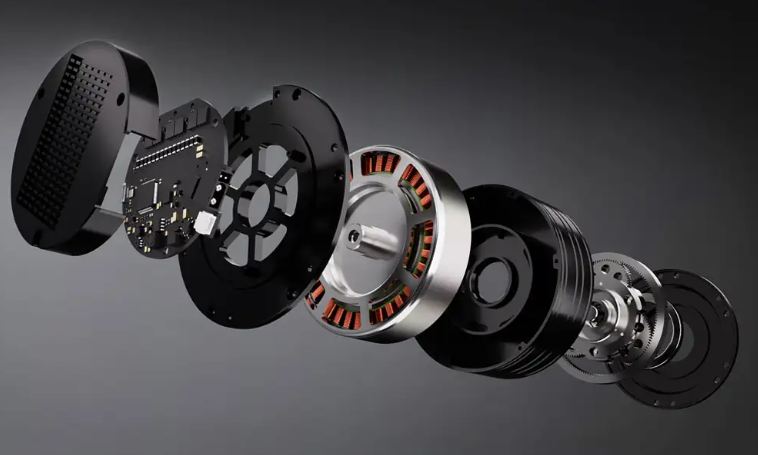
In light of these trends, highly integrated actuators—such as CubeMars’ actuators, which combine brushless DC motors, gearboxes, driver boards, and encoders into a single unit, making it easier for actuators to achieve multi-loop control and system coordination. This design not only simplifies system integration but also ensures stable performance in diverse industrial environments.
The integrated encoder and driver board monitor operating conditions in real time and adapt to changes in load and environment, ensuring operational precision while reducing maintenance requirements. The compact combination of motor and gearhead makes the overall actuator smaller and lighter, thereby reducing system inertia and improving response speed. The modular structure also allows for quick replacement or upgrading of individual components, enabling industrial systems to flexibly adapt to varying demands and maintain continuous, efficient operation.
These actuators also excel in terms of high performance and energy efficiency. Optimized mechanical structures and intelligent control algorithms ensure stable torque output under high loads, while energy-efficient designs and intelligent protection mechanisms (such as overcurrent, overvoltage, and overtemperature protection) reduce energy consumption and extend service life, enabling efficient, reliable, and energy-saving industrial operations.
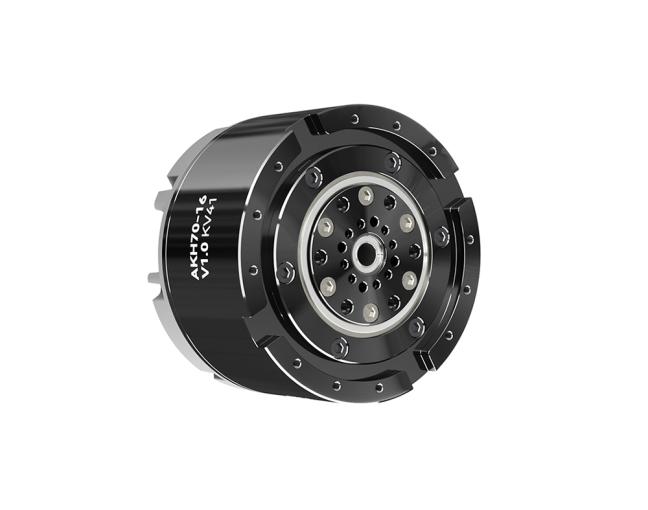
Take the AKH series hollow shaft planetary actuators as an example. This series highly integrates a brushless motor, a precision planetary gearbox, dual high-resolution encoders, and a FOC-enabled driver. The compact structural design not only achieves lightweight construction but also provides high torque density, enabling the actuator to maintain stable performance even under high-speed motion and heavy-load conditions. The combination of high-precision encoders and intelligent drive control enables the system to achieve precise closed-loop control of position, speed, and torque, meeting the high-performance AKH series hollow shaft planetary requirements of industrial robots in multi-degree-of-freedom and complex tasks.
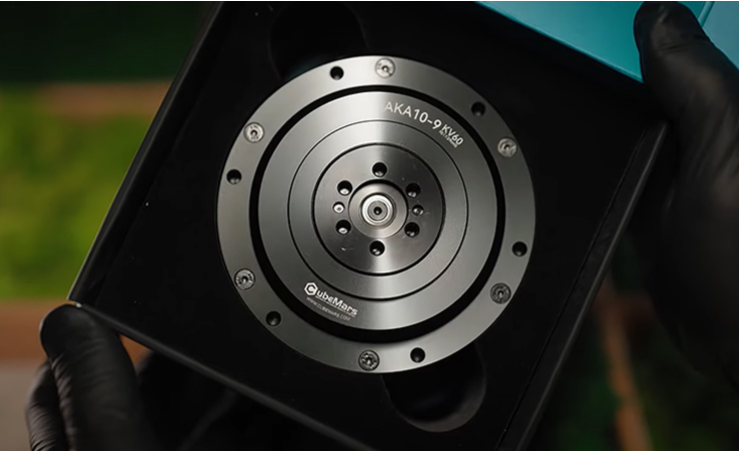
In applications requiring high radial load capacity, CubeMars’ AKA series robotic actuators deliver outstanding performance. Through an innovative design, this series increases radial load capacity by up to 120%, not only addressing the challenge of fluctuating end-of-arm tooling loads in collaborative robots but also significantly extending the actuator’s service life. Additionally, the new 2+5-pin connector integrates power and signal lines and features screw-based mounting for a more secure and reliable connection. The upgraded drive technology supports one-click identification, making debugging and precise control in complex environments more convenient, thereby meeting the demands of automation equipment for high performance and reliability.
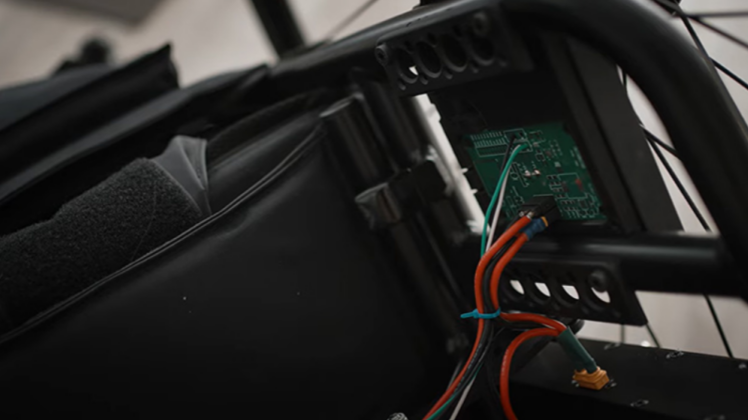
In the custom electric wheelchair project, the AKA10-9 KV60 integrated actuator provided by CubeMars fully demonstrates these advantages. Under high-load conditions such as starting and climbing slopes, this actuator delivers ample and stable torque while maintaining smooth control during low-speed operation, significantly enhancing the user’s control experience and safety. Furthermore, its modular design effectively optimizes the overall vehicle layout and achieves weight reduction, giving the system greater integration flexibility and engineering reliability in practical applications.
In modern industrial automation systems, actuators are the core components that convert control signals into mechanical motion. Their performance directly determines system responsiveness, precision, and reliability.
Hydraulic actuators dominate heavy-duty applications with high force output and impact resistance. Pneumatic actuators excel in high-speed, repetitive operations with cost efficiency. Electric actuators, with their precision, responsiveness, and integration capabilities, are becoming the dominant solution in robotics and intelligent systems.
As Industry 4.0 and intelligent manufacturing continue to evolve, actuators are moving toward greater intelligence, flexibility, and performance. Future actuators will better adapt to environmental and load variations, achieve high-precision closed-loop control, and improve system efficiency through modular and integrated designs—driving automation systems toward greater efficiency, reliability, and intelligence.


