Create your CubeMars account

With the continuous development of robotics technology, robots are gradually moving from traditional structured environments such as industrial manufacturing and warehouse logistics into more complex and open application scenarios.
In the past, robots were mainly used on industrial production lines with stable environments and fixed tasks. Today, robots are undertaking more complex missions, including:
Aerospace exploration and extraterrestrial exploration
Outdoor environment inspection
High-risk area operations
Confined space inspection
Long-duration unmanned operation
Unlike traditional industrial environments with stable conditions and fixed tasks, complex environments are often accompanied by challenges such as extreme temperatures, irregular terrain, high-impact loads, limited installation space, and long-term continuous operation. These challenges place higher requirements on robotic drive systems.
As the core components of robotic motion systems, motors and actuators directly influence robot performance and task execution capabilities through their torque density, dynamic response, reliability, efficiency, and control performance.
Different application environments have different requirements for robotic drive systems. For example:
Quadruped robots need to handle complex terrain and sudden impacts;
Space robots focus more on precise motion and long-term reliability;
Long-term inspection robots need to balance efficiency, service life, and stable operation.
Based on these differences, this article categorizes complex environment robot applications into five typical scenarios and analyzes robot characteristics, drive requirements, and key motor and actuator selection considerations through practical application cases.
Complex environments cover a wide range of applications, from aerospace and extraterrestrial exploration to ground-based outdoor operations, high-risk tasks, and long-term unmanned monitoring.
Different scenarios have significant differences in environmental conditions and mission objectives. The following five categories represent typical application directions for robots operating in complex environments.
| Complex Environment Type | Typical Applications |
| Aerospace, extraterrestrial and extreme environments | Lunar exploration, space robotic arms, extreme environment inspection |
| Harsh outdoor and unstructured environments | Quadruped robots, outdoor inspection robots, unmanned transport platforms |
| High-risk and special operation environments | Search and rescue, hazardous area inspection, special-purpose robots |
| Confined spaces and highly integrated environments | Pipeline robots, miniature inspection robots, small robotic arms |
| Long-term unmanned environments | Infrastructure inspection, unmanned mining areas, remote monitoring systems |
In these complex environments, robots not only need to complete motion tasks but also face challenges such as:
Extreme temperature variations
Irregular terrain
High-impact loads
Long-duration continuous operation
Limited installation space
High-precision motion control requirements
The following sections analyze these five application scenarios in detail, including environmental conditions, mission requirements, and corresponding drive system requirements.
Environmental Characteristics
Aerospace, extraterrestrial, and extreme environments are among the most technically challenging scenarios for robotic applications.
Compared with ordinary terrestrial environments, these scenarios usually involve special physical conditions, including:
Vacuum environments
Microgravity or low-gravity environments
Extreme temperature variations
Complex surface conditions
Long-term operation without maintenance
Typical application environments include:
Lunar exploration areas
Mars surface
Space stations
Exterior surfaces of spacecraft
Polar environments
High-temperature industrial areas
Once deployed in these environments, robots are usually difficult to maintain manually. Therefore, drive systems must have the capability to operate reliably over extended periods.
Typical Robot Applications
Extraterrestrial Exploration Robots
Extraterrestrial exploration robots are mainly used to perform:
Surface mobility
Terrain analysis
Environmental detection
Sample collection
Due to complex terrain and unknown obstacles in extraterrestrial environments, robots need strong motion adaptability.
Space Robotic Arms
Space robotic arms are widely used for:
Space equipment maintenance
Component installation
Object transportation
Precision operations
Robotic arm joints must simultaneously achieve high positioning accuracy and long-term operational reliability.
Extreme Environment Inspection Robots
In high-temperature, low-temperature, or hazardous industrial environments, robots can replace humans to perform:
Equipment inspection
Condition monitoring
Data collection
Reducing the risks associated with personnel entering dangerous areas.
Key Requirements for Motors and Actuators
High Torque Density
Due to weight and energy limitations, robots need to achieve higher output capability within a limited mass.High torque density helps robots to:
Reduce overall weight
Improve payload capacity
Optimize energy utilization
Low Inertia Design
Low inertia actuators can improve the response speed of robotic joints.For applications such as:
Robotic arms
Precision operating mechanisms
High-dynamic robots
Low inertia design can improve control performance.
High Reliability
Extreme environment robots are usually difficult to maintain. Therefore, drive systems need to provide:
Long service life
Stable operation
Good mechanical reliability
Precise Control Capability
Space operations and precision tasks usually require:
High positioning accuracy
Stable torque output
Excellent motion control capability
Thermal Management Capability
Extreme temperatures can affect:
Motor windings
Bearings
Electronic components
Therefore, temperature rise control and heat dissipation design need to be considered comprehensively.
Application Case
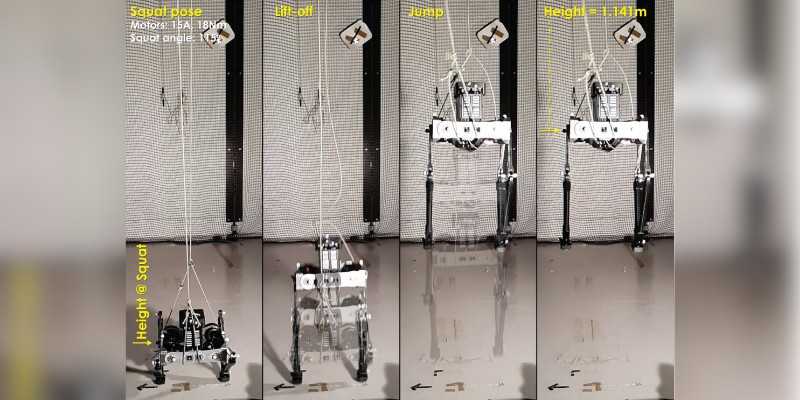
Case Link:A Jumping Robot for Martian Lava Tube Exploration
With the increasing interest in Mars exploration, lava tubes have attracted significant scientific attention as potential resources and future habitats.However, these complex and large underground spaces present severe challenges to traditional exploration technologies.
The jumping robot was specifically designed for Mars lava tube exploration. Its core design objective is to use jumping as the primary locomotion method while maintaining walking capability to adapt to complex terrain and extreme environments.
The robot adopts a five-bar parallel mechanism as its leg structure to optimize vertical jumping performance under Mars’ low-gravity environment.
The design focuses on an efficient power system and lightweight structure while integrating spring-assisted jumping and energy recovery systems to achieve continuous jumping capability.
In terms of the drive system, the robot selected the CubeMars AK70-10 KV100 robotic actuator to provide driving force for the leg parallel mechanism.This actuator features:
Peak torque of 24.8 Nm
10:1 planetary gear reduction structure
Integrated encoder
Support for 1 MHz CAN-bus communication
These features provide power support for joint movements during jumping and walking operations while facilitating motion control and system integration.
By combining the AK70-10 KV100 actuator with a lightweight parallel leg mechanism, spring-assisted jumping, and energy recovery design, the robot achieves a balance between the power output required for jumping motion and overall structural requirements.
This case demonstrates that motor selection for extraterrestrial exploration robots requires comprehensive consideration of:
Peak torque
Transmission structure
Weight
Control interface
Energy limitations
More Case Studies:CubeMars Powers Binghamton Univ. Rover Team for URC
Environmental Characteristics
Compared with industrial environments, outdoor environments are more complex, with uncertainty being their most significant characteristic.Robots may encounter:
Mountains
Deserts
Gobi environments
Forests
Snow-covered areas
Muddy terrain
Rocky surfaces
These environments usually do not have fixed paths, requiring robots to adjust their motion status according to real-time environmental conditions.
Typical Robot Applications
Quadruped Robots
Quadruped robots achieve:
Walking
Running
Obstacle crossing
Climbing slopes
through coordinated movements of multiple joints.Their leg actuators need to continuously adjust output to maintain body stability.
Outdoor Inspection Robots
Main applications include:
Power facility inspection
Pipeline inspection
Outdoor environment monitoring
Infrastructure inspection
Unmanned Transport Robots
Applications include:
Outdoor logistics
Material transportation in special areas
Unmanned operation platforms
Key Requirements for Motors and Actuators
High Peak Torque
Robots require large instantaneous output in situations such as:
Obstacle crossing
Climbing slopes
Posture recovery
Rapid start-up
Fast Dynamic Response
Especially for legged robots, actuators need to respond quickly to:
Motion control commands
Ground condition changes
Posture adjustments
Impact Resistance
Complex terrain may cause:
Collisions
Falls
Sudden load changes
Therefore, the drive system needs to have sufficient mechanical strength and impact resistance.
High Efficiency
Outdoor robots are usually powered by batteries.Improving drive efficiency can:
Extend operating time
Reduce energy consumption
Application Case
Case Link:CubeMars Powers the University of Minnesota's Agricultural Quadruped Robot Dog
With the rapid development of precision agriculture, obtaining comprehensive and high-accuracy crop growth data has become a key challenge.
A breakthrough achievement from the Agricultural Robotics Laboratory at the University of Minnesota is an agricultural quadruped robot designed specifically for complex farmland environments.
This robotic dog uses the CubeMars AK70-10 joint motor as its core power source.
It successfully overcomes the physical limitations of traditional drones and wheeled agricultural machinery, allowing it to enter dense corn fields and collect accurate data on pests, diseases, and nutrient conditions beneath the crop canopy.
This technology provides an important solution for three-dimensional agricultural inspection in modern smart farming.
More Case Studies:Kemba: A Quadrupedal Robot Combining Power and Precision Control
Environmental Characteristics
Some working environments involve significant risks and are unsuitable for direct human access.Typical environments include:
Disaster areas
Firefighting zones
Nuclear facilities
Chemical industrial areas
High-risk industrial environments
Robots can replace humans in inspection, rescue, and operational tasks, improving workplace safety.
Typical Robot Applications
Search and Rescue Robots
Main tasks include:
Disaster area search
Environmental detection
Material transportation
Hazardous Area Inspection Robots
Applications include:
Industrial equipment inspection
Condition monitoring
Automated patrol
Special Operation Robots
Including:
Remote operation platforms
Robots designed for special environments
Key Requirements for Motors and Actuators
High Reliability
Robots need to continuously complete tasks in complex environments.
Impact Resistance
When facing collisions or abnormal load changes, robots need to maintain motion capability.
Precise Motion Control
For robotic arms and operating mechanisms, accurate action execution is required.
Long-Term Operation Capability
Some missions require extended operation periods, requiring attention to:
Temperature rise
Efficiency
Service life
Application Case
In the field of high-altitude high-voltage power transmission maintenance, human live-line operations have always involved significant safety risks.
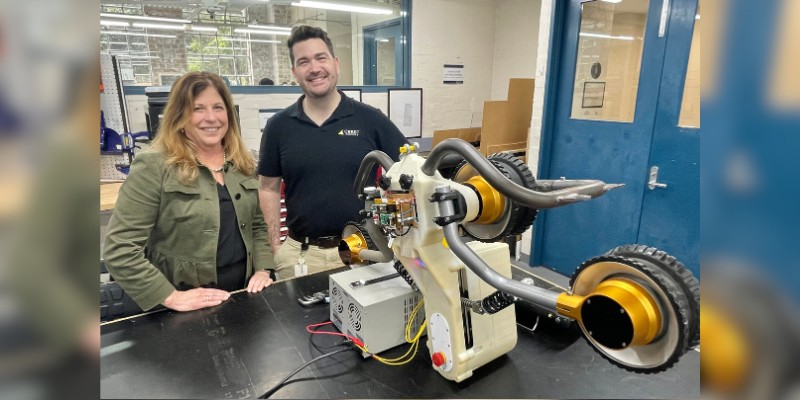
The Gorilla Mk1 robot developed for high-voltage transmission line operations uses advanced technology and a precision drive system to provide improved safety and efficiency for power line maintenance and inspection.
The robot uses CubeMars RI80 V2.0 frameless torque motors as an important component of its drive system.
The Gorilla Mk1 robot is equipped with four CubeMars RI80 V2.0 inner rotor frameless torque motors.
The high precision and high power performance of these motors enable the robot to operate stably and safely on transmission lines while providing strong traction and high load capability for complex working environments.
These motors also provide reliable power output for the robot’s precision control system, allowing it to flexibly adjust applied forces during operation on power lines and maximize operational safety and efficiency.
More Case Studies:GL60II Hollow Gimbal Motor Powering RoboMaster Engineering Robots
Environmental Characteristics
Some robots need to enter areas with limited available space, such as:
Inside pipelines
Inside equipment
Internal structures of aerospace systems
Small robotic platforms
The biggest challenge for these applications is achieving sufficient motion capability within a limited space.
Typical Robot Applications
Pipeline Inspection Robots
Used for:
Pipeline condition inspection
Defect detection
Data collection
Miniature Inspection Robots
Applied for:
Inspection in narrow spaces
Internal equipment examination
Small Robotic Arms
Used for:
Precision operations
Assembly tasks in confined spaces
Key Requirements for Motors and Actuators
Miniaturized Design
Robots operating in limited spaces need to reduce:
Motor size
System weight
High Torque Density
The drive system needs to provide sufficient output within limited volume.
High Integration Level
Actuators usually need to integrate:
Motor
Encoder
Control components
Reducing overall system complexity.
Flexible Structural Design
Some applications require:
Hollow structures
Special installation methods
Customized designs
Application Case
Case Link:CubeMars AK Motors Power Legacy V2 4-Wheel Independent Steering Rover
In complex terrain exploration and narrow-space inspection missions, chassis mobility often determines mission success.
The Legacy V2 four-wheel independent steering exploration vehicle chassis adopts an innovative four-wheel steering and four-wheel drive (4WS4WD) architecture.
It is equipped with CubeMars AK series actuators as the core power and actuator units.
The system successfully achieves:
Zero-radius in-place rotation
Lateral movement
Omni-directional mobility capability
providing exceptional flexibility for special exploration tasks.
More Case Studies:KLEIYN Quadruped Wall-Climbing Robot Powered by CubeMars
Environmental Characteristics
With the development of automation technology, an increasing number of robots need to be deployed in areas where manual maintenance is difficult.Typical environments include:
Unmanned mining areas
Remote regions
Infrastructure facilities
Long-distance inspection areas
These robots usually need to reduce manual maintenance requirements and improve long-term operational capability.
Typical Robot Applications
Automated Inspection Robots
Used for:
Equipment inspection
Condition monitoring
Data collection
Mobile Monitoring Platforms
Used for:
Environmental monitoring
Automated patrol
Unmanned Transport Robots
Used for:
Long-distance transportation
Automated logistics
Key Requirements for Motors and Actuators
High Efficiency
During long-term operation, reducing energy consumption is essential.
Long Service Life
Important factors include:
Mechanical wear
Temperature rise
Continuous operation capability
Low Maintenance Requirements
Reducing manual maintenance costs improves equipment availability.
Stable Operation
Drive systems need to maintain consistent performance over long operating periods.
Application Case
Case Link:CubeMars RI80 Powers Transgrid's Transmission Line Inspection Robot
In high-altitude high-voltage power grid maintenance, manual live-line operations have always involved significant safety risks.
The high-voltage transmission line inspection robot developed by Transgrid Australia innovatively adopts a rover-inspired suspension system based on NASA’s Mars rover Perseverance design concept.
The robot uses CubeMars RI80 high-performance joint motors as the core power source.
It can:
Move autonomously on high-voltage transmission lines
Perform precise climbing operations
Easily cross different cable fittings
By applying robotic technology, this system reduces the need for humans to perform dangerous high-altitude live-line operations.
Motor selection for complex environment robots cannot focus only on individual parameters such as peak torque and speed.Instead, it requires comprehensive evaluation based on:
Actual operating environment
Robot mission requirements
Mechanical structure
Control requirements
When selecting motors or actuators, the following factors should be considered:
Environmental adaptability
Matching between mission requirements and performance
Torque, speed, and duty cycle
Mechanical structure and integration requirements
Control capability and long-term reliability
Only through proper matching between motors, actuators, mechanical structures, and control systems can robots achieve stable, efficient, and reliable operation in complex environments.