Create your CubeMars account

The rapid advancement of humanoid robots, exoskeletons, and quadruped robotic platforms has placed unprecedented demands on actuator technology. Modern robots are no longer expected to perform simple repetitive motions. Instead, they must walk naturally, maintain balance, navigate complex terrain, absorb impacts, and interact safely with both users and their environments.
As robotic mobility continues to improve, actuator design has evolved from a generalized engineering component into a highly specialized subsystem. Engineers are increasingly recognizing that the performance of a robot depends not only on the quality of its actuators, but also on how well each actuator is matched to the functional requirements of a specific joint.
This is particularly evident in lower-limb robotic actuator application. Although the hip, knee, and ankle joints all contribute to locomotion, they perform fundamentally different roles during movement. Consequently, the actuator characteristics required for each joint can vary significantly in terms of torque output, dynamic response, control precision, backdrivability, thermal performance, and structural design.
Understanding these differences is essential for designing efficient and high-performance robotic systems. In this article, we examine the functional roles of hip, knee, and ankle joints, explore the key differences between their actuator requirements, and discuss how engineers can select the most suitable actuator solutions for various robotic applications.
In the early stages of robotic development, many systems were designed around relatively simple motion requirements. Industrial robots often operated within fixed workspaces, performing repetitive tasks with predictable trajectories. Since motion profiles were highly controlled, engineers could frequently standardize actuator configurations across multiple joints, simplifying both mechanical integration and inventory management.
However, the emergence of mobile robotic systems has fundamentally changed actuator design philosophy.
Today's humanoid robots are expected to walk and run with human-like agility. Exoskeletons must assist users while remaining comfortable and responsive, while quadruped robots need to maintain stability across uneven terrain and dynamic environments.
These applications introduce a new challenge: not all joints perform the same job.
Consider a humanoid robot during a walking cycle. The hip joint generates large amounts of torque to drive the entire leg forward and support body weight. At the same time, the knee joint continuously transitions between load-bearing and swing phases, absorbing impact forces while maintaining smooth motion. Meanwhile, the ankle joint performs countless micro-adjustments to preserve balance, adapt to ground conditions, and contribute to forward propulsion.
Although all three joints are part of the same lower-limb system, their operating conditions differ dramatically.
Differences may include:
Load magnitude and direction
Range of motion
Required torque output
Response speed
Backdrivability requirements
Because of these differences, selecting a single actuator architecture for every joint often forces engineers into design compromises. An actuator optimized for maximum torque may introduce unnecessary weight and inertia when used in a joint that prioritizes responsiveness. Conversely, an actuator designed for high-speed precision control may lack the torque capacity required by heavily loaded joints.
As robotic systems become more sophisticated, actuator selection is increasingly driven by joint functionality rather than standardization. Instead of asking, "Which actuator is the most powerful?" engineers are now asking a more important question: "Which actuator characteristics best match the demands of this specific joint?"
This shift toward joint-specific actuator design offers several advantages:
| Design Objective | Benefit |
| Optimized torque distribution | Improved locomotion efficiency |
| Better actuator matching | Reduced system weight |
| Enhanced dynamic response | More natural movement |
| Improved energy utilization | Longer operating time |
| Joint-level performance optimization | Greater overall robot capability |
For this reason, modern robotic systems rarely treat lower-limb joints as identical mechanical structures. Instead, each joint is analyzed according to its role within the locomotion chain, and actuator specifications are tailored accordingly.
To understand why these design differences exist, it is first necessary to examine the unique functions performed by the hip, knee, and ankle joints during robotic movement.
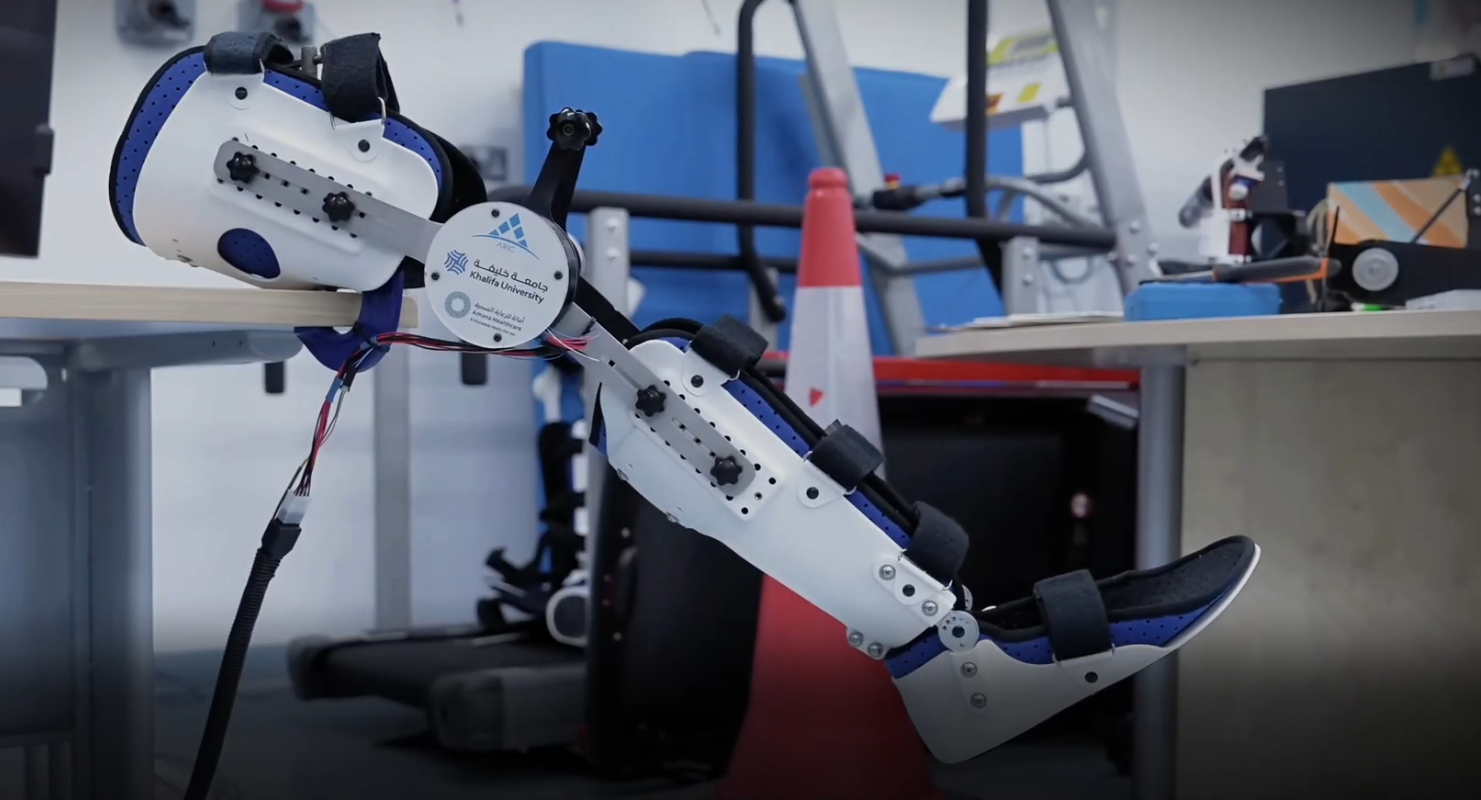
Before comparing actuator specifications, it is important to understand the role each joint plays within the robotic locomotion system.
Although the hip, knee, and ankle work together to generate movement, they do not contribute equally to every phase of motion. Each joint performs a distinct mechanical function, experiences different loading conditions, and faces unique control challenges.
This is true not only in biological systems but also in humanoid robots, exoskeletons, rehabilitation devices, and quadruped platforms. As a result, actuator requirements are often determined by the functional responsibilities of the joint itself.
The following sections examine the role of each lower-limb joint and how those roles influence actuator design priorities.
Hip Joint: The Primary Source of Lower-Limb Power
The hip joint serves as the foundation of lower-limb motion. Positioned closest to the robot's center of mass, it is responsible for generating large-scale leg movements while supporting a significant portion of the system's weight.
During walking, running, stair climbing, or load-carrying tasks, the hip joint must repeatedly accelerate and decelerate the entire leg. In humanoid robots, it is also heavily involved in maintaining body posture and shifting the center of gravity during dynamic movement.
Because of its location within the kinematic chain, forces generated at the hip directly influence the motion of every downstream segment, including the knee and ankle.
Common responsibilities of the hip joint include:
Supporting body weight
Driving leg swing motion
Controlling forward and backward movement
Assisting lateral balance adjustments
Providing large-range motion for locomotion
For robotic systems, this makes the hip one of the most demanding joints in terms of mechanical output. Designers often prioritize torque capacity, continuous power delivery, structural stiffness, and thermal performance when selecting hip actuators.
As a result, hip actuators are typically among the highest-power units within a robotic lower-limb system.
Knee Joint: The Link Between Stability and Mobility
While the hip generates movement, the knee plays a crucial role in managing how that movement is transferred and controlled.
The knee continuously alternates between two very different operating conditions. During the stance phase of walking, it supports substantial loads and absorbs impact forces generated during ground contact. During the swing phase, it must rapidly flex and extend to achieve efficient leg motion.
This combination of load-bearing and dynamic movement makes the knee one of the most mechanically complex joints in robotic locomotion.
In many robotic systems, the knee is responsible for:
Supporting vertical loads
Absorbing impact during landing
Enabling efficient leg swing
Improving walking efficiency
Reducing energy expenditure during gait cycles
Unlike the hip, which often prioritizes raw torque output, knee performance depends heavily on the balance between torque generation and responsiveness.
Actuators that are excessively heavy or difficult to backdrive can negatively affect gait smoothness and energy efficiency. For this reason, designers frequently emphasize torque density, dynamic response, and backdrivability when developing knee actuation systems.
In many humanoid and rehabilitation robots, knee actuator performance has a direct influence on overall walking quality.
Ankle Joint: The Key to Balance and Ground Interaction
Although the ankle is often smaller than the hip and knee, its contribution to locomotion should not be underestimated.
The ankle serves as the primary interface between the robotic system and the ground. Every step involves continuous adjustments in response to terrain conditions, body posture changes, and external disturbances.
Unlike the hip and knee, which primarily focus on generating and transmitting motion, the ankle plays a major role in stabilizing movement and maintaining balance.
Its responsibilities often include:
Ground adaptation
Balance correction
Shock mitigation
Posture stabilization
Forward propulsion during push-off
For dynamic robots operating in real-world environments, these functions are essential. Even small positioning errors at the ankle can propagate through the entire kinematic chain and significantly affect overall stability.
As a result, ankle actuators often place greater emphasis on control quality than on maximum torque output alone.
Key design priorities typically include:
High control bandwidth
Fast feedback response
Accurate position control
Force-control capability
High backdrivability
This is one reason why advanced humanoid robots frequently devote significant engineering effort to ankle joint development despite the joint's relatively compact size.
Functional Comparison of Lower-Limb Joints
| Joint | Primary Function | Motion Characteristics | Main Design Priority |
| Hip | Power Generation | Large-Range Motion | Torque & Power |
| Knee | Motion Transfer & Shock Absorption | Frequent Flexion/Extension | Torque & Responsiveness |
| Ankle | Balance & Ground Interaction | Continuous Micro-Adjustments | Precision & Control |
As this comparison shows, lower-limb joints are not simply different locations for the same actuator architecture. Each joint contributes to locomotion in a unique way, leading to fundamentally different performance requirements.These differences ultimately determine how actuators should be designed, optimized, and selected for specific robotic applications.
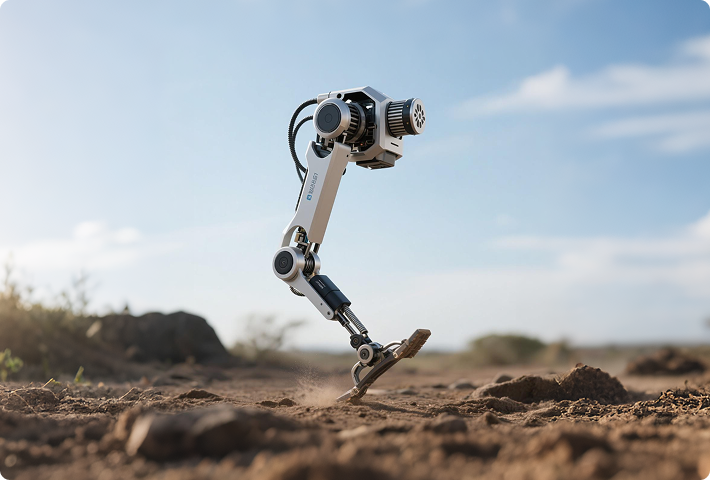
After understanding the functional roles of the hip, knee, and ankle joints, the next question becomes clear:
How do these differences translate into actuator requirements?
Although all lower-limb actuators ultimately convert electrical energy into mechanical motion, the performance characteristics required by each joint can vary significantly. An actuator optimized for one joint may perform poorly when applied to another because the underlying mechanical and control objectives are fundamentally different.
For this reason, modern robotic actuator development is increasingly driven by application-specific requirements rather than standardized hardware configurations.
The table below summarizes some of the most important differences between hip, knee, and ankle actuators.
| Performance Factor | Hip Actuator | Knee Actuator | Ankle Actuator |
| Torque Requirement | Very High | High | Moderate to High |
| Dynamic Response | Medium | High | Very High |
| Control Precision | Medium | High | Very High |
| Continuous Load Capability | Very High | High | Moderate |
| Backdrivability Importance | Medium | High | Very High |
| Thermal Management Priority | Very High | High | Medium |
While these categories help illustrate the overall differences, the engineering considerations behind each actuator type are worth examining in greater detail.
Why Hip Actuators Prioritize Torque and Continuous Power
The hip joint is responsible for moving and supporting the largest mass within the lower-limb system. Every step requires the hip to accelerate the leg, control body posture, and contribute to overall locomotion.
Because of these responsibilities, hip actuators often experience the highest sustained loads in the entire robotic system.
Unlike joints that mainly perform positioning tasks, hip actuators must deliver substantial torque over extended periods without excessive heat buildup. This becomes particularly important in applications such as:
Humanoid robots carrying payloads
Industrial exoskeletons
Load-bearing rehabilitation systems
Long-duration mobile robots
As operating time increases, thermal performance becomes nearly as important as peak torque output. An actuator capable of producing high torque for only a few seconds may be unsuitable for continuous walking or standing applications.
Consequently, hip actuator design often emphasizes:
High continuous torque capability
Strong thermal management
Structural rigidity
High power density
Reliable long-duration operation
For many robotic platforms, the hip joint ultimately defines the upper limit of overall locomotion capability.
Why Knee Actuators Must Balance Torque and Responsiveness
The knee occupies a unique position within the locomotion chain.
Unlike the hip, which focuses primarily on power generation, or the ankle, which emphasizes balance control, the knee must constantly transition between supporting loads and enabling movement.
During a single gait cycle, the knee may experience:
Weight-bearing conditions
Rapid acceleration
Sudden deceleration
Repeated impact loading
Continuous position adjustments
These changing requirements make actuator responsiveness particularly important.
A knee actuator that produces high torque but reacts slowly can negatively affect walking efficiency. Conversely, an actuator optimized solely for speed may struggle under heavy loading conditions.
As a result, knee actuator development often focuses on achieving an effective balance between force output and dynamic performance.
Key priorities typically include:
High torque density
Fast acceleration and deceleration
Efficient energy transfer
Smooth motion control
Good backdrivability
In many advanced robotic systems, knee actuator performance directly influences gait quality, walking efficiency, and user comfort.
Why Ankle Actuators Emphasize Precision and Control
If the hip generates movement and the knee manages motion transfer, the ankle determines how effectively the robot interacts with the environment.
Every step introduces variations in terrain, surface stiffness, friction, and external disturbances. The ankle must continuously compensate for these changes while maintaining stability.This creates a very different design challenge compared with the hip and knee.
In many cases, ankle actuators do not require the highest torque within the system. Instead, they require the ability to react quickly and accurately to changing conditions.
For example, when a humanoid robot encounters an uneven surface, the ankle may need to make multiple corrective adjustments within fractions of a second. Small delays in response can propagate through the entire body and lead to instability.
For this reason, ankle actuator design often prioritizes:
High control bandwidth
Fast sensor feedback
Accurate position control
Force-control capability
Excellent backdrivability
These characteristics are particularly important in dynamic robots that perform balancing, running, jumping, or terrain-adaptive locomotion.
As robotic mobility continues to improve, ankle actuator technology is becoming an increasingly important factor in overall system performance.
Why a Single Actuator Architecture Is Rarely Optimal
Given the differences outlined above, it becomes clear why modern robotic developers rarely use identical actuator configurations throughout an entire lower-limb system.
A hip actuator optimized for maximum torque may introduce unnecessary weight and inertia when installed at the ankle. Likewise, an ankle actuator optimized for precision control may lack the continuous power capacity required at the hip.
Instead, engineers increasingly adopt a joint-specific design philosophy. This approach allows each joint to contribute more effectively to the overall locomotion strategy, improving efficiency, agility, stability, and user experience.
However, actuator priorities can also vary depending on the type of robot being developed. A humanoid robot, exoskeleton, and rehabilitation device may all place different levels of importance on torque, responsiveness, precision, and compliance.
Understanding these application-specific priorities is the next step in selecting the most appropriate actuator solution.
While the functional roles of the hip, knee, and ankle joints remain largely consistent across robotic systems, actuator priorities can vary significantly depending on the intended application.
A humanoid robot designed for dynamic locomotion faces very different challenges from a rehabilitation device assisting patient recovery. Likewise, an industrial exoskeleton focuses on load support and user comfort, while a quadruped robot must continuously adapt to uneven terrain.
As a result, actuator selection is not determined solely by joint location. It is equally influenced by the overall objectives of the robotic platform.
Understanding these application-specific priorities helps engineers make more informed decisions when balancing torque, responsiveness, precision, efficiency, and compliance.
Humanoid Robots: Balancing Power, Agility, and Stability
Humanoid robots represent one of the most demanding actuator applications in modern robotics.
Unlike fixed industrial systems, humanoids must coordinate dozens of joints simultaneously while maintaining balance and generating natural movement. Tasks such as walking, climbing stairs, carrying objects, and recovering from external disturbances require all lower-limb joints to work together in a highly dynamic manner.
For humanoid robots:
Hip actuators typically prioritize torque output and power density.
Knee actuators focus on dynamic response and efficient motion transfer.
Ankle actuators emphasize balance control, force regulation, and terrain adaptation.
Because mobility performance is often a key differentiator for humanoid platforms, designers frequently seek a balance between power, weight, efficiency, and controllability.
Exoskeletons: Prioritizing Assistance and User Comfort
Exoskeleton systems introduce a unique challenge because they operate directly alongside the human body.
Unlike autonomous robots, exoskeletons must cooperate with the user's natural movement rather than simply executing predefined trajectories. Excessive actuator inertia, poor responsiveness, or overly rigid control can negatively affect comfort and usability.
As a result, actuator selection often focuses on achieving a balance between assistance and transparency.
Typical priorities include:
Lightweight construction
Smooth torque delivery
Good backdrivability
Low mechanical resistance
High energy efficiency
For lower-limb exoskeletons, knee and ankle joints are particularly sensitive to actuator behavior because users can immediately perceive any delay or resistance during walking.
Quadruped Robots: Optimizing Mobility Across Complex Terrain
Quadruped robots face a different set of challenges.
Rather than mimicking human movement, they must maintain stability while traversing highly variable environments. Uneven ground, slopes, obstacles, and sudden disturbances place significant demands on lower-limb actuators.
In these systems:
Hip joints contribute to body positioning and stride generation
Knee joints help absorb impact loads and manage leg dynamics
As a result, quadruped developers often prioritize:
High torque density
Fast response speed
Robust impact resistance
Efficient energy utilization
Reliable operation under varying loads
Because every kilogram affects mobility and endurance, actuator weight and power density are often major design considerations.
Application Priorities Across Different Robot Types
| Robot Type | Hip Priority | Knee Priority | Ankle Priority |
| Humanoid Robot | Torque & Power Density | Dynamic Motion Control | Balance & Force Control |
| Exoskeleton | User Assistance | Comfort & Responsiveness | Natural Gait Support |
| Quadruped Robot | Mobility & Stride Generation | Shock Absorption | Terrain Adaptation |
Although these priorities vary across applications, one principle remains consistent: actuator performance should always be matched to the functional demands of both the joint and the robotic system as a whole.
This is why modern actuator selection involves much more than comparing torque ratings alone. Engineers must evaluate how factors such as dynamic response, backdrivability, control bandwidth, compliance, and power density contribute to the overall performance objectives of the platform.
The next step is understanding how to translate these requirements into practical actuator selection criteria for real-world robotic designs.
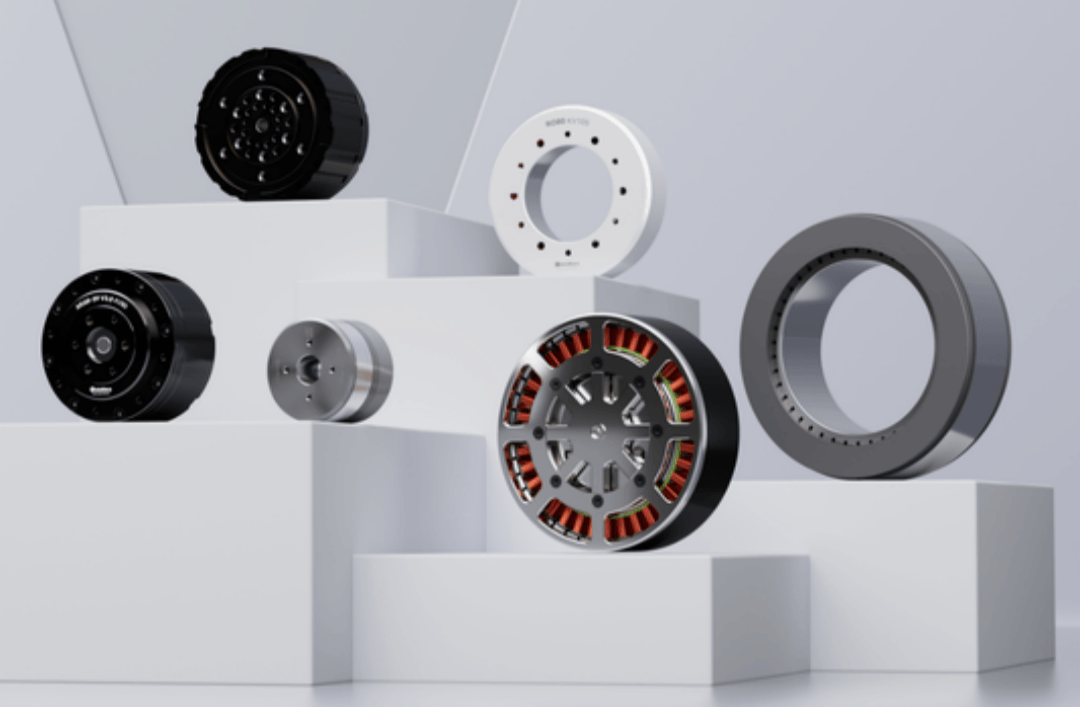
After understanding the functional differences between hip, knee, and ankle joints, actuator selection should follow a structured process.
Instead of directly choosing an actuator based on a single specification, engineers usually start from the joint requirement and gradually narrow down the suitable actuator characteristics.
A practical selection workflow can be divided into several steps.
Step 1: Define What the Joint Is Responsible For
The first step is not choosing the motor. It is understanding the role of the joint. Different joints solve different mechanical problems:
| Joint | Main Question |
| Hip | Can it generate enough power to move and support the leg? |
| Knee | Can it handle loads while maintaining dynamic motion? |
| Ankle | Can it maintain stability and adapt to the environment? |
For example:
a hip actuator for a humanoid robot is mainly responsible for generating large-scale movement and supporting body weight
a knee actuator must repeatedly switch between load-bearing and motion control
an ankle actuator focuses more on balance correction and interaction with the ground
This first step determines what actuator characteristics should be prioritized.
Step 2: Estimate Required Torque Before Selecting an Actuator
Torque is usually the first major parameter engineers calculate.
However, the requirement is not simply: "How much torque can the actuator output?"
The more important question is: "How much torque does the joint actually need during operation?"
A simplified selection process considers:
Joint load
Link length
Robot weight
Motion speed
Operating condition
For example:
a hip joint usually requires higher torque because it moves larger masses
a knee joint may require high torque density because space and weight are limited
an ankle joint may not require the highest torque but needs accurate torque control
This prevents oversizing the actuator and adding unnecessary weight.
Step 3: Separate Peak Torque and Continuous Torque Requirements
After estimating torque demand, engineers need to determine whether the requirement is continuous or temporary.
This is one of the most common mistakes in actuator selection.
Peak torque is mainly related to:
Acceleration
Impact
Sudden posture changes
Continuous torque is related to:
Walking
Standing
Repeated operation
For lower-limb robots:
hip joints often rely heavily on continuous torque capability because they support long-duration movement
knee joints usually need a balance between continuous load handling and dynamic response
ankle joints often require controlled torque output for rapid adjustments
Therefore, the actuator should be selected according to the real motion cycle rather than the maximum theoretical load.
Step 4: Match Speed, Reduction Ratio, and Joint Dynamics
Torque alone cannot define actuator performance. The actuator must also provide suitable speed.
A higher reduction ratio can increase output torque, but it may reduce output speed and responsiveness.
A lower reduction ratio can improve dynamic response but may reduce available torque.
Therefore:
| Joint | Typical Preference |
| Hip | Higher torque capability |
| Knee | Balance between torque and speed |
| Ankle | Faster response and precise control |
The correct actuator is the one that matches the motion characteristics of the joint.
Step 5: Consider Control Requirements and Backdrivability
For modern robots, mechanical output is only part of actuator performance.
The actuator must also interact with the control system.
This is especially important for:
Humanoid robots
Exoskeletons
Rehabilitation robots
Hip joints often prioritize stable force output.
Knee joints require smooth transition and responsive control.
Ankle joints usually demand the highest level of control precision because small errors can affect overall balance.
Important parameters include:
Control bandwidth
Position accuracy
Backdrivability
Compliance
Step 6: Evaluate Weight, Size, and System Integration
Finally, engineers must confirm whether the actuator can actually fit into the robot design.
A theoretically powerful actuator may not be suitable if it is:
Too heavy
Too large
Too inefficient
This is especially important for lower-limb robots.
Because actuators are mounted directly on moving structures, every additional gram increases energy consumption and affects motion dynamics.
A Practical Hip, Knee, and Ankle Actuator Selection Flow
| Selection Stage | Hip | Knee | Ankle |
| Main Goal | Generate power | Transfer motion efficiently | Maintain stability |
| First Check | Torque capability | Torque-to-weight ratio | Control response |
| Second Check | Continuous output | Dynamic response | Precision |
| Final Check | Thermal & weight | Backdrivability | Compliance |
Following this process allows engineers to select actuators based on actual robotic requirements rather than simply choosing the highest-performance model available.
The best actuator is not the one with the largest specifications.
It is the one that best matches the mechanical role, motion characteristics, and control objectives of the joint.
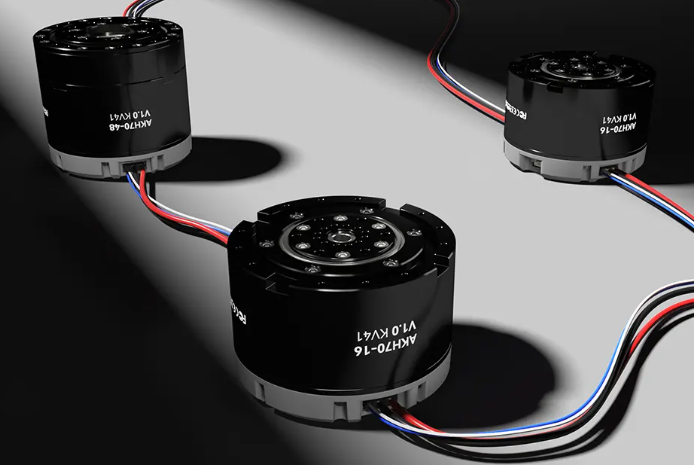
For humanoid robots, lower-limb actuator selection is not about choosing the strongest actuator. Each joint requires a different performance balance.
| Joint | Main Function | Primary Challenge | Selection Focus | Recommended Solution |
| Hip | Drive the leg and support body weight | High continuous load | Torque density, thermal stability, power output | AKH70-48 V1.0 KV41 |
| Knee | Control gait transition and absorb impact | Dynamic load changes | Response speed, torque density, backdrivability | AK80-64 KV80 |
| Ankle | Maintain balance and adapt to terrain | Fast environmental interaction | Precision, bandwidth, compliance | AKH70-16 V1.0 KV41 |
For Hip Joints: Power Capability Comes First
The hip is fundamentally a power-generation joint.
Unlike other lower-limb joints, hip actuators must move the entire leg structure while helping maintain the robot's center of mass.
Therefore, the main selection question is: Can the actuator continuously deliver enough mechanical power without excessive heat or weight increase?
This is why hip applications usually prioritize:
Continuous torque rather than short peak torque
High torque density rather than simply larger size
Efficient thermal management
For these requirements, the AKH70-48 V1.0 KV41 provides a solution focused on high-output lower-limb applications.
Its high torque density and integrated design allow developers to achieve strong joint output while maintaining compact mechanical integration.
For Knee Joints: The Key Is Finding the Balance Point
The knee is not simply a smaller version of the hip.
During walking, it constantly switches between:
Supporting body weight
Absorbing impact
Accelerating the leg
This creates a unique requirement:
Too much reduction → high torque but slower response.
Too little reduction → fast response but insufficient force.
Therefore, knee actuator selection is mainly about finding the right balance between output and dynamics.
The AK80-64 KV80 is designed for applications requiring both strong torque capability and dynamic motion control.Its integrated actuator structure helps simplify system design while providing the response characteristics required for frequent motion transitions.
For Ankle Joints: Control Quality Determines Performance
The ankle operates differently from the hip and knee. It does not mainly determine how much force the robot can generate.
Instead, it determines how effectively the robot interacts with the environment.
For ankle applications, engineers often focus on:
Fast feedback
Precise positioning
Smooth force interaction
The AKH70-16 V1.0 is suitable for applications where compact integration and accurate control are important.
By providing responsive motion control, it helps robotic platforms improve balance and terrain adaptability.
Why Joint-Specific Actuator Selection Matters
A lower-limb robotic system performs best when each actuator is optimized for its actual role.
The hip requires power
The knee requires balance
The ankle requires precision
Using different actuator solutions for different joints allows engineers to achieve better:
Motion efficiency
Dynamic response
Stability
Mechanical integration
The hip, knee, and ankle joints all contribute to lower-limb movement, but they perform different mechanical functions within a robotic system. Therefore, their actuators require different performance characteristics rather than a one-size-fits-all solution.
Hip actuators typically prioritize high torque output, continuous power capability, and thermal stability, while knee actuators focus on balancing force, responsiveness, and dynamic motion. In comparison, ankle actuators require higher control precision, fast response, and adaptability to maintain balance and interact with the environment.
As humanoid robots, exoskeletons, and legged robotic systems continue to evolve, actuator selection is shifting from simply pursuing higher output toward joint-specific optimization. Choosing the right actuator based on each joint’s role is becoming essential for achieving better efficiency, stability, and natural robotic movement.


