Cubemars - 17 Year Motor Manufacturer info@cubemars.com +86 13755649079
English
English
中文简体
日本語
Deutsch
Français
한국어
Español
Pусский
Quick Registration
Create your CubeMars account


Moment
TABLE OF CONTENTS
What Determines the Motion Smoothness of Robot Joints?
How Integrated Actuators Improve Robot Motion Smoothness
Future Development Directions for Robot Motion Smoothness
Conclusion

How Integrated Actuators Improve Robot Smooth Motion? A Complete Analysis of the Key Factors

CubeMars / May 27,2026

With the continuous development of humanoid robots, exoskeleton systems, quadruped robots, and collaborative robotic arms, motion smoothness has become one of the important indicators for evaluating robot performance. A robot joint with smooth motion can not only improve precision and stability, but also provide a more natural human-machine interaction experience.


The smoothness of robot motion directly affects its performance in real-world application scenarios.


For humanoid robots, unstable motion or jerky movements can reduce walking balance capability and dynamic coordination. In exoskeleton systems, poor motion quality may affect wearing comfort and operational safety. Collaborative robots and robotic arms also rely on smooth joint control to achieve precise operation and repetitive motion.


High-quality actuator motion smoothness usually brings a series of direct performance improvements, such as better low-speed control capability, lower vibration and noise performance, more precise force control capability, and more natural and smooth motion trajectories. At the same time, it can also improve position control accuracy and provide a safer and more stable experience in human interaction scenarios.


As robotic systems continue to develop toward lightweight structures and high power density, maintaining motion smoothness while achieving high torque output within limited volume is also becoming increasingly challenging.


So, what exactly determines the “smoothness” of robot joints?


The answer goes far beyond motor power itself. The motion quality of robots is actually jointly determined by multiple factors, including motor design, reduction structure, encoder feedback, control algorithms, and actuator integration solutions. In modern robotic systems, even slight optimization in these areas can significantly improve overall dynamic performance and motion stability.


What Determines the Motion Smoothness of Robot Joints?


Low Cogging Torque Improves Motion Quality


One important factor affecting robot joint smoothness is cogging torque.


Cogging torque is the non-ideal resistance generated by the magnetic attraction effect between the motor magnets and stator slots. Excessive cogging torque usually causes robot joints to experience stuttering or uneven motion during low-speed operation.


In applications such as humanoid robot walking, robotic arm control, and rehabilitation robots, low-speed motion smoothness is particularly critical. Even small torque fluctuations may affect motion accuracy and control stability.


To reduce the cogging effect, modern robotic motors usually adopt:

  • Optimized magnetic circuit design

  • High pole-pair structures

  • Precision winding design


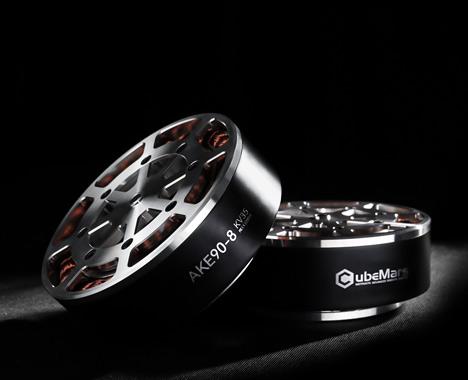
For example, frameless torque motor architecture technology can help actuators output more stable and continuous torque throughout the entire motion process.


Reducer Backlash Directly Affects Joint Precision


Another key factor is reducer backlash.


Backlash refers to the small mechanical gap existing between internal transmission structures inside the reducer. Excessive backlash introduces delay, vibration, and positioning errors during motion reversal.


In robot joints, reducing backlash is especially critical for various high-performance applications, including:

  • Dynamic walking robots

  • Force control systems

  • High-precision robotic arms

  • Human-interaction robots


Different transmission solutions each have different advantages:

  • Harmonic reducers: usually feature extremely low backlash and high positioning accuracy

  • Planetary reduction systems: compact structure with high torque density

  • QDD (Quasi-Direct Drive) systems: place greater emphasis on backdrivability and dynamic response capability


ake90-8


Reasonable selection of reduction structures is of great significance for improving overall actuator motion smoothness and control performance.


Encoder Feedback Affects Motion Stability


Encoder feedback is also an important component in achieving smooth robot motion.


Actuator controllers rely on encoder signals to determine motor position, speed, and torque output. If feedback resolution is insufficient or signals are unstable, it may lead to vibration, oscillation, and inaccurate motion.


This is why more and more high-performance robotic actuators are beginning to adopt dual encoder solutions.


A dual encoder actuator is usually composed of a motor-side encoder and an output-side encoder. This solution can simultaneously obtain the motion states of both the motor side and output side, thereby further improving overall actuator control performance.


Compared with traditional solutions, dual encoder structures can usually provide the following advantages:

  • Higher position control accuracy

  • More precise torque control capability

  • Better backlash compensation performance

  • More stable motion synchronization performance

  • More accurate force feedback performance


In humanoid robots, exoskeleton systems, and high-dynamic robotic platforms, dual encoder solutions can effectively improve the smoothness and consistency of joint motion, and are therefore being increasingly widely applied in high-performance robotic actuators.


At the same time, single encoder actuators still have obvious advantages in certain application scenarios, such as:

  • Lower system complexity

  • Lower overall cost

  • More compact integrated structure

  • More suitable for lightweight robotic platforms


Therefore, many robotic actuator platforms currently provide both dual encoder and single encoder configuration solutions according to different application requirements, in order to balance performance, cost, and system integration.


In practical robotic applications, different actuators are often optimized for specific joint requirements. Taking some of CubeMars’ robotic actuators as examples, different models place different emphases on encoder architecture, torque characteristics, reduction ratio, and structural design.


Typical Model Examples

Model

Encoder Type

Key Features

AK40-10 KV170

Single Encoder

Low inertia design; high-speed capability

AK45-10 KV75

Single Encoder

Compact structure; lightweight design; suitable for small robot joints

AK80-9 V3.0 KV100

Dual Encoder

Balanced torque and dynamic response; high control precision

AK10-9 V3.0 KV60

Dual Encoder

High torque output; high stability control

AK80-64 KV80

Dual Encoder

64:1 high reduction ratio; high-torque low-speed control


Advanced Motor Control Algorithms Are Also Critical


Relying solely on hardware performance is not enough to achieve high-quality smooth robot motion. Control algorithms also play a key role. Currently, FOC (Field-Oriented Control) has become one of the mainstream solutions widely used in robotic motor control.


Compared with traditional control methods, FOC control can usually provide:

  • More stable current output

  • Lower torque ripple

  • Better low-speed operating performance

  • Faster dynamic response capability

  • Smoother acceleration and deceleration processes


When high-performance control algorithms are combined with high-precision encoders and optimized motor structures, robot joint motion stability, response speed, and overall motion quality can be further improved.


Mechanical Integration and Structural Design


Mechanical structure design also directly affects the motion smoothness of robot joints. If structural rigidity is insufficient, or if the joint itself is excessively heavy, vibration, instability, and control errors are more likely to occur under high-speed motion or dynamic loads.


Therefore, modern robotic actuators are beginning to focus more on the following directions in structural design:

  • Highly integrated design

  • Lightweight structural solutions

  • Hollow shaft design

  • High-rigidity housing structures

  • Efficient thermal management capability


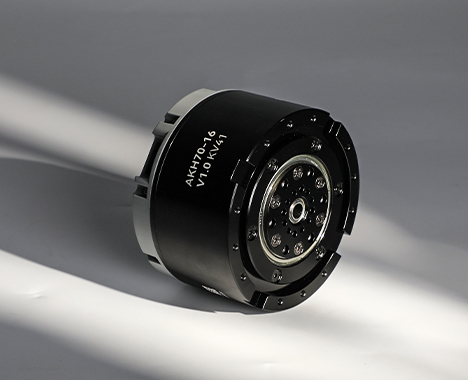
Compared with traditional structures, hollow shaft designs can provide more flexible internal routing space for wiring, sensors, and drive systems, while also helping improve the overall integration level and space utilization efficiency of robot joints.


Currently, solutions using hollow shaft planetary actuators are being increasingly applied in highly integrated robot joints. While maintaining compact dimensions, these structures can also provide high torque output capability, making them especially suitable for application scenarios such as humanoid robots, exoskeletons, and collaborative robots that require compact structures and efficient spatial layouts.


akh-70-16-kv41-robotic-actuator-list


At the same time, highly integrated actuators can also reduce mechanical errors and connection complexity during assembly, while improving system reliability and helping enhance overall motion consistency.


How Integrated Actuators Improve Robot Motion Smoothness


In addition to motors, reducers, and control algorithms themselves, actuator integration methods also directly affect robot motion smoothness.


Traditional robotic systems usually require separate integration of motors, reducers, encoders, and drivers, connected through external wiring and mechanical structures. This split architecture not only increases system complexity, but may also introduce more mechanical errors, structural gaps, and signal synchronization problems.


In contrast, integrated robotic actuators highly integrate motors, reduction mechanisms, encoders, and drive control systems, thereby reducing external connections and intermediate transmission links.


This integrated structure can usually provide more stable system dynamic performance.


First, because the internal structure is uniformly designed and matched, the overall rigidity and motion consistency of the actuator are usually higher, thereby reducing vibration and structural errors during high-speed motion.


Second, shorter transmission chains and more compact structural layouts also help reduce gap accumulation and micro-deformation problems caused by connecting components, thereby further improving low-speed motion smoothness and control stability.


At the same time, highly integrated designs can also optimize signal coordination efficiency between encoders, drivers, and motors, enabling more stable feedback control capability during high-dynamic motion processes.


Especially in high-dynamic platforms such as humanoid robots, quadruped robots, and exoskeleton systems, multi-joint motion often requires high synchronization and control consistency. Therefore, integrated actuators are being increasingly widely applied in high-performance robot joint systems.


Future Development Directions for Robot Motion Smoothness


With the continuous development of humanoid robots, exoskeleton systems, and high-dynamic robotic platforms, the requirements for robot motion smoothness and dynamic control capability are also continuously increasing.


Future optimization of robotic motion systems is expected to revolve around multiple directions, including actuator hardware, motion control, and intelligent algorithms.


Higher-Performance Actuator Hardware


In order to achieve more natural and highly dynamic motion performance within limited space, robotic actuators are continuously developing toward higher performance, including:

  • Higher torque density

  • Lower rotational inertia

  • Better backdrivability

  • Higher integration structural design


These optimizations can help robots further improve dynamic response speed, low-speed control stability, and overall motion flexibility while increasing output capability.


At the same time, lighter structural designs also help reduce joint load and motion inertia, thereby reducing vibration and control errors during motion.


More Precise Motion Control Systems


In addition to hardware itself, control systems also have a decisive impact on robot motion quality.


Future robotic platforms are expected to further improve:

  • Force control precision

  • Low-speed motion stability

  • Dynamic response bandwidth

  • Multi-joint synchronization control capability

  • State feedback precision


As high-bandwidth control systems and high-precision feedback technologies continue to develop, robot joints will be able to achieve more continuous, stable, and natural motion trajectories.


For humanoid robots, this improvement in control capability is particularly important because complex gait control and dynamic balance systems often require multiple joints to perform high-frequency coordinated control simultaneously.


AI-Assisted Motion Control and Dynamic Optimization


In recent years, AI technology has also gradually entered the field of robotic motion control.


Compared with traditional fixed-parameter control methods, future systems may further combine:

  • AI-assisted motion control

  • Adaptive dynamic compensation

  • Intelligent friction and backlash optimization

  • Real-time motion state prediction

  • Environmental perception and motion coordination optimization


By combining real-time sensor data with dynamic models, robotic systems can further improve adaptability to complex environments and maintain more stable motion performance under different loads, terrains, and motion states.


For the future robotics industry, the goal is no longer merely to achieve basic motion capability, but to enable robots to possess more natural, stable, and efficient motion performance in complex real-world environments, thereby better adapting to applications such as human-machine interaction, dynamic operations, and complex task execution.


Conclusion


The smoothness of robot motion is the result of the combined optimization of multiple technologies. Factors such as cogging torque, reducer backlash, encoder precision, motor control algorithms, and actuator integration solutions all have important impacts on final motion quality.


As robotic systems continue to develop toward more dynamic and more humanoid directions, robotic actuators with high-performance control and high-precision feedback capability will also play an increasingly critical role in next-generation robotic applications.

Related Articles
Which motors are used for walking robots
Walking robots typically use a combination of different types of motors to achieve locomotion. The specific motors used can vary depending on the design and requirements of the robot.
Sep 06,2023
Robotic Motor Backlash: A Key Factor in Precision Mechanical Control
In the fields of precision mechanics and robotics, backlash is a critical concept. Backlash refers to the unintended motion or free movement in a mechanical transmission system caused by gaps between gears or other components. Excessive backlash can reduc
Jun 28,2024
RI80 Frameless motor with high torque density
RI80 Frameless motor with high torque density ,0.5mm clearance on the edge of stator for better intallation, Excellent copper fill factor to meet high torque density and dynamics.Hand winding for delicate performance.
Aug 16,2023
Leave Message
User name
Anonymous
E-mail *
Name *
Phone
Comments
Verification code
captcha
Warm prompt
Warm prompt
Please Sign In
Sign In
Sign Up
Forgot Password?
Warm prompt