Create your CubeMars account

With the rapid development of robotics technology, emerging applications such as humanoid robots, quadruped robots, and exoskeletons are continuously driving the advancement of actuator technology. Compared with traditional industrial equipment, modern robots place higher demands on joint systems: actuators must not only provide sufficient power output, but also deliver fast response, precise control, and excellent interaction capabilities.
During robotic motion, joint actuators directly affect the overall movement performance of the robot. Whether it is a humanoid robot performing walking and dynamic balancing, or an exoskeleton device assisting human movement, actuators must achieve efficient power output within a limited space while maintaining flexible and safe motion characteristics.
Traditional servo actuators typically rely on transmission structures with high reduction ratios to increase output torque. However, in some robotic applications that require high dynamic response and force interaction capabilities, excessive mechanical stiffness may limit the backdrivability and motion flexibility of the actuator.
Against this background, QDD (Quasi Direct Drive) actuators have gradually become an important solution for robotic joint design. By adopting a low reduction ratio transmission structure, QDD actuators can achieve a better balance between output capability, response speed, and mechanical compliance, enabling robotic joints to achieve more natural movement patterns.
However, as QDD actuators continue to expand into more application fields, different robotic platforms have also developed significantly different requirements for actuator performance. An actuator suitable for a robotic arm may not necessarily meet the dynamic performance requirements of legged robot joints. Therefore, when selecting a QDD actuator, developers cannot focus on a single parameter alone, but need to evaluate whether the actuator meets the actual application requirements from an overall performance perspective.
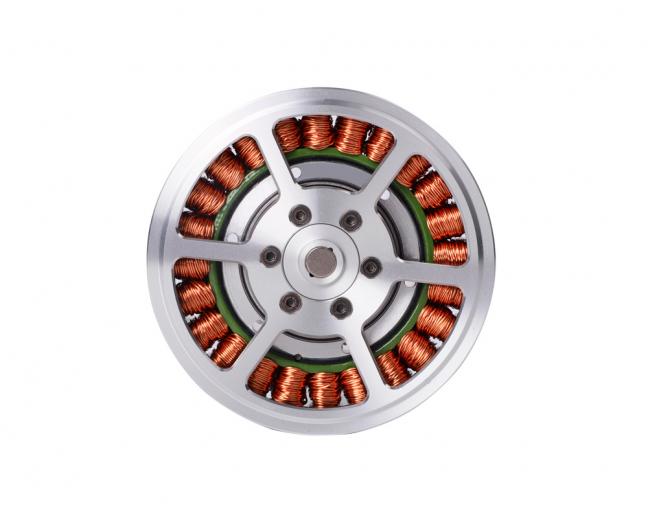
A QDD actuator is not simply a combination of a motor and a reduction mechanism, but a core power unit within a robotic motion system. It needs to simultaneously handle multiple tasks, including power transmission, motion control, and interaction with the external environment.
In practical robot design, actuator performance directly affects:
Motion speed and agility
Posture stability
Energy efficiency
Human-robot interaction safety
Long-term operational reliability
For example, in humanoid robots, leg joints frequently experience acceleration, deceleration, and impact loads. Actuators must not only provide instantaneous high torque but also have the ability to rapidly adjust joint states. In exoskeleton robots, actuators place greater emphasis on lightweight design and backdrivability to ensure that the device can follow human movements and provide natural assistance.
Therefore, when selecting a QDD actuator, developers need to consider the specific application scenario and make a comprehensive evaluation based on multiple key performance factors, including output capability, dynamic response, control accuracy, and mechanical design.
Only by achieving the right balance among these factors can an actuator truly meet the motion requirements of a robotic system. The following sections will analyze the key performance indicators that should be considered during QDD actuator selection, helping developers better understand how different parameters influence practical applications.
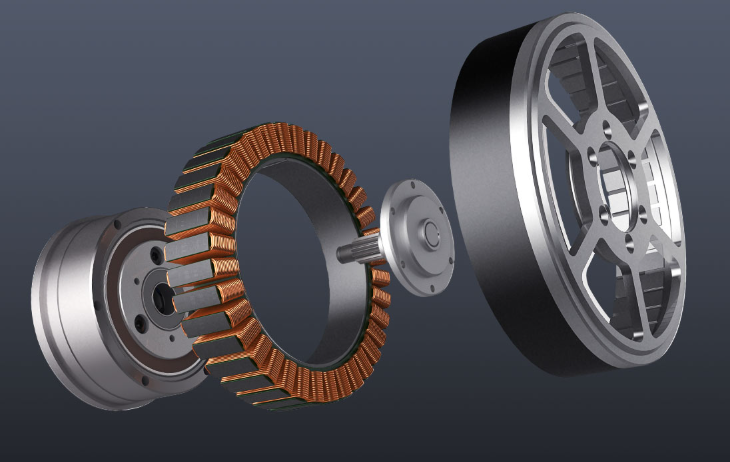
The core advantage of QDD actuators lies in their low reduction ratio transmission design, which allows motor output to be transferred more directly to robotic joints, improving system response speed and motion flexibility.
However, for robotic applications, actuator performance is not determined by a single parameter. Different performance indicators often interact with each other. For example, higher output torque usually requires a larger mechanical structure, while a more lightweight design may place higher demands on thermal management and long-term reliability.
Therefore, when selecting a QDD actuator, developers need to evaluate the actuator from multiple perspectives, including power output, motion control, and mechanical performance, based on the overall requirements of the robot system.
In general, the following key performance indicators determine whether a QDD actuator can meet the actual requirements of a robotic platform.
Torque Density: Measuring Power Efficiency Within a Limited Space
The requirements for robotic joints are not simply about achieving higher output torque. Under limitations in installation space and overall weight, achieving more efficient power output has become a key direction in modern robotic actuator design.
Torque density is commonly used to measure how much output capability an actuator can provide within a limited weight and volume.
For joints installed at the end of a mechanical structure, actuator weight directly affects the overall inertia performance of the robot. Improving torque density can help robots achieve:
Lighter joint structures
Lower motion inertia
Higher motion efficiency
This is especially important for humanoid robots, quadruped robots, and exoskeleton systems, where joints frequently need to perform rapid start-up, acceleration and deceleration, posture adjustment, and dynamic balance control. These movements require actuators with stronger power response capabilities.
In QDD structures, due to the adoption of a lower reduction ratio design, the motor takes on more of the output task. Therefore, motor performance, magnetic circuit design, and overall structural optimization all influence the final torque density.
Peak Torque and Continuous Torque: Do Not Focus Only on Maximum Output
During robotic operation, actuators are not always under the same load conditions.
Different motion phases require significantly different torque capabilities:
| Operating Condition | Actuator Requirement |
| Jumping and rapid turning | High peak output for a short period |
| Normal walking | Stable continuous output |
| Posture maintenance | Precise torque control |
Therefore, when selecting a QDD actuator, developers should consider:
Peak Torque
Rated Torque
Continuous operation capability
Thermal management performance
Peak torque determines the actuator's ability to handle short-term high-load situations, while continuous torque determines long-term operational stability. Focusing only on peak torque specifications may overlook temperature rise issues during real-world operation.
For platforms involving frequent dynamic movements, peak output capability and response performance should be prioritized. For systems requiring long-term operation, continuous load capacity and thermal design become more important.
Backdrivability: A Key Advantage of QDD Over Traditional Actuators
Traditional high-reduction-ratio actuators usually emphasize output stiffness and mechanical power amplification capability.
However, as robots enter dynamic interaction scenarios, actuators also need to detect external forces and adjust their output states accordingly.
| Traditional Actuator | QDD Actuator | |
| Mechanical impedance | Higher | Lower |
| Response to external forces | Relatively limited | More natural |
| Force interaction control | More challenging | Better suited |
Backdrivability means that robotic joints can respond more naturally to external forces, providing:
Improved human-robot interaction safety
Better force control performance
Enhanced compliant motion capability
For example, exoskeleton robots need to follow human movements, while collaborative robots need to quickly adjust their output when interacting with the environment. The low reduction ratio design of QDD actuators reduces mechanical transmission resistance, allowing the system to achieve lower mechanical impedance.
However, it is important to note that better backdrivability does not mean lower stiffness is always better. A well-designed actuator needs to achieve a balance between output capability, control stability, and mechanical compliance.
Backlash and Control Accuracy: Affecting Final Motion Performance
The final motion accuracy demonstrated by a robot does not depend solely on the control algorithm. The precision of the mechanical transmission system also determines whether joint movements can be accurately executed.
Clearance between gears in a reduction mechanism can cause backlash.
Its impact process can generally be described as:
Mechanical clearance increases → Position errors accumulate → Feedback correction increases → Motion stability decreases
Therefore, for high-precision applications such as robotic arms and dexterous manipulation robots, developers should pay close attention to:
Reduction mechanism design
Encoder resolution
Feedback response speed
Control algorithm compatibility
A low-backlash design helps actuators achieve more precise joint control.
Dynamic Response: Determining Whether Robot Motion Feels Natural
Modern robots are evolving from simple repetitive movements toward more complex dynamic motions. During this transition, actuators need to continuously perform:
State detection → Control calculation → Output adjustment
For example:
Humanoid robots maintaining balance
Quadruped robots adapting to terrain changes
Robots rapidly adjusting their posture
Dynamic response capability is mainly influenced by:
Motor inertia
Transmission structure
Control system response speed
Feedback system performance
A faster response speed helps robots reduce motion delays and quickly recover their state when affected by external disturbances.
In summary, QDD actuator selection requires comprehensive evaluation across multiple performance dimensions. Different robotic applications place different priorities on these indicators. Only by matching actuator characteristics with actual requirements can the advantages of QDD technology be fully realized.
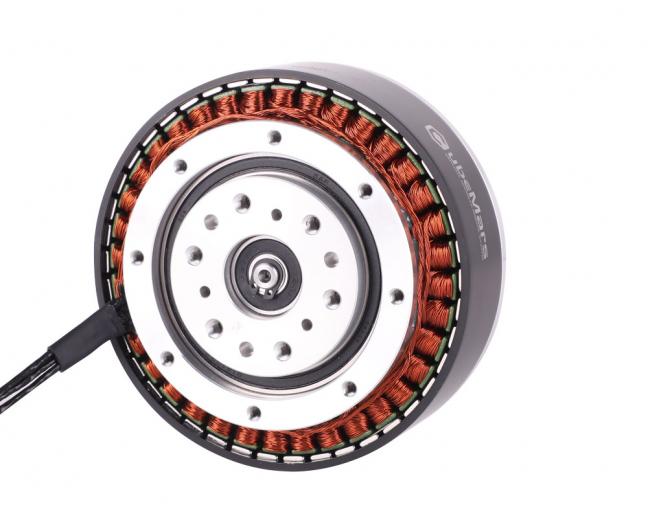
Although QDD actuators offer high response speed, low mechanical impedance, and excellent force control capabilities, different robotic platforms do not always prioritize the same actuator characteristics.
In practical development processes, actuators are not simply about choosing the model with the highest specifications. Instead, the selection should be based on:
Joint position
Motion patterns
Load characteristics
Control requirements
to find the most suitable actuator solution.
For example, legged robots need to handle frequent impacts and dynamic movements, while robotic arms place greater emphasis on motion accuracy and stable output.
Therefore, the key to QDD actuator selection is not finding the product with the “highest performance,” but achieving the best match between the robot's requirements and the actuator's capabilities.
Humanoid Robots: Balancing Power Output and Dynamic Response
Humanoid robots aim to replicate human-like movement patterns, meaning their joint motions have strong dynamic characteristics.
During walking, climbing stairs, and maintaining balance, key joints such as the hip, knee, and ankle need to continuously adjust output torque, allowing the robot to adapt to constantly changing postures.
This means actuators must not only provide sufficient power output but also respond quickly to control system commands.
Humanoid robots typically focus on:
| Key Requirement | Actuator Requirement |
| Complex dynamic movements | Fast response capability |
| Limited joint space | High torque density |
| Posture adjustment | Strong force control performance |
| Long-duration motion | Lightweight design |
Higher torque density can reduce the load on robotic joints, while faster response capability helps the system achieve more natural and stable motion performance.
Especially for critical leg joints, actuators need to balance both output capability and dynamic control performance.
Quadruped Robots: Handling Impacts and Rapid Posture Adjustment
Compared with humanoid robots, quadruped robots experience more significant external impacts during movement.
During running, jumping, and traversing complex terrain, leg joints frequently experience:
Ground impacts
Instantaneous load changes
Rapid posture adjustments
Therefore, quadruped robots place greater emphasis on actuator power performance and reliability.
During actuator selection, key factors usually include:
Peak torque
Continuous output capability
Response speed
Mechanical reliability
If the actuator output is insufficient, the robot may experience unstable gaits, reduced motion efficiency, and other performance issues.
A QDD actuator with strong dynamic performance can help robots quickly adjust joint states and improve motion adaptability in complex environments.
Exoskeletons: Beyond Power Output, Natural Interaction Matters More
The biggest difference between exoskeletons and other robotic applications is that exoskeleton actuators directly participate in human movement. Therefore, they must not only provide assistive power but also avoid restricting natural human motion.
Compared with simply pursuing higher output capability, exoskeleton systems place greater emphasis on:
Actuator weight
Backdrivability
Motion compliance
Control accuracy
Good backdrivability reduces joint mechanical impedance, allowing the device to follow human movements more naturally.
At the same time, lightweight design reduces the burden on users and improves comfort during long-term use. For rehabilitation robots and assistive devices, the coordination between the actuator and the human body is often more important than pure peak performance.
Robotic Arms and Collaborative Robots: Accuracy and Stability Come First
Robotic arms and collaborative robots typically perform precision operation tasks, so their actuator requirements differ from those of legged robots.
These applications may not require extremely high instantaneous output, but place greater importance on:
Joint positioning accuracy
Smooth motion performance
Torque control capability
Long-term operational stability
Especially in tasks such as grasping, assembly, and human-robot collaboration, robots need to precisely control every joint movement.
| Focus Area | Influencing Factors |
| Motion accuracy | Backlash control, encoder feedback |
| Control stability | Control algorithms, response speed |
| Long-term operation | Thermal management and reliability |
Low-backlash structures and high-precision feedback systems help robotic arms achieve more accurate motion control and improve repeatability during complex tasks.
Matching QDD Actuator Performance with Application Requirements
Different robotic applications demonstrate that there is no single standard for QDD actuator selection.
Different scenarios prioritize different performance characteristics:
| Application Type | Key Performance Focus |
| Humanoid robots | Torque density, dynamic response, lightweight design |
| Quadruped robots | Peak torque, impact resistance, reliability |
| Exoskeletons | Weight, backdrivability, compliance |
| Robotic arms | Accuracy, backlash, control performance |
Therefore, when designing robotic joint systems, developers need to select actuators based on actual motion requirements rather than simply comparing a single parameter.
Only after clearly defining application needs and selecting a QDD actuator with matching performance characteristics can the advantages of quasi-direct drive technology be fully realized.
During the development of robotic systems, actuator selection usually involves multiple stages. Developers need to first determine the actual operating conditions of the robot joint, and then gradually filter actuators that meet the required performance, mechanical, and control requirements.
A complete actuator selection process typically includes the following steps:
Step 1: Define the Target Joint Instead of Looking at Actuator Specifications First
A QDD actuator is not an independent power component. Its performance needs to match the requirements of the robotic joint where it is installed.
Therefore, during the early stage of selection, developers should first determine:
Actuator installation position
Joint motion direction
Motion frequency
Operating mode
For example, even within the same robotic leg, the hip, knee, and ankle joints experience different loads and therefore have different actuator requirements.
Only after the joint’s specific tasks are defined can developers determine what level of actuator performance is actually needed.
Step 2: Estimate the Actual Load Based on Motion Conditions
After determining the joint application, the next step is to analyze the forces and loads experienced by the actuator during operation.
The load in robotic motion is usually not constant, but changes with different movement phases:
Static state → Support load
Acceleration phase → Inertial load
Collision or jumping → Instantaneous impact load
Therefore, developers need to evaluate the following based on the motion trajectory:
Required peak torque
Continuous output requirements
Operating duration
Thermal conditions
This step determines the required power level of the actuator.
Step 3: Select Models That Meet the Performance Requirements
After completing load analysis, developers can move on to selecting specific actuator models.
At this stage, different actuators should be compared based on:
Torque density
Speed range
Backdrivability
Control accuracy
Response speed
It is important to note that trade-offs often exist between different performance characteristics.
For example:
Higher output capability may result in larger size and weight
Lower mechanical impedance may require sacrificing some transmission stiffness
The final selection should focus on the overall objectives of the robotic system rather than maximizing a single parameter.
Step 4: Confirm Whether the Actuator Can Be Integrated into the System
Even after the actuator meets the performance requirements, it is still necessary to verify whether it can be practically integrated into the robot system.
Common engineering challenges include:
Insufficient installation space
Incompatible mounting interfaces
Difficult cable routing
Limited heat dissipation conditions
This is especially important for robots with many degrees of freedom, where the size and weight of each actuator can directly influence the performance of the entire system.
Step 5: Validate Long-Term Performance Under Real Operating Conditions
After the initial actuator selection, further testing is required to verify whether the actuator meets actual application requirements.
Key evaluation factors include:
Temperature rise during long-term operation
Stability during repeated movements
Performance under extreme loads
Consistency of control response
Because laboratory specifications cannot fully represent the real operating performance of a robot.
Only through validation under actual working conditions can developers determine whether an actuator is truly suitable for the target application.
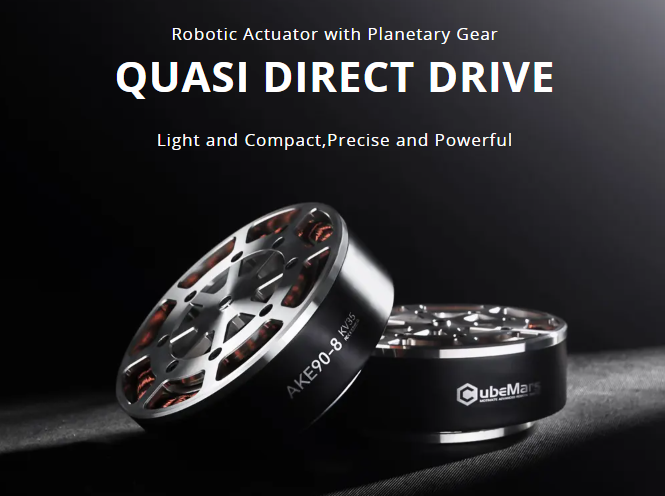
For robotic developers, selecting a QDD actuator requires more than focusing on individual performance parameters. It is also necessary to evaluate whether the actuator can meet the actual requirements of specific joint applications.
An excellent QDD actuator needs to achieve a balance between output capability, dynamic response, control accuracy, and system integration. Based on the demand for high-performance power systems in robotic joints, the CubeMars AKE Series Quasi Direct Drive Actuator adopts a highly integrated design that optimizes the combination of the motor, reduction mechanism, and drive system, providing a compact, efficient, and reliable power solution for robotic joints.
The AKE Series covers different sizes and output levels, meeting the requirements of various applications ranging from lightweight robotic joints to high-load motion platforms.
High Torque Density Design for Improved Robotic Motion Efficiency
In robotic systems, actuator weight directly affects the overall motion performance.
This is especially important for dynamic platforms such as humanoid robots and quadruped robots, where joints frequently perform acceleration, deceleration, and posture adjustments. Excessive actuator weight increases motion inertia, requiring the robot to consume more energy to complete movements.
Therefore, high torque density has become a key factor in QDD actuator selection.
The CubeMars AKE Series optimizes motor structures and transmission solutions to provide high output capability while maintaining a compact form factor, enabling better adaptation to the space limitations of robotic joints.
Different AKE models are designed for different load requirements:
| Product Model | Peak Torque | Key Features | Recommended Applications |
| CubeMars AKE60-8 KV80 | 12.5 Nm | Compact and lightweight, high response, suitable for space-limited applications | Small robots, dexterous joints, lightweight mechanical structures |
| CubeMars AKE80-8 KV30 | 30 Nm | Higher output capability while balancing size and power performance | Humanoid robot and quadruped robot joints |
| CubeMars AKE90-8 KV30 | 45 Nm | Higher torque output for high-load applications | High-load robotic joints, complex motion platforms |
Through different specifications and model combinations, the AKE Series enables developers to select a more suitable power solution based on the structural requirements of their robots.
High Response and Low Mechanical Impedance for Dynamic Robot Applications
Modern robots are evolving from simple repetitive movements toward dynamic and interactive motion.
When humanoid robots maintain balance, quadruped robots adapt to complex terrain, or collaborative robots perform force-controlled operations, actuators need to quickly sense and respond to changes in joint states.
The QDD structure reduces the reduction ratio, allowing motor output to be transferred more directly to the joint, thereby lowering mechanical impedance and improving dynamic response capability.
The CubeMars AKE Series adopts a quasi-direct-drive design, enabling the actuator to achieve:
Fast torque response
More natural backdrivable motion
More flexible joint control
This makes the AKE Series especially suitable for robotic applications requiring high dynamic performance, such as legged robots, exoskeleton systems, and high-degree-of-freedom robotic platforms.
Integrated Design for Simplified Robotic Joint Development
Robotic actuators need to satisfy performance requirements while also reducing system development complexity.
Traditional robotic joints often require separate components such as:
Motors
Gear reducers
Drivers
Encoders
Mechanical connection structures
Multiple independent modules increase mechanical design complexity and raise system integration and debugging costs.
The CubeMars AKE Series adopts an integrated joint actuator design, combining core components into a compact structure, allowing developers to build robotic joints more efficiently.
Its integration advantages include:
| Design Feature | Benefits |
| Integrated motor and reduction mechanism | Reduces mechanical design complexity |
| Integrated drive system | Simplifies control system deployment |
| Compact structural design | Improves robot space utilization |
| Modular interfaces | Enables faster integration and testing |
For robotic projects requiring rapid development and iteration, integrated QDD actuators can effectively lower the development barrier.
AKE Selection Recommendations for Different Robotic Platforms
Different robotic applications emphasize different actuator characteristics. Therefore, actuator selection should be matched according to actual motion requirements.
| Application Scenario | Recommended AKE Model Direction | Key Performance Focus |
| Lightweight robotic joints | CubeMars AKE60-8 KV80 | Weight, response speed, space utilization |
| Humanoid robot leg joints | CubeMars AKE80-8 KV30 | Torque density, dynamic output, reliability |
| High-load motion platforms | CubeMars AKE90-8 KV30 | Output capability, continuous operation performance |
By selecting suitable models for different joint positions, the AKE Series helps robotic systems achieve a balance between power performance, control accuracy, and mechanical design.
The CubeMars AKE Series QDD actuators are characterized by high integration, fast response capability, and a wide range of specifications, providing robotic developers with more flexible joint drive solutions.
With the continuous development of humanoid robots, quadruped robots, and intelligent robotic systems, actuators have evolved from simple power output components into core elements that influence robotic motion performance, control capability, and interaction experience.
Compared with traditional drive solutions, QDD actuators provide a better balance between power output, dynamic response, and backdrivability through their low reduction ratio design, creating new possibilities for modern robotic joint development.
During the QDD actuator selection process, developers should not focus on a single parameter alone. Instead, they need to comprehensively evaluate factors such as torque density, continuous output capability, backdrivability, control accuracy, and system integration capability based on actual application requirements.
Different robotic platforms have different actuator demands. Only by selecting actuators that match the mechanical design and motion tasks can the full performance potential of the robotic system be achieved.
The CubeMars AKE Series is optimized around robotic joint application requirements. Through a highly integrated design, compact structure, and multiple product options, it provides flexible and reliable power solutions for various types of robots.
Whether for lightweight robotic joints or complex motion platforms requiring high dynamic response, selecting the right QDD actuator solution allows robotic developers to achieve a better balance between power output, control accuracy, and motion flexibility.