Crear su cuenta de CubeMars

Con el rápido desarrollo de los dispositivos portátiles inteligentes, la asistencia en rehabilitación y los equipos de colaboración humano-máquina, los actuadores de exoesqueleto se están convirtiendo en componentes centrales importantes en el campo del control de movimiento de alta gama.
Ya sea en sistemas de asistencia, dispositivos de rehabilitación o equipos de soporte de carga, los actuadores determinan directamente:
Fuerza de salida
Sensibilidad del movimiento
Comodidad de uso
Seguridad de la interacción humana
Sin embargo, en el campo de los exoesqueletos, siempre ha existido una contradicción técnica clave:
Una mayor densidad de potencia suele significar un mayor par de salida y una estructura más compacta; mientras que la seguridad humana requiere que el actuador posea características de cumplimiento, controlabilidad y bajo impacto.
Entonces, ¿cómo pueden exactamente los actuadores de exoesqueleto lograr un equilibrio entre “alto rendimiento” y “alta seguridad”?
Un actuador de exoesqueleto es una unidad de potencia utilizada para accionar el movimiento de las articulaciones humanas, generalmente aplicada en:
Dispositivos portátiles de asistencia
Sistemas de asistencia en rehabilitación
Dispositivos de mejora del movimiento humano
Equipos de colaboración humano-máquina
Se encarga principalmente de proporcionar a las articulaciones humanas:
Salida de par
Asistencia al movimiento
Seguimiento dinámico
Control del movimiento
Un actuador de exoesqueleto completo generalmente consta de las siguientes partes:
Motor
Mecanismo de reducción
Codificador
Driver
Sistema de control
Su función es similar a “músculos mecánicos”, ayudando al cuerpo humano a lograr movimientos más fáciles y estables.
Un actuador de exoesqueleto es el dispositivo de potencia central utilizado para accionar el movimiento de las articulaciones en un sistema de exoesqueleto, responsable de proporcionar par de asistencia, control de movimiento y respuesta dinámica para el movimiento humano.
Generalmente se instala en las siguientes partes del cuerpo humano:
Articulación de la cadera
Articulación de la rodilla
Articulación del tobillo
Articulación del hombro
Articulaciones del brazo
y otras zonas de movimiento, logrando la asistencia y mejora del movimiento humano mediante la simulación del método de funcionamiento de los músculos humanos.
Un actuador de exoesqueleto completo generalmente incluye:
Motor
Mecanismo de reducción
Codificador
Driver
Sistema de control de par
Módulo de comunicación
Algunos actuadores de gama alta también integran:
Sensores de fuerza
Sistemas de monitoreo de temperatura
Módulos de protección de frenado
formando una unidad de accionamiento articular altamente integrada todo en uno.
1. Exoesqueletos de rehabilitación médica
Ayudan a pacientes con accidentes cerebrovasculares, lesiones de médula espinal y condiciones similares a recuperar la capacidad de caminar y moverse.
2. Exoesqueletos de asistencia industrial
Utilizados en trabajos de alta intensidad como manipulación y ensamblaje para reducir la fatiga laboral y las lesiones ocupacionales.
3. Exoesqueletos militares/aumentados
Mejoran la capacidad de carga, la resistencia y la eficiencia operativa del ser humano.
Como unidad de potencia central de todo el sistema, los actuadores de exoesqueleto no solo determinan el límite superior de la capacidad de salida, sino que también afectan directamente la naturalidad de la interacción humano-máquina y la experiencia de uso a largo plazo. A medida que los escenarios de aplicación continúan expandiéndose desde la asistencia industrial y el entrenamiento de rehabilitación hasta la colaboración humano-máquina compleja, sus requisitos técnicos también aumentan continuamente.
A nivel de diseño, los actuadores de exoesqueleto ya no son simplemente componentes que “proporcionan energía”, sino sistemas integrales que deben satisfacer simultáneamente salida de alto rendimiento, control de seguridad humana y experiencia de interacción compliant. Por lo tanto, sus características técnicas clave han evolucionado gradualmente en torno a múltiples dimensiones centrales.
| Categoría técnica | Contenido principal | Puntos técnicos clave | Valor aportado |
| Alta densidad de potencia | Tamaño pequeño con alta capacidad de salida | Diseño de alta tasa de llenado de ranuras / materiales de imán permanente de alto rendimiento / estructura compacta | Menor peso, mayor salida, más fácil de usar |
| Control preciso de par | Método de control centrado en la “fuerza” | Control de corriente de alta precisión / retroalimentación de par en tiempo real / sistemas de alto ancho de banda | Movimiento más natural y colaboración humano-máquina más suave |
| Cumplimiento y backdrivability | Mejorar la naturalidad de la interacción humano-máquina | Diseño de baja inercia / estructura de baja fricción / algoritmos de control compliant | Reducir rigidez y mejorar la comodidad del movimiento |
| Control de alta seguridad | Mecanismo con prioridad en la seguridad humana | Limitación de par / protección de corriente / monitoreo de temperatura / mecanismos de parada de emergencia | Prevenir sobrecargas y lesiones accidentales |
| Baja inercia y respuesta rápida | Seguimiento rápido del movimiento humano | Motores de baja inercia / bucles de corriente de alta velocidad / drivers de alta respuesta | Marcha más suave y movimientos más sincronizados |
| Diseño altamente integrado | Estructura articular integrada | Integración de motor + driver + codificador + sensores | Estructura más compacta y mayor fiabilidad |
| Capacidad de gestión térmica | Garantía de operación estable a largo plazo | Optimización de disipación de calor / monitoreo de temperatura / control de limitación de corriente | Mejorar la resistencia y la comodidad de uso |
| Colaboración humano-máquina inteligente | Dirección de desarrollo futuro | Predicción de marcha / reconocimiento de movimiento / control adaptativo | Experiencia de asistencia más inteligente y natural |
En general, el desarrollo tecnológico de los actuadores de exoesqueleto ha pasado gradualmente de la optimización de “capacidad de salida única” hacia un diseño de equilibrio integral de “rendimiento + seguridad + experiencia humana”.
Entre ellos, la relación entre alta densidad de potencia, control compliant y seguridad humana es especialmente crítica, ya que determina conjuntamente si el actuador puede adaptarse realmente al uso a largo plazo y a escenarios complejos de interacción humano-máquina.
La razón por la que los actuadores de exoesqueleto son cada vez más sensibles a la “alta densidad de potencia” no es simplemente la búsqueda de una mayor salida, sino que está determinada fundamentalmente por su objetivo de aplicación (el cuerpo humano) y su método de uso (uso prolongado y de contacto cercano).
En comparación con los motores robóticos ordinarios, los actuadores de exoesqueleto deben satisfacer simultáneamente las tres restricciones de “rendimiento de potencia + seguridad humana + experiencia de uso”, lo que convierte a la densidad de potencia en un indicador clave que determina el éxito o fracaso del sistema.
Los motores robóticos ordinarios generalmente se utilizan en entornos fijos, como:
Brazos robóticos industriales
Equipos de líneas de producción automatizadas
Sistemas de movimiento de trayectoria fija
Las características de estos escenarios son:
No requieren uso cercano al cuerpo
No actúan directamente sobre el cuerpo humano
Permiten mayor peso y volumen
Dan más importancia a la salida estable y la vida útil
Sin embargo, los actuadores de exoesqueleto son completamente diferentes, ya que están directamente fijados al cuerpo humano y su entorno de operación es “el ser humano”.
Esto trae tres diferencias fundamentales:
| Restricción principal | Requisito específico | Área afectada | Impacto principal | Orientación de diseño |
| Debe usarse pegado al cuerpo (extremadamente sensible al peso) | Los actuadores se instalan en las articulaciones (rodilla / cadera / tobillo) | Articulaciones de las extremidades inferiores y superiores | Altera la marcha, aumenta el consumo de energía, acelera la fatiga | Hacer el sistema lo más ligero posible manteniendo la capacidad de salida |
| Debe coexistir con humanos (no puede usar accionamiento rígido) | Seguir el movimiento humano, evitar interferir con el movimiento natural y prevenir tirones forzados | Cadena de movimiento de todo el cuerpo | Afecta la naturalidad del movimiento y la experiencia de interacción | Mejorar el cumplimiento, reducir la impedancia y mejorar la interacción natural |
| Debe funcionar durante largos periodos (sensibilidad al calor y la comodidad) | Uso prolongado, baja elevación de temperatura, salida estable | Todo el sistema portátil | Afecta la comodidad y la experiencia de uso continuo | Optimizar la disipación térmica y la eficiencia energética para garantizar operación estable a largo plazo |
El diseño de los actuadores de exoesqueleto no consiste simplemente en buscar “más potencia” o “mayor velocidad”, sino en lograr un equilibrio integral entre la salida de potencia y la experiencia de interacción bajo restricciones del cuerpo humano. Dado que actúan directamente sobre las articulaciones humanas, los objetivos de diseño deben considerar simultáneamente el rendimiento, la seguridad y la experiencia de uso a largo plazo.
En general, los objetivos principales pueden resumirse en los siguientes aspectos:
| Objetivo de diseño | Posicionamiento | Requisitos principales | Objetivo esencial |
| Alta densidad de potencia | Objetivo de rendimiento fundamental | Proporcionar mayor par en menor volumen; reducir la carga articular; mejorar la compacidad estructural | Lograr mayor potencia con una estructura más ligera |
| Control compliant | Objetivo de interacción humano-máquina | Ajustar dinámicamente la salida según el movimiento humano; transiciones suaves de par; evitar impactos rígidos | Permitir que el dispositivo “siga al humano” en lugar de “controlar al humano” |
| Seguridad humana | Objetivo de restricción del sistema | Limitaciones duales de par y corriente; mecanismos de protección ante anomalías; control de rango seguro de movimiento; monitoreo en tiempo real de temperatura y carga | Garantizar que no se cause ningún riesgo incontrolable al cuerpo humano bajo ninguna circunstancia |
| Backdrivability | Objetivo de movimiento natural | Reducir la impedancia mecánica; reducir la sensación de fricción; mejorar la capacidad de seguimiento pasivo | Permitir que el cuerpo humano impulse naturalmente el movimiento del actuador |
| Comodidad de uso | Objetivo de uso a largo plazo | Baja carga de peso; baja generación de calor; operación continua estable; reducción de acumulación de fatiga | Lograr un uso prolongado cómodo sin afectar el movimiento diario |
En el diseño de actuadores de exoesqueleto, la alta densidad de potencia no es solo un indicador de rendimiento, sino un factor clave que determina si el sistema es “usable, fácil de usar y adecuado para uso prolongado”. Afecta directamente el control de peso, la salida de potencia, la seguridad humana y la experiencia general de uso.
Desde la perspectiva de aplicaciones prácticas, su importancia se refleja principalmente en:
| Función clave | Problema central | Impacto de densidad insuficiente | Mejoras aportadas por alta densidad de potencia |
| Resolver la contradicción entre diseño ligero y capacidad de salida | Requerir simultáneamente “alta potencia + bajo peso” | Mayor tamaño del motor, mayor peso, mayor carga para el cuerpo humano | Mayor potencia en una estructura más pequeña y ligera |
| Reducir la carga del uso humano | Las articulaciones son extremadamente sensibles al peso (rodilla/cadera/tobillo) | Equipos más pesados, mayor inercia, mayor consumo de energía, fatiga fácil | Reducir la carga articular y el consumo energético total |
| Mejorar el control compliant y la naturalidad del movimiento | Necesidad de movimiento colaborativo suave humano-máquina | Alta inercia, respuesta lenta, movimiento rígido | Menor inercia, respuesta más rápida, salida de par más suave |
| Mejorar los límites de seguridad humana | Control del movimiento humano en entornos dinámicos | Respuesta lenta, alto riesgo de impacto, retraso de control | Control en lazo cerrado rápido para reducir impactos y riesgos de pérdida de control |
| Mejorar la backdrivability y la experiencia de interacción natural | El cuerpo humano debe poder impulsar naturalmente el actuador | Alta resistencia, fuerte sensación mecánica, movimiento poco fluido | Reducir la impedancia del sistema y mejorar la capacidad de seguimiento natural |
| Mejorar la comodidad de uso a largo plazo | Requisito de operación prolongada de contacto cercano | Carga articular pesada, rápida acumulación de fatiga, mala experiencia | Experiencia más ligera, eficiente energéticamente y cómoda de uso continuo |
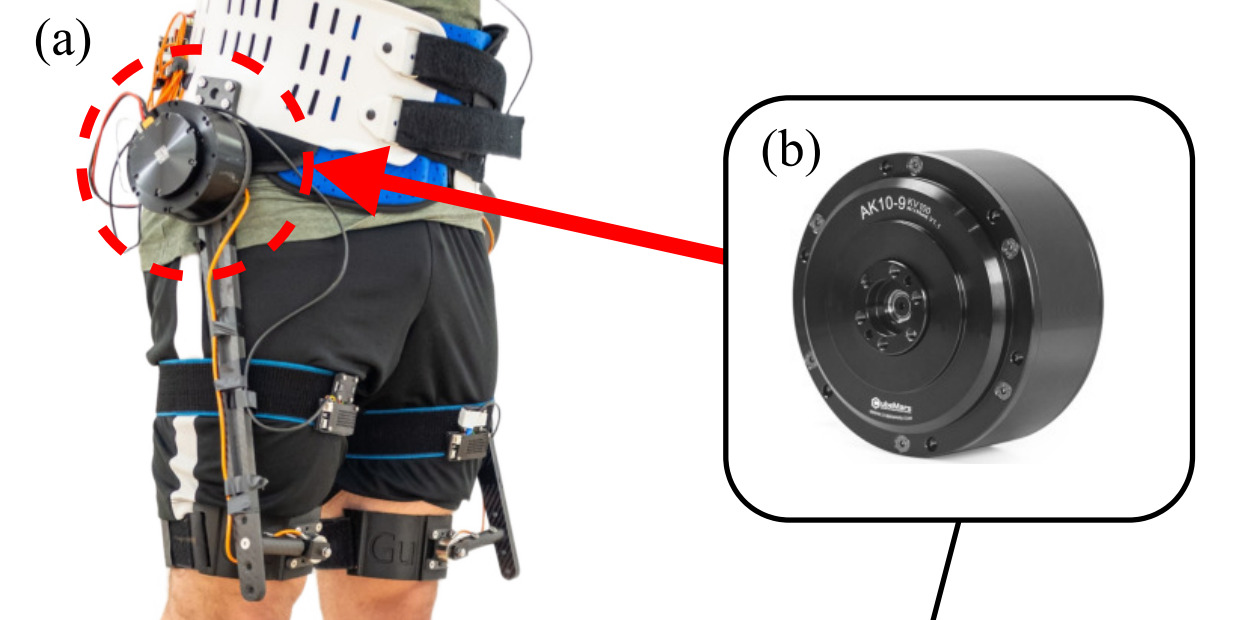
Antecedentes del proyecto
En los sistemas de exoesqueleto de colaboración humano-máquina, la “fuerza de interacción” es un parámetro clave que afecta la precisión del control y la comodidad de uso. Las soluciones tradicionales suelen depender de sensores de fuerza adicionales para medir la interacción entre humanos y máquinas, pero este enfoque presenta problemas evidentes:
Aumento del peso del sistema
Mayor coste total
Incremento de la complejidad estructural
Reducción de la fiabilidad de integración
Por ello, la industria ha comenzado a explorar una solución más ligera y eficiente: lograr una estimación precisa de la fuerza de interacción humano-máquina sin añadir sensores adicionales.
Solución del actuador CubeMars
Este proyecto utiliza actuadores CubeMars para construir un sistema de exoesqueleto de articulación de cadera, logrando la estimación de la fuerza de interacción mediante las propias características dinámicas del actuador.
El diseño central se basa en las siguientes capacidades clave:
| Capacidad técnica | Función |
| Alta densidad de potencia | Proporcionar suficiente asistencia articular mientras se reduce el peso total del sistema |
| Capacidad de control compliant | Lograr una interacción humano-máquina y retroalimentación de fuerza más natural |
| Baja impedancia mecánica | Reducir la resistencia al movimiento y mejorar la capacidad de control activo humano |
| Alto rendimiento de respuesta | Mejorar la precisión del control bajo cambios dinámicos |
Resultados del proyecto
Durante los experimentos de caminata en cinta, los sujetos realizaron pruebas de movimiento bajo diferentes condiciones de par de asistencia.
El sistema demostró los siguientes resultados:
Error medio controlado dentro de un rango relativamente bajo
Mejora significativa en la precisión del seguimiento de par
Mayor estabilidad en la interacción humano-máquina
Esto indica:
Incluso sin sensores de fuerza adicionales, todavía es posible lograr una estimación de fuerza de interacción humano-máquina de alta precisión.
Importancia técnica
El valor central de este caso es verificar que:
A través de las características intrínsecas de actuadores de alto rendimiento, la estructura del sistema puede simplificarse al mismo tiempo que se mejora la precisión del control.
Al mismo tiempo, mostró un rendimiento destacado en:
Mejora de la seguridad humana (reducción de impactos bruscos)
Mejora del control compliant (movimiento más natural)
Optimización de la backdrivability (movimiento más fluido)
Mejora de la comodidad de uso (reducción de la fatiga a largo plazo)
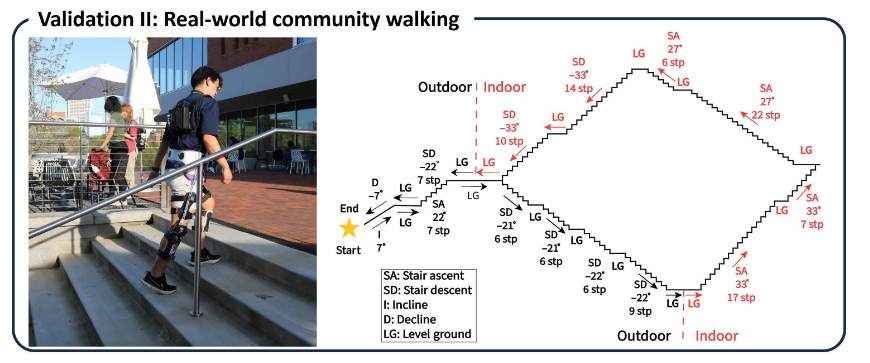
Antecedentes del proyecto
Con el desarrollo de la inteligencia artificial y las tecnologías de control de movimiento, los sistemas de exoesqueleto están evolucionando desde modos de asistencia fija hacia control inteligente adaptativo.
Este proyecto fue desarrollado conjuntamente por múltiples universidades, con el objetivo de lograr:
Adaptación a terrenos complejos
Reconocimiento de marcha en tiempo real
Ajuste dinámico de asistencia
Experiencia de uso natural a largo plazo
Esto impone mayores requisitos a los actuadores.
Solución del actuador CubeMars
El sistema adopta actuadores CubeMars como unidad de accionamiento central para soportar control de movimiento dinámico complejo.
Sus principales capacidades técnicas incluyen:
| Capacidad técnica | Función |
| Alta densidad de potencia | Proporcionar salida de potencia estable garantizando diseño ligero |
| Capacidad de control compliant | Lograr un movimiento colaborativo natural entre humano y máquina |
| Alta backdrivability | Mejorar la libertad del movimiento activo humano |
| Baja impedancia mecánica | Reducir la sensación “mecánica” del movimiento y mejorar la naturalidad |
| Alta respuesta dinámica | Adaptarse rápidamente a cambios de marcha y del entorno |
Resultados del proyecto
El sistema puede ajustar automáticamente las estrategias de asistencia según diferentes escenarios de movimiento, incluyendo:
Caminata en terreno plano
Subida y bajada de escaleras
Movimiento en pendiente ascendente y descendente
Cambio de velocidad de marcha
Durante los cambios dinámicos, el actuador puede responder rápidamente a las variaciones del movimiento humano, reduciendo eficazmente:
Sensación de retardo de movimiento
Sensación de arrastre mecánico
Problemas de coordinación de la marcha
El rendimiento general del movimiento se vuelve más suave y natural.
Importancia técnica
Este caso verifica el papel central de los actuadores de exoesqueleto en sistemas de control inteligente:
Los actuadores no son solo la fuente de energía, sino también el factor clave que determina la experiencia de interacción humano-máquina.
Su valor principal se refleja en:
Mejora de los límites de seguridad humana (reducción de riesgos de impacto)
Mejora del control compliant (movimiento más natural)
Optimización de la backdrivability (movimiento más fácil de impulsar por el humano)
Mejora de la comodidad de uso (apto para uso prolongado)
Soporte de salida estable bajo alta densidad de potencia
A través de estos dos casos, se puede observar que el desarrollo de los actuadores de exoesqueleto ya no depende simplemente de “mayor salida”, sino que se está desplazando gradualmente hacia:
Densidad de potencia (ligereza + alta salida)
Control compliant (interacción natural humano-máquina)
Seguridad humana (restricciones del sistema)
Backdrivability (naturalidad del movimiento)
Comodidad de uso (experiencia a largo plazo)
Esto también muestra que:
El valor central de los actuadores de exoesqueleto no es “impulsar el movimiento humano”, sino “permitir que el ser humano se mueva de forma más natural”.
En los actuadores de exoesqueleto, los motores no solo determinan el rendimiento de potencia del equipo, sino que también afectan directamente la seguridad humana y la experiencia de uso. Por ello, más que buscar simplemente mayor potencia, la seguridad humana siempre ha sido el factor más importante en el diseño.
Aunque una alta densidad de potencia puede hacer los actuadores más ligeros y compactos, un exceso de capacidad de salida también puede provocar:
Impactos de movimiento excesivos
Distribución desigual de fuerzas articulares
Control inestable
Movimiento humano-máquina no sincronizado
Dado que los actuadores de exoesqueleto actúan directamente sobre las articulaciones humanas, cualquier pérdida de control o respuesta no natural puede afectar articulaciones, músculos e incluso el equilibrio general del movimiento. Por ello, no solo deben ser “potentes”, sino también “seguros, estables y controlables”.
¿Cómo mejorar la seguridad humana?
Para garantizar la seguridad bajo condiciones de alta densidad de potencia, los actuadores modernos suelen emplear:
Control de par: salida más suave y natural, evitando accionamiento rígido
Control de impedancia: reducir impactos mecánicos y mejorar suavidad
Protección por límite de par: evitar lesiones por sobrecarga
Diseño de baja inercia: mejorar respuesta y estabilidad
El objetivo central es:
Mantener la capacidad de potencia mientras se hace la interacción humano-máquina más natural y controlable.
¿Por qué sigue siendo necesaria la alta densidad de potencia?
La alta densidad de potencia sigue siendo una dirección clave porque afecta directamente:
Diseño estructural ligero
Capacidad de asistencia
Rendimiento de control compliant
Backdrivability y experiencia natural de movimiento
Comodidad de uso a largo plazo
En otras palabras, la densidad de potencia determina “cuánta potencia puede tener el sistema”, mientras que la seguridad determina “si puede usarse de forma estable”.
Lógica central del equilibrio
En el diseño de actuadores de exoesqueleto, la relación entre ambos puede resumirse como:
La densidad de potencia determina el límite superior de rendimiento, mientras que la seguridad humana determina el límite de aplicación.
Una solución realmente excelente no consiste en elegir entre ambos, sino en liberar completamente el rendimiento garantizando la seguridad.
El objetivo de diseño no es simplemente lograr mayor potencia, sino un equilibrio a nivel de sistema entre:
Salida de potencia
Precisión de control
Seguridad humana
Comodidad de uso
logrando así una experiencia de colaboración humano-máquina sostenible a largo plazo.
En sistemas de actuadores de exoesqueleto, diferentes posiciones articulares (cadera, rodilla, tobillo, etc.) y distintos escenarios de aplicación requieren diferentes prestaciones del motor. Durante la selección, normalmente se evalúan:
Densidad de potencia
Capacidad de par
Seguridad humana
Peso total
Precisión de control
Capacidad de control compliant (backdrivability)
Entre ellas, la alta densidad de potencia y el control compliant se están convirtiendo en tendencias clave en la selección de motores para exoesqueletos.
| Modelo | Aplicación recomendada | Características principales | Área aplicable |
| AK10-9 V3.0 KV60 | Exoesqueletos de alta carga / sistemas de asistencia de miembros inferiores | Alto par de salida, alta densidad de potencia, estructura de doble codificador | Cadera / Rodilla |
| AK80-9 V3.0 KV100 | Exoesqueletos inteligentes con IA / sistemas de asistencia de marcha | Alta velocidad de respuesta, baja impedancia mecánica, alto control compliant | Rodilla / Tobillo |
| AK80-6 KV100 | Sistemas de exoesqueleto ligeros | Alta integración, ligereza, operación estable | Estructuras de asistencia de miembros inferiores |
| AK70-10 KV100 | Exoesqueletos de asistencia industrial | Alta capacidad de carga de par, alta resistencia a impactos | Cadera |
| AK60-6 V3.0 KV80 | Dispositivos portátiles | Diseño miniaturizado, alta eficiencia, baja inercia | Tobillo / módulos pequeños |
| Serie AKE | Rehabilitación y exoesqueletos de aumento | Alto control compliant, excelente backdrivability, interacción natural | Sistemas de articulaciones de miembros inferiores |
Recomendaciones de selección (según escenarios de aplicación)
| Escenario de aplicación | Dirección recomendada del motor | Requisitos clave |
| Exoesqueletos médicos de rehabilitación | Alta conformidad + control de alta precisión | Prioridad en la seguridad humana, movimiento natural |
| Exoesqueletos industriales para carga | Alto par de torsión + alta estabilidad | Funcionamiento continuo a largo plazo, resistencia a la carga |
| Exoesqueletos inteligentes con IA | Alta velocidad de respuesta + control de alto ancho de banda | Reconocimiento dinámico de la marcha y ajuste en tiempo real |
| Dispositivos portátiles ligeros | Alta densidad de potencia + miniaturización | Reducción de la carga sobre el usuario y mayor comodidad |
Con el desarrollo de la robótica, los algoritmos de control de IA y los actuadores de alto rendimiento, los actuadores de exoesqueleto están pasando gradualmente de los laboratorios a aplicaciones reales como rehabilitación médica, asistencia industrial y dispositivos inteligentes portátiles. Como fuente de energía central del sistema, la selección y el rendimiento del actuador determinan directamente la experiencia global, la seguridad y la usabilidad.
1. Los actuadores de exoesqueleto no solo determinan el rendimiento de potencia, sino también la seguridad humana y la experiencia de uso: A diferencia de los motores industriales tradicionales, los actuadores de exoesqueleto interactúan directamente con las articulaciones humanas durante largos periodos, por lo que priorizan el control compliant, la colaboración humano-máquina y la comodidad a largo plazo.
2. La alta densidad de potencia es una dirección clave de desarrollo: Permite mayor salida en menor volumen y peso, mejorando la flexibilidad y reduciendo la carga humana.
3. La seguridad humana siempre tiene prioridad sobre la potencia extrema: Deben emplearse mecanismos como control de impedancia, limitación de par y control compliant para evitar impactos rígidos.
4. El control compliant y la backdrivability son la base de la colaboración humano-máquina: Permiten que el cuerpo humano impulse naturalmente el sistema para una interacción más fluida.
5. Dirección futura: más ligero, más inteligente y más seguro: Con la IA y la integración avanzada, los exoesqueletos evolucionarán hacia mayor densidad de potencia y mejor interacción natural.
El desarrollo de los actuadores de exoesqueleto está pasando de la simple búsqueda de potencia a un equilibrio a nivel de sistema entre densidad de potencia, precisión de control, seguridad y experiencia humana.
En el futuro, lograr una mejor integración entre alto rendimiento y seguridad humana será la clave para la maduración de esta tecnología en aplicaciones reales.


