Create your CubeMars account

When selecting a BLDC (brushless DC) motor for a robot, engineers need to consider more than torque, speed, dimensions, and power consumption. They must also determine how the controller obtains rotor-position information and regulates motor motion.
The feedback method directly affects startup behavior, low-speed operation, motion smoothness, positioning performance, and control-system complexity. These factors are especially important for robotic arms, humanoid robots, quadruped robots, and other systems that require repeatable motion or coordinated control of multiple joints.
Two common motor-control approaches are sensorless control and encoder-based control.
Sensorless Control: Estimates rotor position or speed from electrical measurements and a motor model, without relying on a dedicated rotor-position sensor for commutation.
Encoder-Based Control: Uses an encoder to measure rotor position. Depending on the system architecture, this feedback can be used for commutation, speed regulation, or closed-loop position control.
Each approach suits different applications. Sensorless control can reduce sensor-related hardware and wiring, while encoder-based control generally has an advantage when reliable position feedback and precise motion regulation are required.
For robot manufacturers and system integrators, the key is not simply to decide which approach is more advanced, but to determine which feedback architecture best matches the application's motion profile, performance requirements, and system design.
Sensorless BLDC motor control estimates rotor position or speed from the motor's electrical characteristics during operation, without relying on a dedicated rotor-position sensor for sensorless commutation.
Depending on the control algorithm, the controller may use back electromotive force (Back-EMF), phase voltage, phase current, or other electrical characteristics to determine the rotor's operating state.
2.1 How Sensorless Control Works
As a BLDC motor rotates, the permanent magnets move relative to the stator windings, generating back-EMF. The controller analyzes these electrical signals to estimate rotor position and determine the appropriate commutation timing.
Different sensorless control strategies use different estimation methods. For example, traditional back-EMF detection generally works best once the motor reaches a speed at which a recognizable signal is available. Other algorithms may cover a wider operating range, but performance depends on the motor model, controller hardware, and algorithm implementation.
One potential advantage of sensorless control is reduced sensor-related integration work. Because commutation does not depend on a dedicated position sensor, the motor assembly may need fewer sensor mounting features and connecting wires.
However, sensorless control does not mean the controller directly measures rotor position. It still estimates position from the motor's electrical characteristics, so limitations can arise under certain operating conditions.
2.2 When Is Sensorless Control Suitable?
Sensorless control may be a suitable option when an application prioritizes compact design, simpler wiring, or speed regulation rather than precise position feedback.
Potential advantages include:
Reduced sensor hardware: Sensorless commutation does not require a dedicated rotor-position sensor.
Simplified wiring: Additional sensor cables between the motor and controller may not be needed.
Greater mechanical integration flexibility: Less work may be required to mount and align a separate commutation sensor.
Potential space and cost benefits: The actual benefits depend on the motor, controller, and application requirements.
These characteristics may be relevant to projects integrating frameless motors into custom robotic mechanisms. For example, CubeMars RI Series frameless inrunner torque motors and RO Series frameless outrunner torque motors can be used in customer-developed mechanical systems. Engineers can evaluate different rotor-detection and commutation approaches based on the selected motor configuration and controller capabilities.
Note that removing a sensor does not necessarily make the entire system simpler. The controller must still be compatible with the selected motor and operate reliably across the target speed and load range.
2.3 Limitations of Sensorless Control at Startup and Low Speeds
Sensorless control requires particular scrutiny when a motor must start from standstill, operate at very low speeds, or respond to changing loads.
Startup behavior
At standstill, traditional back-EMF detection cannot determine rotor position directly from rotational back-EMF, because the signal is absent or too weak to detect reliably. The controller may therefore need rotor alignment, initial-position estimation, or another startup strategy. Actual results depend on the algorithm and application conditions.
Low-speed operation
At low speeds, the electrical signals used to estimate rotor position may be weak and more susceptible to noise and external interference. In some control schemes, this can affect commutation and motion smoothness.
Load changes
Sudden load changes can also challenge the controller's estimation of rotor state. Performance depends on the estimation algorithm, motor parameters, controller tuning, and actual operating conditions. For robotic joints that move slowly, reverse direction frequently, or start under load, sensorless control should be validated under real operating conditions rather than judged solely by medium- or high-speed steady-state results.
Encoder-based control provides the controller with measured rotor-position information. Depending on the encoder type and control-system architecture, this feedback can be used for commutation, speed regulation, and closed-loop position control.
3.1 How Encoder Feedback Works
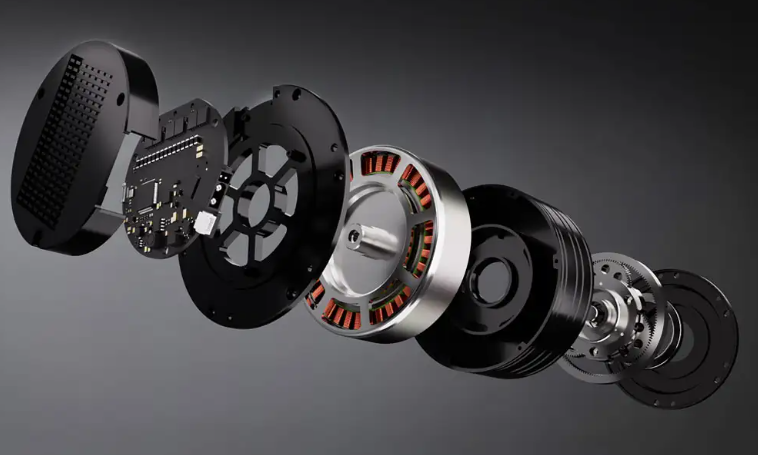
An encoder converts rotor motion into electrical signals or digital position data. The controller processes this information to determine rotor position and, depending on the system configuration, calculate speed and regulate motion.
Common encoder types include:
Incremental Encoder: Outputs signals representing relative motion. After startup, the system may need homing or reference-point calibration to establish a known position.
Absolute Encoder: Provides a position value within its measurement range, allowing the controller to identify position without necessarily driving the motor to find a reference point first.
Encoder resolution should not be confused with the positioning accuracy of the complete system. Actual performance is also affected by sensor quality, mounting, mechanical clearance, structural compliance, calibration, and control-loop tuning.
3.2 Why Is Encoder Feedback Important for Robotic Joints?
Encoder-based control is worth prioritizing when a robotic joint must follow a specified trajectory, hold a target position, or repeat motions under changing loads.
By measuring position, the controller can compare the target position with the measured position and adjust motor operation to reduce the error between them.
For example, an industrial robotic arm may need to move slowly while carrying a workpiece, stop at a specified angle, and repeat the same action throughout production. In this situation, position feedback helps the system regulate motion consistently.
Encoder feedback can also support coordinated control across multiple axes. The final result, however, depends on the complete control architecture, including the drive, communication system, mechanical structure, and motion-control software.
3.3 Motor-Side Feedback vs. Output-Side Feedback
One often-overlooked point for robotic joint motors is that motor-shaft position is not necessarily the same as the position of the final mechanical output.
In a geared actuator, the encoder may measure the motor rotor's position. The relationship between that measurement and the actual joint position is also affected by the gear ratio, backlash, and elastic deformation.
This is particularly important when evaluating integrated actuators. For example, CubeMars AK Series actuators and AKE Series quasi-direct-drive motors use different levels of mechanical integration. When applying them to robotic joints, engineers should confirm the specific encoder configuration and whether the available feedback meets the position-control requirements at the final output.
An integrated encoder can simplify feedback-system design, but it does not automatically eliminate mechanical positioning errors.
The main difference between the two approaches is how rotor-position information is obtained and how that information is used for motion control.
| Comparison | Sensorless Control | Encoder-Based Control |
| Rotor-position information | Estimated from electrical measurements or a motor model | Measured by an encoder |
| Dedicated position sensor required? | Not required for sensorless commutation | Required |
| Startup behavior | Depends on the estimation method and startup strategy | Position feedback is available once the encoder is initialized and operating normally |
| Low-speed operation | Some estimation methods face challenges at low speeds | Generally provides more direct position information |
| Position-control capability | Requires a suitable position-estimation method and control architecture | Suitable for closed-loop position control |
| Hardware and wiring | Potentially simpler | Requires additional encoder hardware and an interface |
| System integration | Depends on the controller and estimation algorithm | Encoder mounting, configuration, and feedback integration must be considered |
| Typical applications | Applications prioritizing rotation, speed regulation, or reduced sensor hardware | Applications requiring measured position feedback and precise motion regulation |
This table is intended as a general reference, not an absolute performance ranking. Sensorless algorithms can differ significantly, and encoder-based control also depends on encoder, controller, and mechanical-system design. The final choice should be based on the application's operating range and control objectives.
Different types of robotic motors have different feedback requirements. The most suitable solution depends on motion characteristics, positioning performance, startup conditions, and control architecture—not simply on the robot category.
5.1 Robotic Arms and Collaborative Robots
Cobot motors and robotic arm motors typically require controlled joint trajectories, repeatable positioning, and multi-axis coordination.
When an application requires measured position feedback—especially for low-speed motion, precise trajectory tracking, or holding a target joint position—encoder-based control is generally worth prioritizing.
Sensorless control may still be considered for auxiliary rotary mechanisms or axes where precise position feedback is not a primary requirement.
For custom robotic arms, engineers can consider CubeMars RI Series frameless inrunner torque motors or RO Series frameless outrunner torque motors, then select compatible feedback hardware and a controller based on the target performance. This offers considerable mechanical integration flexibility, but final system accuracy still depends on transmission characteristics, sensor mounting, and control-loop tuning.
5.2 Humanoid and Quadruped Robots
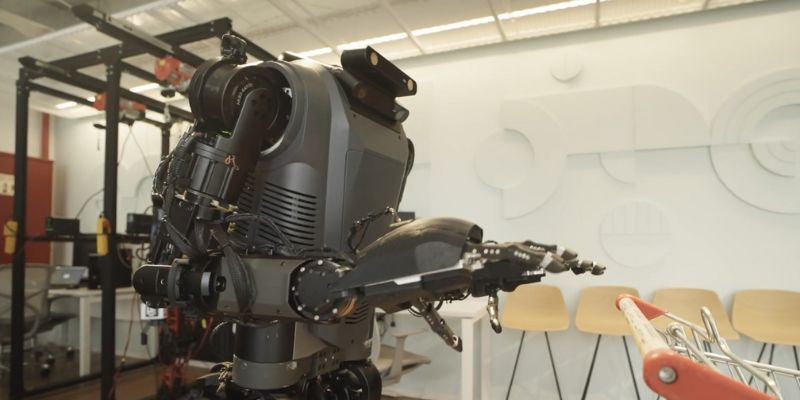
Humanoid robot motors and quadruped robot motors must coordinate multiple joints under constantly changing loads. Walking, running, and jumping involve rapid acceleration, frequent direction changes, and significant external disturbances at the joints.
Encoder feedback can support position regulation and coordinated motion. However, in force- or torque-controlled systems, an encoder alone cannot directly measure contact force or joint torque. Depending on the control strategy, the system may also need current-based torque estimation, force sensors, torque sensors, or other feedback methods.
For compact robotic joints, engineers can evaluate the different integration options offered by CubeMars AKE Series quasi-direct-drive motors and AK Series actuators. Selection should account for required output torque, mechanical design, feedback configuration, and controller compatibility.
Sensorless control may also suit some auxiliary functions, but its startup reliability, low-speed performance, and resistance to load disturbances should be thoroughly validated before it is used for demanding joint motion.

5.3 Exoskeleton Robots
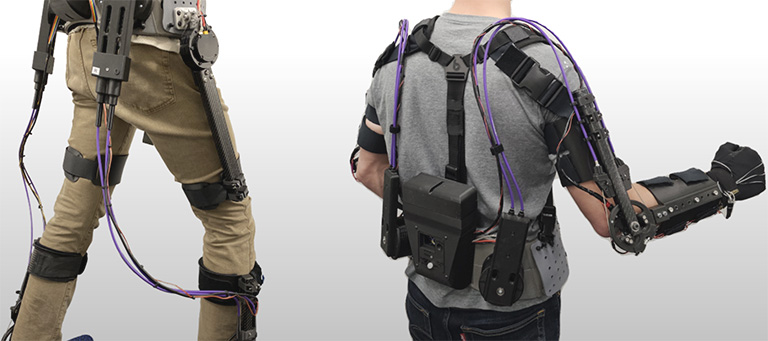
Exoskeleton robot motors must coordinate motor output with human movement. Their control systems may need to provide smooth assistance, respond to changing joint loads, and maintain predictable motion over repeated cycles.
Encoder feedback helps track joint position and regulate motion. However, motor-side position feedback alone may not fully represent the wearer's actual joint movement or directly determine the interaction force between the person and the device. Depending on the design requirements, additional joint-angle sensors, force sensors, or other feedback mechanisms may be needed.
Sensorless control may be considered for auxiliary functions that do not require precise joint-position feedback. For primary assistive joints, engineers should carefully evaluate startup behavior, low-speed response, torque regulation, total actuator weight, thermal comfort, and safety under unexpected loads.
5.4 Industrial Robots and Automation Equipment
Industrial robot motors and automation equipment may require repeatable positioning, stable speed regulation, and reliability during long production runs.
For positioning axes, encoder-based control provides measured position feedback to help the controller track motion commands and correct position errors. Sensorless control may be considered for continuous-rotation mechanisms or auxiliary drives that do not require precise position measurement.
When integrating frameless motors into custom industrial joints, engineers can evaluate CubeMars RI and RO Series motors based on target speed, torque, feedback configuration, and available installation space.
Engineers should distinguish encoder resolution from actual system positioning accuracy. Gearbox backlash, structural stiffness, calibration, load variation, and controller tuning all affect the final result.
5.5 Medical and Rehabilitation Robots
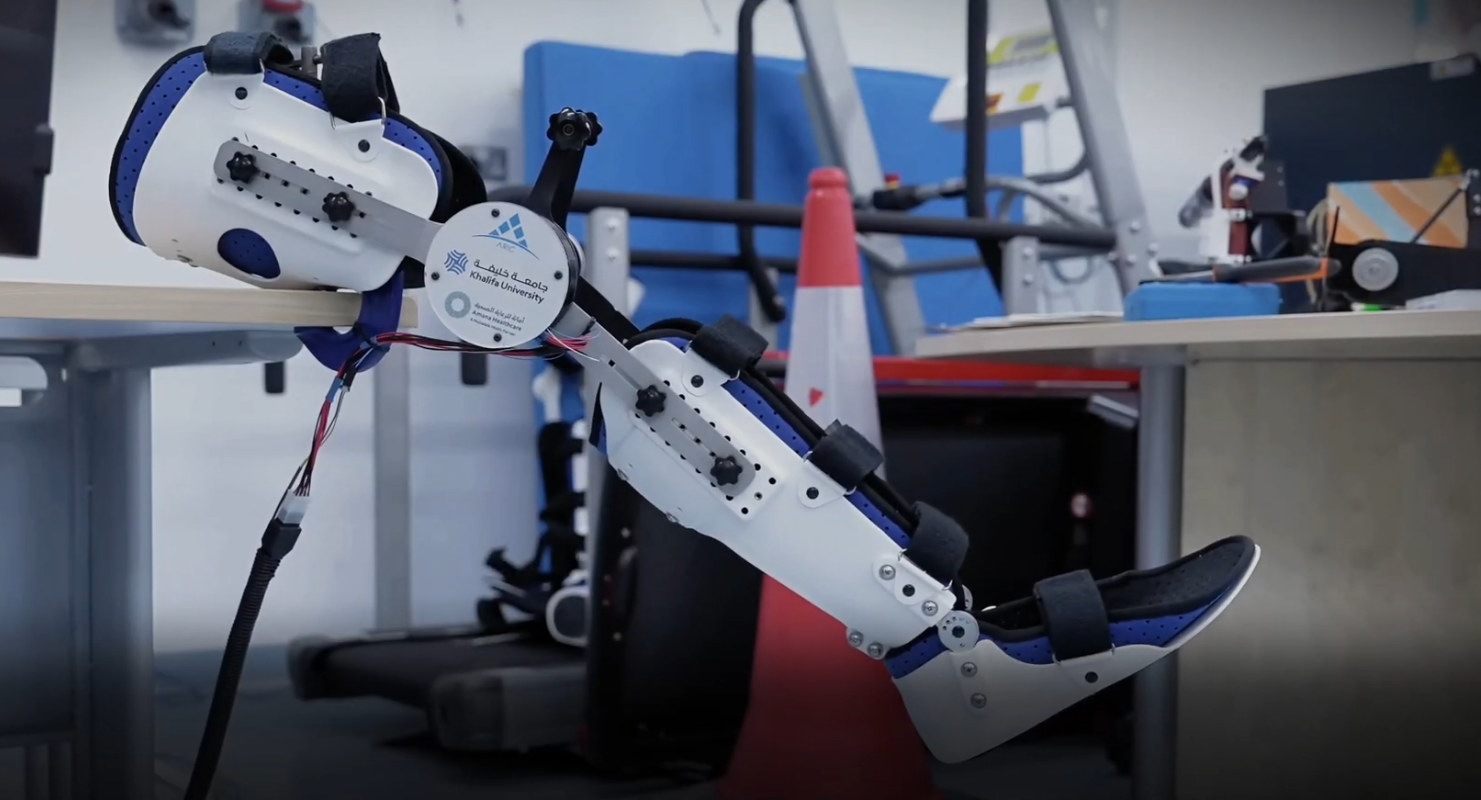
Medical and rehabilitation robot motors may require smooth low-speed motion, repeatable trajectories, and careful control during human–robot interaction.
Encoder-based control helps regulate position and speed, especially when a system must follow a specified trajectory or hold a target position. However, accurate position feedback is not the same as direct force measurement and cannot, by itself, guarantee safe human–robot interaction.
Depending on the application, engineers may also need force or torque sensors, joint-angle feedback, motion limits, and fault-handling mechanisms.
Sensorless control may be suitable for some auxiliary mechanisms, but its low-speed performance and startup behavior must meet the application's requirements. The complete system must also comply with the applicable safety requirements and regulations for its intended use.
5.6 Inspection and Autonomous Mobile Robots
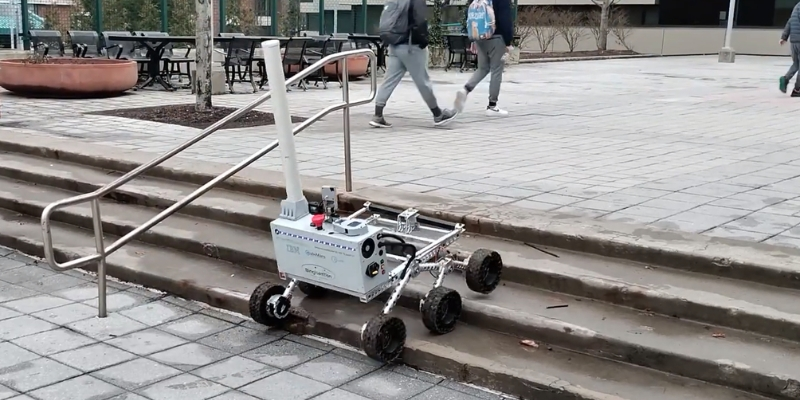
Inspection robot motors may serve mobile platforms, robotic arms, camera gimbals, and dedicated positioning mechanisms. Feedback requirements can vary considerably between subsystems.
For wheel drives on a mobile platform, speed regulation may be more important than precise rotor-position measurement. If a sensorless BLDC control method operates reliably across the required speed and load range, it can be considered.
For an inspection robot's arm or camera-positioning mechanism, precise angular positioning and smooth low-speed motion may be more important. Encoder feedback helps the controller track target positions and correct motion errors.
When evaluating options, consider startup under load, speed stability, feedback availability, communication compatibility, duty cycle, and environmental conditions. Different axes on the same robot may require different control approaches.
5.7 Gimbals and Precision Motion Systems
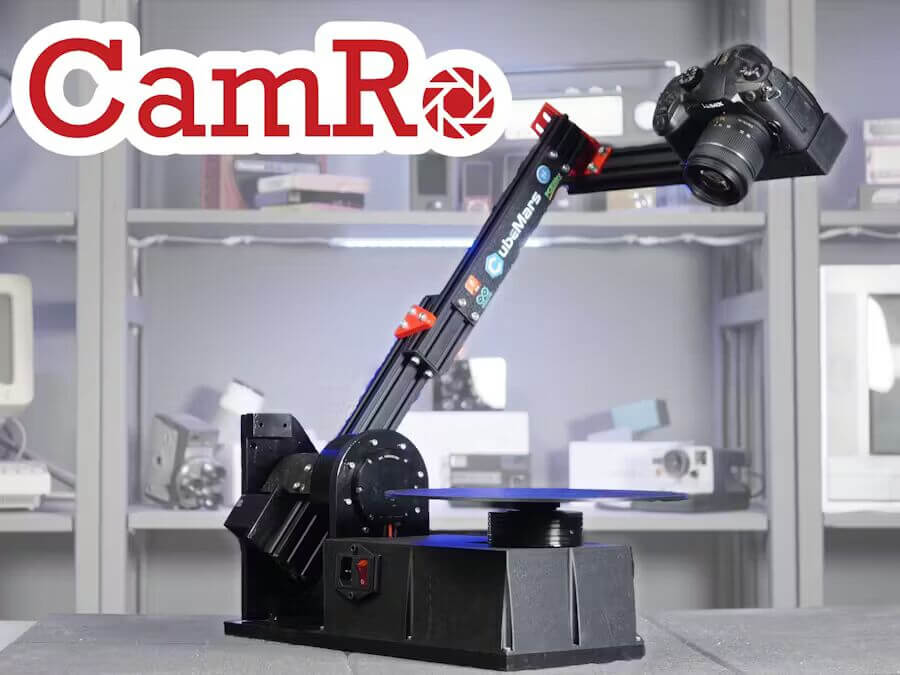
Gimbal systems typically prioritize smooth motion, low-speed stability, and precise angular positioning.
Encoder feedback helps the controller track target positions and correct motion errors. The appropriate solution still depends on motor design, control algorithms, stabilization requirements, and where position is measured within the system.
Engineers should also consider mechanical friction, cogging torque, structural vibration, and interactions between the motor control loop and the overall stabilization system.
5.8 Feedback Methods Compared Across Robot Applications
| Robot application | Primary control requirements | Feedback method worth evaluating |
| Robotic arms and collaborative robots | Position tracking, repeatable positioning, multi-axis coordination | Prioritize encoder-based control for precision motion axes |
| Humanoid and quadruped robots | Dynamic joint motion, disturbance rejection, coordinated control | Encoder feedback; add torque or force feedback when needed |
| Exoskeleton robots | Coordination with human movement, smooth assistance, fast response | Encoder-based joint feedback; add joint-angle or force sensors when necessary |
| Industrial robots and automation equipment | Repeatable positioning, speed stability, continuous operation | Use encoder-based control for positioning axes; consider sensorless control for suitable auxiliary drives |
| Medical and rehabilitation robots | Smooth motion, trajectory tracking, controlled human–robot interaction | Encoder feedback, supplemented with other sensors as needed |
| Inspection and mobile robots | Speed regulation, positioning, environmental adaptability | Consider sensorless control for suitable wheel drives and encoder control for precision mechanisms |
| Gimbals and precision motion systems | Smooth low-speed motion, angular positioning, stabilization | Choose the feedback architecture based on the motor and stabilization system |
These recommendations are starting points for evaluation, not fixed rules. Sensorless algorithms differ in startup strategy, low-speed capability, and disturbance rejection. Encoder-based system performance also depends on encoder quality, mechanical design, and controller implementation.
When evaluating CubeMars products, engineers can consider RI/RO Series frameless torque motors, AKE Series quasi-direct-drive motors, and AK Series actuators according to system integration needs. Before final selection, confirm the sensor configuration, supported control modes, and controller compatibility of the specific model.
Choosing sensorless or encoder-based control is about more than deciding whether the motor has a sensor. The motor, controller, feedback hardware, and mechanical transmission must be compatible with one another.
6.1 Hall Sensors and Encoders Are Not the Same
Hall sensors are commonly used to provide rotor-position information for commutation. They can meet basic commutation needs in some control schemes, but typically provide less detailed position information than encoders. Encoders offer finer position measurement and are therefore commonly used for closed-loop position control.
This distinction is especially important when comparing motor configurations. For example, the CubeMars RO80 KV105 Standard version includes Hall sensors, while the RO80 KV105 Lite version does not. This shows that sensor configurations can differ within the same product series. The Lite version may suit designs using a compatible sensorless controller or another feedback approach. However, the absence of Hall sensors does not mean the motor is compatible with every sensorless control algorithm.
Related product pages:
When selecting a configuration, engineers should confirm the specific sensor arrangement, controller compatibility, startup strategy, and target operating-speed range.
6.2 Encoder Integration and Controller Compatibility
The encoder must match the controller in terms of electrical interface, signal format, resolution, initialization method, and supported control modes.
Some integrated actuator solutions simplify this process by incorporating position feedback into a more complete drive system. CubeMars driver-board documentation for the AK, AKE, AKA, and AKH Series lists integrated single-turn absolute encoder configurations. The specific resolution and available functions depend on the selected product configuration.
For system designers, this integration can reduce the work required to build a separate feedback system. Even so, confirm the encoder specifications and supported control modes for the exact model and version, as well as the relationship between measured motor position and the final mechanical output.
For more information, refer to the CubeMars driver-board product pages.
6.3 Evaluate the Complete Drive Architecture
Before specifying a motor, engineers should identify the system architecture required by the application:
A standalone motor with an external controller;
A motor equipped with Hall sensors and used with a compatible drive;
A motor equipped with an encoder for closed-loop motion control;
A geared motor or quasi-direct-drive solution;
An actuator integrating feedback devices and drive electronics.
These options have different system architectures, and the required components vary by model. A geared motor does not necessarily include a controller, while a motor without Hall sensors may still operate with a compatible sensorless controller or use another supported feedback method.
Defining the required level of integration early in the design process can reduce risks related to later assembly, tuning, and system compatibility.
Before choosing a feedback method, engineers should clarify the motor's motion profile and control objectives.
7.1 Assess the Operating-Speed Range
If the motor operates mainly at medium to high speeds, a suitable sensorless control algorithm may be sufficient.
If the motor must start reliably under load, move at very low speeds, or frequently reverse direction, evaluate algorithm performance carefully under these conditions. Encoder feedback generally provides more direct information about rotor position.
7.2 Define Positioning Requirements
If the system mainly requires speed regulation, sensorless control may be sufficient.
If the application requires precise joint-angle tracking, repeatable motion trajectories, or closed-loop position regulation, encoder-based control is generally a more suitable starting point.
Note that positioning accuracy should be defined at the actual mechanical output, rather than inferred from encoder resolution alone.
7.3 Consider Startup Conditions and Load Disturbances
Determine whether the motor must start from any rotor position, start under a substantial load, or remain stable when torque demand changes suddenly.
These conditions may reveal limitations in some sensorless estimation methods. It is advisable to validate the selected motor and controller under conditions that closely resemble the real application.
7.4 Confirm Controller Compatibility
The controller must support the selected motor and feedback method.
For sensorless control, confirm the supported estimation algorithm, motor-parameter requirements, startup sequence, and low-speed performance.
For encoder-based control, confirm the encoder type, electrical interface, resolution, initialization behavior, and supported control modes.
7.5 Evaluate Total System Cost
Sensorless control may reduce sensor-related hardware, but total system cost is also affected by controller price, algorithm-tuning difficulty, and validation effort.
Encoder-based control requires additional feedback hardware and integration work, but this investment may be worthwhile when positioning performance, repeatability, and tuning efficiency are critical.
The better solution is the one that balances performance, complexity, and cost while meeting the application's requirements.
Sensorless control and encoder-based control address different engineering needs.
Sensorless control estimates rotor position or speed from the motor's electrical characteristics, reducing reliance on a dedicated rotor-position sensor. For applications that mainly require rotation or speed regulation, it may be suitable if the selected algorithm covers the target operating range.
Encoder-based control provides measured position feedback and is generally worth prioritizing for robotic systems that require closed-loop positioning, repeatable trajectories, or reliable low-speed motion.
The final choice depends on startup requirements, operating-speed range, positioning needs, mechanical structure, controller compatibility, and total system cost.
For robot manufacturers and system integrators, the goal is not to default to the more complex option, but to match the motor and feedback architecture of each joint or drive axis to its actual motion requirements.
1. What is the main difference between sensorless and encoder-based control?
Sensorless control estimates rotor position or speed from electrical measurements and a motor model. Encoder-based control uses a physical encoder to measure rotor position and provide feedback to the controller.
2. Is sensorless BLDC motor control suitable for robots?
Yes. Sensorless control may suit robotic applications that mainly require rotation or speed regulation. Its suitability depends on startup requirements, low-speed performance, load changes, and whether precise position feedback is needed.
3. Is encoder-based control always more accurate?
Not necessarily. An encoder provides measured position feedback, but overall positioning accuracy is also affected by encoder quality, mechanical tolerances, transmission backlash, calibration, and control-loop performance.
4. Are Hall sensors and encoders the same?
No. Hall sensors generally provide rotor-position information for commutation, usually with relatively coarse angular information. Encoders provide more detailed position measurements and are commonly used for closed-loop position control.
5. Can a BLDC motor operate without Hall sensors?
Yes. A motor can operate without Hall sensors when paired with a compatible controller and an appropriate sensorless control algorithm. Other supported feedback methods may also be used, depending on the design. The controller must meet the motor's startup requirements and target operating range.
6. Which CubeMars products can be used in encoder-controlled robotic systems?
CubeMars offers a range of motor and actuator solutions, including RI and RO Series frameless motors, AKE Series quasi-direct-drive motors, and AK Series actuators. The appropriate feedback architecture depends on the selected model and the complete system design. Refer to the official documentation for encoder specifications and supported control modes.
7. Should a robotic joint use a motor with Hall sensors or an encoder?
First, define the joint's control requirements. Hall sensors may be sufficient for commutation in some designs, while applications requiring precise position feedback generally need an appropriate encoder-based feedback architecture.
Also confirm whether the feedback device measures motor-rotor position or the position of the final joint output.

.png)
