Cubemars - 17 Year Motor Manufacturer info@cubemars.com +86 13755649079
English
English
中文简体
日本語
Deutsch
Français
한국어
Español
Pусский
Quick Registration
Create your CubeMars account


Moment
TABLE OF CONTENTS
The Motivation Behind the Innovation
Device Principle and Mechanism
Rehabilitation Process: From Customization to Independence
1.Personalized Setup
2. Independent Operation
3. Treatment Data Feedback
Assisting Patients and Caregivers

CubeMars Motors Empower Michaël’s Team to Develop an Autonomous Stretching Device

CubeMars / Dec 27,2024

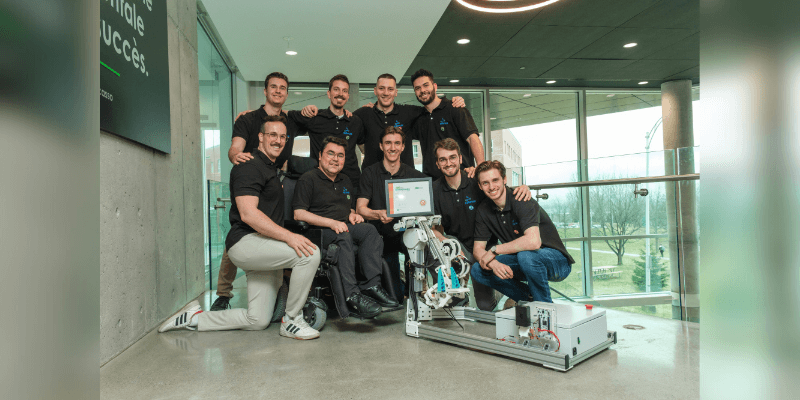
Michaël’s Team


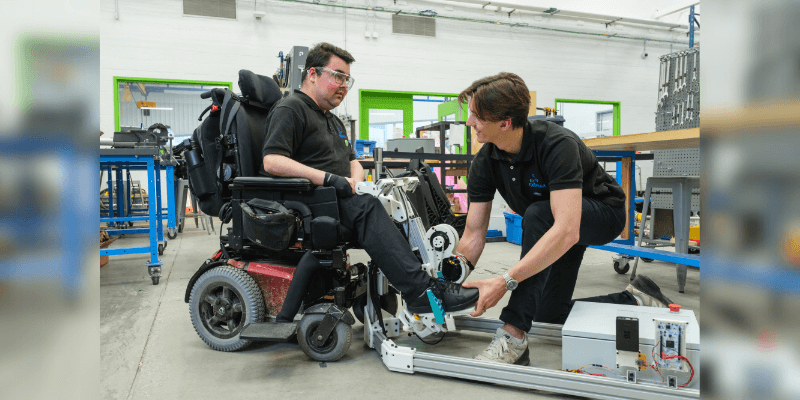
Michaël, who suffers from muscular dystrophy, used his own experiences to collaborate with his team to develop an innovative calf stretching device. This device, equipped with CubeMars motors, provides a more convenient rehabilitation treatment option for patients with neuromuscular diseases.


The Motivation Behind the Innovation


Michaël’s Team


Due to the effects of muscular dystrophy, Michaël has needed to perform calf stretches regularly since childhood to alleviate muscle tightness and stiffness. Although stretching therapy is effective, it often requires the assistance of family members or therapists, making the process time-consuming and inflexible.


“As a child, my parents often helped me with the stretching exercises. But, with four children to care for, they sometimes forgot,” Michaël recalls. This experience motivated him to design a device in his university graduation project that would allow patients to complete their stretches independently, aiming to reduce the burden on both patients and caregivers while improving treatment efficiency.


Device Principle and Mechanism


CubeMars Motor


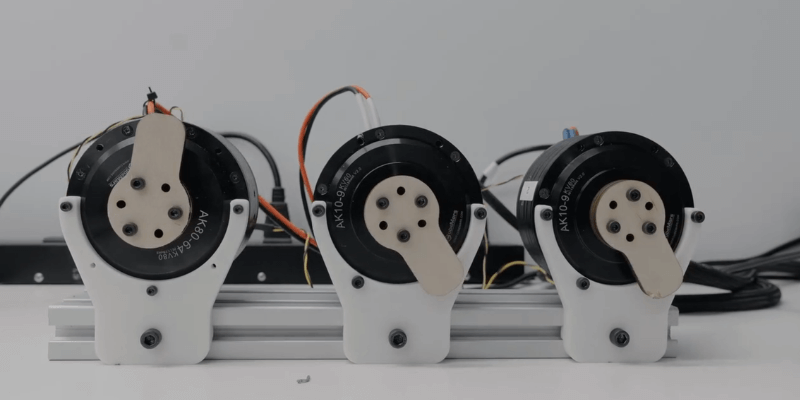
This device incorporates CubeMars AK80-64 KV80 and AK10-9 V2.0 KV60 robotic actuators to ensure precise motion control and ample power support:


High-Performance Motors: The device utilizes CubeMars motors to deliver stable and powerful motion, effectively aiding patients in stretching and relieving muscle stiffness.


Smart Control: The device features an integrated smart module that can automatically adjust the stretch intensity and angle, providing personalized therapy based on the patient's specific needs.


The design enables patients to perform the treatment without external assistance. With simple operation, patients can initiate the stretching program, making the process both safe and efficient.


Rehabilitation Process: From Customization to Independence


Michaël’s Team


1.Personalized Setup


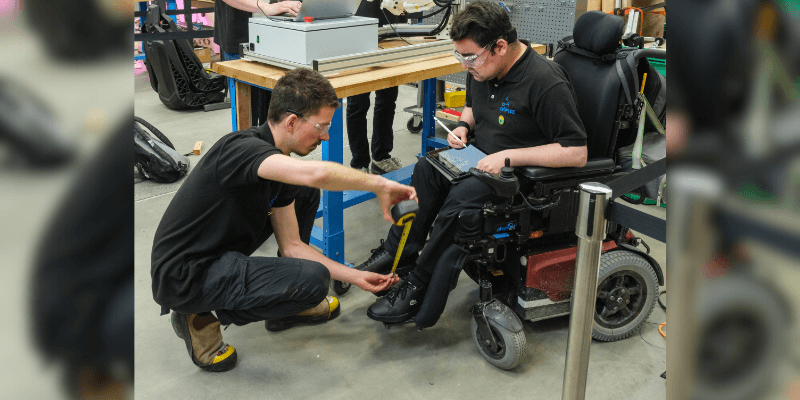
Physical therapists customize the device’s initial settings, including stretch intensity, duration, and frequency, based on the patient's muscle condition and treatment needs.


2. Independent Operation


Patients simply secure their calf and activate the device, allowing them to complete the treatment autonomously.


3. Treatment Data Feedback


After each use, the device records treatment data, which is shared with physical therapists to adjust the patient's ongoing treatment plan.


Assisting Patients and Caregivers


The device’s design greatly enhances patient independence and reduces the workload for both family members and therapists. Physical therapists have stated that the device significantly improves the patient’s ability to perform stretching exercises with greater ease and precision, thereby optimizing the overall rehabilitation process.


Michaël shares, “With this device, I can more easily complete my daily stretches, while also reducing my dependence on others.”


Related Articles
How Many Motors Can A Robot Have
Explains how many motors a robot can have, analyzing engineering factors such as DOF, torque, mechanical design, and system constraints across different robot types.
Nov 03,2023
Make Your Own Camera Arms with CubeMars' Robotic Actuator(Open Source)
Create your own programmable camera arm with CubeMars actuators. Discover CamRo, an open-source, dual-axis robotic rig for smooth, cinematic motion control.
Aug 01,2025
Do robots use AC or DC Motors?
Robots can use both AC (alternating current) and DC (direct current) motors, depending on their specific applications and requirements. Each type of motor has its advantages and is chosen based on the particular needs of the robot's tasks.
Oct 16,2023
Leave Message
User name
Anonymous
E-mail *
Name *
Phone
Comments
Verification code
captcha
Warm prompt
Warm prompt
Please Sign In
Sign In
Sign Up
Forgot Password?
Warm prompt